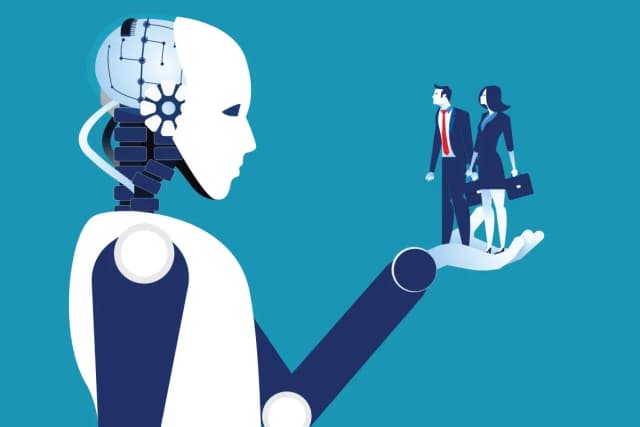
Can AI agents remember too much? The privacy risks of agent memory

TL;DR:AI coding assistants are transforming the full stack developer role by automating repetitive coding tasks and enabling faster development. As a result, developers are focusing more on problem-solving, system design, code validation, and architecture. The future belongs to professionals who combine strong engineering fundamentals with effective AI-assisted development workflows.
If you have ever used an AI assistant and thought, “I wish it remembered this next time,” you are not alone.
That is exactly where AI is heading.
Modern AI agents can remember conversations, preferences, tasks, and goals. This continuity makes them more useful than traditional chatbots.
But it also creates a trade-off.
Imagine using an AI assistant at work for several months. It learns about your projects, communication style, colleagues, and past decisions. That can make everyday work easier, but it also raises an uncomfortable question, “How much does the AI now know about you?”
Yes, AI agents can remember too much, particularly when information is retained without a clear purpose, reused in the wrong context, or stored longer than necessary.
Also Read: What Are AI Agents? The Simple Truth Behind the Buzz
What is AI agent memory?
AI agent memory is the information an AI system retains and recalls across interactions. Depending on the system, it may include:
- Previous conversations and instructions
- User preferences and work patterns
- Projects, goals, and pending tasks
- Information retrieved from connected applications
- Feedback and decisions from earlier sessions
Memory can be temporary or persistent. Temporary memory supports the current task, while persistent memory can influence an agent’s responses and actions much later.
That difference matters. Persistent memory does not simply store information. It can also shape how an agent reasons, selects tools, and behaves in future interactions.
Why do AI agents need memory?
Few people want to repeat the same context whenever they use an AI tool.
Memory allows an agent to:
- Continue an earlier conversation
- Adapt to individual preferences
- Track tasks over time
- Connect related interactions
- Provide more relevant support
A sales agent might remember customer preferences. A project agent could track decisions and action items. A marketing agent may retain campaign context across different stages.
The more relevant context an agent has, the more useful it can be. However, that same context can become sensitive when collected at scale.
Where do the privacy risks begin?
The privacy problem is not simply what an AI agent can access. It is what the agent keeps, how it uses that information, and whether the user remains in control.
1. AI may know more than users realize
One interaction reveals little. Hundreds of interactions can reveal patterns in how a person communicates, works, makes decisions, and collaborates.
Combined, these details can form a surprisingly comprehensive profile. The concern is that users may not know what has been retained or inferred.
2. Information can cross contextual boundaries
Information appropriate for one task may be inappropriate for another.
Without clear safeguards, an AI agent could:
- Reuse confidential project information elsewhere
- Mix details from different customers or teams
- Apply personal preferences to professional decisions
- Surface old information in an unrelated workflow
Privacy-by-design guidance recommends separating memory according to its original processing purpose, reducing the risk of information being reused inappropriately.
3. Information can remain longer than necessary
Projects end. Roles change. Preferences evolve. Decisions are revised.
If an agent continues using old information, its memory can become both a privacy risk and a source of inaccurate recommendations.
Deletion may also be difficult when information exists across summaries, logs, caches, backups, or searchable embeddings. This is why retention rules should be defined for every type of memory.
Sometimes, forgetting is the most responsible thing an AI system can do.
4. More memory creates greater security exposure
An agent’s memory may contain information gathered from multiple systems, making it valuable to attackers.
There is also the risk of memory poisoning, where malicious or inaccurate information is inserted into an agent’s memory to influence future behavior. Both Microsoft Security and OWASP identify persistent memory manipulation as a security concern for AI agents.
5. AI mistakes can become lasting assumptions
An agent might mistake a temporary request for a permanent preference, retain an inaccurate summary, or remember a suggestion as an approved decision.
Without persistent memory, such mistakes may disappear after a session. With memory, they can continue influencing future outputs.
Users therefore need ways to inspect, correct, and delete what an agent remembers.
6. Users may lose control of their information
Trust depends on transparency.
Users should be able to understand:
- What the agent remembers
- Why the information is being stored
- How long it will remain
- Who or what can access it
- Whether it can be corrected or deleted
A simple memory on-or-off setting may not be enough. Someone may want an agent to remember a writing preference but forget details from a sensitive conversation.
The most trusted AI systems will not be the ones that remember the most. They will be the ones that give users meaningful control over what is remembered and why.
This naturally leads to a bigger question.
If memory can improve AI experiences but also create privacy concerns, how should organizations approach it?
How can organizations balance memory and privacy?
The answer is not to eliminate memory from AI agents.
Without memory, agents would lose much of what makes them useful. They would struggle to maintain context, personalize interactions, or support long-running tasks.
Instead, organizations need to find the balance between usefulness and responsibility.
As AI agents become more capable, memory management is becoming a key part of Responsible AI. The goal is to ensure that agents remember enough to be helpful, without retaining so much information that they create unnecessary privacy or security risks.
In practice, that means designing systems that:
- Collect only the information needed for a specific purpose
- Keep sensitive information separated by context
- Apply clear retention and deletion policies
- Give users visibility into what is being remembered
- Allow inaccurate information to be corrected or removed
- Restrict access to only the data and tools an agent genuinely needs
- Enable organizations to review and audit AI-driven actions
The goal is not maximum memory.
It's responsible memory.
And achieving that requires more than technology. It requires people who understand how AI systems work, where risks emerge, and how governance should evolve alongside innovation.
From Using AI to Understanding AI
AI literacy is moving beyond prompts and productivity, As agents become more autonomous, professionals must also understand:
- What information AI should access
- What it should be allowed to remember
- When human review is necessary
- How privacy and security risks emerge
- Where limits on AI autonomy should be placed
These are no longer questions only for developers. Managers, marketers, analysts, consultants, entrepreneurs, and business leaders increasingly need to make informed decisions about AI use.
The AI Infinity reflects this shift through functional and technical learning pathways. Its curriculum includes AI Literacy, Generative AI, Agentic AI, Trustworthy AI, and Responsible AI, helping learners understand both AI applications and their wider implications.
The learning experience brings these areas into practice through:
- Live sessions with AI experts
- Hands-on experience with more than 20 AI tools
- Skill-based assignments
- Industry-relevant projects
- Flexible, self-paced resources
- Six months of access to updated content
This practical understanding matters as AI moves from producing content to remembering context, coordinating tasks, and acting across workflows. Professionals do not all need to become AI engineers, but they do need to understand AI well enough to question how it uses data and where human judgment must remain involved.
Also Read: Learning AI vs Using AI: What Most Professionals Get Wrong
The future of AI may depend on how well it forgets
For years, technology has focused on storing more information. AI agents require us to ask a different question, “What information should not be stored?”
Trust will not come from agents that remember everything. It will come from systems that retain the right information, protect it appropriately, and forget it when it is no longer needed.
Conclusion
Memory makes AI agents more personalized, consistent, and useful. It can also lead to excessive data collection, misplaced context, persistent errors, and greater security exposure.
So, can AI agents remember too much?
Yes. The risk begins when memory has no defined purpose, boundary, expiry period, or meaningful user control.
The most trustworthy AI agents will not be those with the biggest memory. They will be the ones designed to remember responsibly.
Frequently Asked Questions
Q1. Do AI agents remember?
Yes, many modern AI agents can retain context across interactions. Depending on how they are designed, they may remember preferences, tasks, goals, or previous conversations to provide more personalized and relevant assistance. However, the type, duration, and scope of memory vary across different AI systems.
Q2. What are the biggest security risks of AI agents?
The biggest security risks include unauthorized access to sensitive data, excessive permissions, memory manipulation, inaccurate decision-making, and the reuse of information across unintended contexts. As agents interact with multiple systems and retain information over time, protecting their memory becomes as important as securing the underlying applications.
Q3. Is AI violating your privacy?
Not necessarily. AI becomes a privacy concern when it collects, stores, or uses information without sufficient transparency, user control, or a clear purpose. Responsible AI systems should provide visibility into what data is retained, why it is stored, and how users can manage or delete it.
About the Author
TalentSprint
TalentSprint, Part of Accenture LearnVantage, is a global leader in building deep expertise across emerging technologies, leadership, and management areas. With over 15 years of education excellence, TalentSprint designs and delivers high-impact, outcome-driven learning solutions for individuals, institutions, and enterprises. TalentSprint partners with leading enterprises and top-tier academic institutions to co-create industry-relevant learning experiences that drive measurable learning outcomes at scale.
Explore Our Programme
Advance your career with the right program