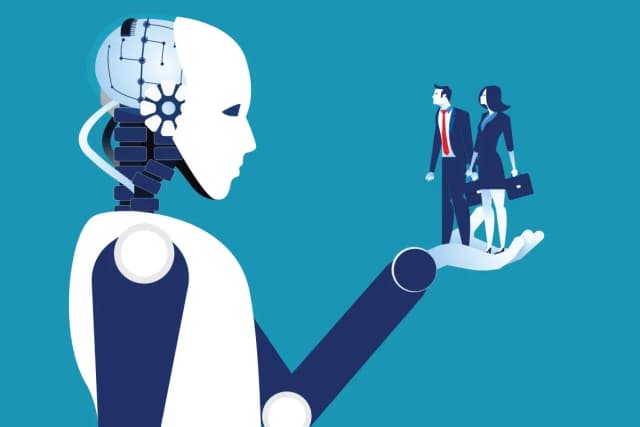
AI Career roadmap for working professionals: From Beginner to AI Leader

TL;DR:AI careers are no longer limited to technical specialists. This roadmap helps learners and professionals understand how to progress from building computer science foundations and AI literacy to gaining practical experience, developing advanced AI and Machine Learning expertise, and ultimately leading AI-driven business transformation. The right path depends on your goals, background, and career stage.
Artificial Intelligence is no longer a future skill. It is becoming a career skill.
Yet for many working professionals, the biggest challenge is not understanding why AI matters. It is figuring out where to begin. Some wonder whether they can transition into an AI career without a computer science degree. Others question if it's possible to break into AI with no prior experience, learn the right skills while working full-time, or realistically land an AI-related role within a reasonable timeframe.
The confusion is understandable. There are countless courses, certifications, and career paths to choose from. Should you focus on prompt engineering, machine learning, data science, or Generative AI? Which AI roles are actually in demand? And most importantly, what does the journey from AI beginner to AI leader really look like?
The good news is that building an AI career does not require becoming an expert overnight. What it does require is a clear roadmap. One that helps you understand the skills to develop, the opportunities to pursue, and the learning path that aligns with your career goals.
Whether you're a business professional looking to leverage AI in your current role, a technology professional aiming to specialize in AI and Machine Learning, or someone exploring a complete career transition, understanding the stages of growth can help you make more confident decisions.
This roadmap breaks down that journey, from building foundations and gaining practical experience to developing specialized expertise and ultimately leading AI-driven innovation within your organization.
Stage 1: Build Strong Foundations
One of the most common questions aspiring AI professionals ask is: Do I need a computer science degree to build a career in AI?
The answer depends on where you are in your career journey.
While many AI roles are accessible to professionals from diverse backgrounds, a strong foundation in computer science can provide a long-term advantage. Concepts such as programming, algorithms, data structures, systems thinking, and software development form the backbone of many emerging technologies, including Artificial Intelligence.
For students and early-career learners, investing in these fundamentals can open multiple pathways into AI, Machine Learning, Data Science, Cloud Computing, and Software Engineering.
Building Future-Ready Technical Skills
Programs such as the BS in Computer Science by VVISM Hyderabad and TalentSprint are designed to build this foundation while keeping industry relevance at the core.
What makes the program distinctive is its combination of:
- A UGC-recognized BS degree and a structured industry apprenticeship
- Strong computer science foundations through labs, coding challenges, hackathons, and projects
- Exposure to high-demand technologies such as AI, ML, Data Science, Cloud, SAP, and Pega
- Industry-integrated learning delivered by VVISM faculty and TalentSprint experts
- Continuous mentorship and professional development
- Placement support and real-world experience that help learners graduate job-ready
For aspiring technology professionals, this foundational stage can create the platform on which future AI careers are built.
Stage 2: Develop AI Literacy and Fluency
Many professionals don't struggle with motivation. They struggle with uncertainty.
Should they learn ChatGPT first? Do they need coding? Which AI tools matter? Can they learn AI while working full-time?
Before specializing, professionals need AI fluency.
Today, AI adoption is no longer limited to technology teams. Marketing, operations, finance, HR, consulting, and business leadership functions are increasingly leveraging AI to improve productivity, decision-making, and innovation.
The reality is simple: AI skills are becoming essential across industries.
Making AI Accessible for Everyone
This is where having a structured learning pathway becomes important. For many professionals, the challenge isn't a lack of interest in AI. It's knowing where to begin, what to learn, and how to apply it effectively in their work.
AI Infinity is designed to bridge that gap by helping learners move from AI awareness to practical adoption. Instead of overwhelming participants with technical complexity, the programme focuses on building hands-on confidence through learning, experimentation, and real-world application.
The learning experience combines expert-led guidance with practical exposure to today's most relevant AI technologies, including ChatGPT, Copilot, Gemini, and Perplexity. Through industry-relevant projects, skill-based assignments, and flexible self-paced resources, learners can gradually build proficiency while applying AI to meaningful professional challenges.
Some of the key highlights include:
- Live sessions led by AI experts
- Exposure to 20+ leading AI tools
- Industry-relevant projects and practical applications
- Skill-based assignments to track learning progress
- Flexible self-paced learning resources
- Six months of continued access for ongoing upskilling
What makes AI Infinity particularly relevant in today's rapidly evolving workplace is its flexibility. Whether you're a student preparing for future opportunities, a working professional looking to stay competitive, an entrepreneur exploring new possibilities, a career switcher re-entering the workforce, or a technical professional seeking deeper AI expertise, the programme offers learning pathways that align with different goals and experience levels.
After all, AI is no longer a niche or specialized capability reserved for technical experts. It is increasingly becoming a fundamental professional skill, much like digital literacy was a decade ago. The sooner individuals learn how to work effectively with AI, the better positioned they will be to create value, adapt to change, and stay relevant in an AI-driven world.
Stage 3: Move From Learning to Application
Learning about AI is important.
Applying AI is what creates career opportunities.
Many professionals spend months completing courses yet struggle to demonstrate practical experience. Employers increasingly look for evidence that candidates can use AI to solve real-world problems.
At this stage, the focus should shift toward:
- Automating workflows
- Solving business challenges
- Building use cases
- Developing project portfolios
- Applying AI to current job responsibilities
- Understanding enterprise AI adoption
This is where professionals start moving from consumers of AI to practitioners of AI.
Developing Practical AI Skills
The AI course by IIT Hyderabad is designed precisely for this transition.
For professionals who understand AI concepts but want to build practical competence, AIET offers:
- Learning led by IIT Hyderabad faculty and industry experts
- 200 hours of immersive interactive learning
- Exposure to more than 10 industry-relevant AI tools
- 60 hours of structured lab-based learning
- Capstone projects focused on solving real business problems
The programme reflects an important reality in today's job market: AI skills are no longer confined to specialists. They are becoming essential across functions, industries, and leadership levels.
Stage 4: Choose Your AI Career Path
As you build your AI skills and gain confidence applying them in real-world scenarios, a new question naturally emerges, "Where can AI take my career?"
The good news is that AI is not creating just one type of job. It is transforming roles across business, data, and technology, opening multiple pathways for professionals with different interests and strengths.
Business-focused AI careers
If you enjoy strategy, problem-solving, and driving organizational change, AI can help you move into roles that focus on business transformation and innovation, such as:
- AI Product Manager
- AI Consultant
- AI Transformation Specialist
- AI Strategy Lead
These roles focus on identifying opportunities for AI adoption, aligning initiatives with business goals, and ensuring AI delivers measurable value.
Data-focused AI careers
For professionals who enjoy working with data, uncovering insights, and supporting decision-making, AI is creating growing demand for roles such as:
- Data Analyst
- Business Intelligence Analyst
- Data Scientist
These careers combine analytical thinking with AI-powered tools to turn data into actionable business insights.
Technical AI careers
If you're interested in building and deploying intelligent systems, a more technical path may be the right fit. Common roles include:
- AI Engineer
- Machine Learning Engineer
- Generative AI Engineer
- MLOps Engineer
These professionals develop, train, deploy, and maintain the AI systems that power modern products and services.
What's important to remember is that AI careers rarely require starting from scratch. The professionals who thrive in this space are often those who combine AI capabilities with their existing expertise, whether that expertise lies in business, marketing, finance, operations, healthcare, education, or technology. Rather than replacing your current strengths, AI can amplify them and open the door to new career opportunities
Stage 5: Develop advanced AI and machine learning expertise
As professionals move into technical AI roles, they need deeper knowledge and specialization.
This stage focuses on developing expertise in areas such as:
- Machine Learning
- Deep Learning
- Natural Language Processing
- Computer Vision
- Large Language Models
- MLOps
- AI model deployment
The goal is no longer simply understanding AI but building, deploying, and optimizing AI systems.
Advancing technical mastery
For professionals seeking advanced capabilities, the AI and Machine Learning course by IIIT Hyderabad provides a pathway into deeper technical specialization.
The programme is built for working professionals and emphasizes practical application through:
- Learning from IIIT Hyderabad's renowned research faculty
- Practitioner-focused curriculum aligned with industry needs
- Mentor-supported lab sessions
- 132 hours of projects and hackathons
- Two immersive campus visits
- Extensive live online learning experiences
This stage is particularly valuable for professionals pursuing roles in AI Engineering, Machine Learning Engineering, Data Science, and advanced AI development.
Stage 6: Become an AI Leader
For many professionals, the goal of learning AI is not to become the person building every model or writing every line of code. It is to become the person who can identify where AI creates the most value, make informed strategic decisions, and lead organizations through change.
This is where the AI career journey takes a different turn.
At the leadership level, the conversation is no longer about tools, algorithms, or technical implementation. The focus shifts to business transformation.
Senior leaders are increasingly being asked questions such as:
- Where can AI create the greatest business impact?
- How do we prioritize AI investments?
- How can AI be scaled across the organization?
- What governance frameworks are needed to manage risks responsibly?
- How do we prepare teams for an AI-driven future?
The challenge is significant. While most organizations recognize AI's transformational potential, only a small percentage have successfully scaled AI across the enterprise. The differentiator is often not technology, but leadership.
Leaders who can successfully bridge business strategy, organizational priorities, and AI capabilities are becoming increasingly valuable as organizations move from experimentation to enterprise-wide adoption.
Leading AI transformation
For experienced professionals and business leaders, developing AI leadership capabilities requires a different kind of learning.
Rather than focusing on technical execution, the emphasis shifts toward understanding how AI influences strategy, decision-making, innovation, competitive advantage, and organizational growth.
The AI for Leaders by IIM Calcutta is designed for current and aspiring leaders looking to deploy AI strategically across the business, the experienced professionals seeking to apply AI for better decisions and business impact and also the entrepreneurs and business owners aiming to use AI to drive business growth.
The programme combines:
- A business-focused curriculum centered on AI's strategic applications
- Live interactive learning with faculty and industry insights
- Capstone projects that address real business challenges
- Peer learning and networking with experienced professionals
- Two campus immersion experiences at IIM Calcutta
- IIM Calcutta Executive Education certification and alumni status
Delivered through executive-friendly weekend classes over 10 months, the programme helps leaders build the perspective needed to guide AI initiatives with confidence while balancing business priorities, governance considerations, and long-term organizational objectives.
Ultimately, AI leadership is not about understanding every technological advancement. It is about understanding how to harness AI to drive growth, strengthen competitiveness, and create sustainable business value.
Conclusion
The journey from AI beginner to AI leader is not defined by a single course, certification, or job title. It is a progression of learning, experimentation, application, specialization, and leadership.
Some professionals begin by building strong technical foundations. Others start by learning how AI can improve their current role. Some choose to deepen their expertise through advanced AI and Machine Learning. Eventually, the most successful professionals become the leaders who guide organizations through AI-driven transformation.
The key is not knowing everything about AI today. It is taking the next step in your journey and continuously building the skills, experience, and confidence needed to thrive in an AI-powered future.
Frequently Asked Questions
Q1. Can I switch to an AI career without a computer science degree?
Yes. Many AI roles are open to professionals from business, operations, finance, marketing, and other domains. While technical foundations can be helpful, success often depends on building AI literacy, gaining practical experience, and applying AI to solve real-world business challenges.
Q2. Which AI learning path is best for working professionals?
The right path depends on your career goals. Professionals new to AI can start with AI literacy and practical applications, while those targeting AI-focused roles can pursue applied AI, Machine Learning, or advanced AI specializations aligned with their desired career trajectory.
Q3. How do I progress from using AI tools to becoming an AI leader?
The journey typically involves building AI awareness, applying AI to solve business problems, developing specialized expertise, and eventually leading AI initiatives. AI leaders focus on strategy, transformation, governance, and creating measurable business value through enterprise-wide AI adoption.
About the Author
TalentSprint
TalentSprint, Part of Accenture LearnVantage, is a global leader in building deep expertise across emerging technologies, leadership, and management areas. With over 15 years of education excellence, TalentSprint designs and delivers high-impact, outcome-driven learning solutions for individuals, institutions, and enterprises. TalentSprint partners with leading enterprises and top-tier academic institutions to co-create industry-relevant learning experiences that drive measurable learning outcomes at scale.
Explore Our Programme
Advance your career with the right program