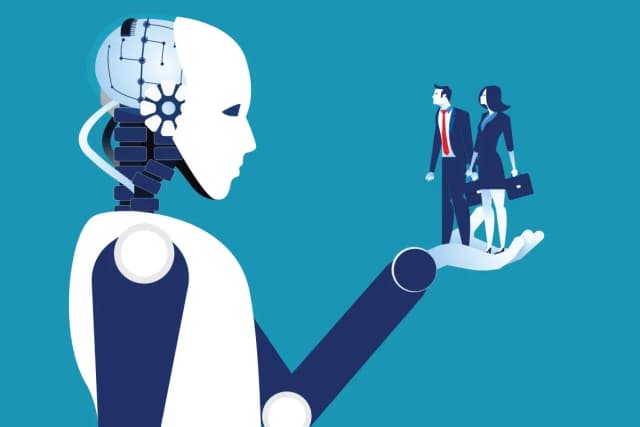
What Does an AI‑Ready Professional Look Like in 2026?

What if your most important coworker in 2026 isn’t human, but an algorithm?
This is no longer a hypothetical. AI has moved from being a support tool to becoming a core part of how work gets done. Marketers refine campaigns using AI insights. Analysts accelerate decisions with automated intelligence. Across functions, AI is embedded into everyday workflows.
Yet despite this rise in adoption, most professionals, and organizations, are struggling to convert AI usage into real impact. The challenge isn’t access to tools. It’s readiness.
As AI takes over repetitive and scalable tasks, human work is shifting toward judgment, creativity, and strategy. This shift is redefining what it means to be skilled. In 2026, value won’t come from knowing more, it will come from knowing how to work with AI.
That’s where the AI‑ready professional comes in.
Who Is an AI‑ready professional?
An AI‑ready professional isn’t defined by job title or technical depth.
They’re defined by how they work, think, and adapt alongside AI.
At the simplest level, an AI‑ready professional can collaborate with AI naturally, apply it effectively in their role, and evolve continuously as tools and expectations change.
In practice, this shows up clearly in daily work.
What AI‑readiness looks like?
They use AI naturally, not occasionally.
AI‑ready professionals don’t “experiment” with AI once in a while. They embed it into daily workflows, research, drafting, analysis, ideation, and decision support. AI becomes an everyday collaborator, not a novelty. Human judgment isn’t replaced; it’s strengthened.
They have functional AI skills, even without a tech background.
AI readiness isn’t about coding. It’s about asking better questions, interpreting outputs, spotting weak or biased responses, and using AI to support decisions rather than accepting answers blindly. This applies across marketing, HR, finance, operations, and consulting, not just technical roles.
They understand the basics without needing depth.
They know what AI can and can’t do, how data affects outcomes, and why validation matters. This foundational awareness helps them collaborate with technical teams, ask smarter questions, and avoid unrealistic expectations from AI tools.
They think in workflows, not tools.
Instead of chasing the latest AI product, AI‑ready professionals focus on outcomes. They identify repeatable patterns in work, integrate AI into processes, and measure value through time saved and quality improved. This workflow mindset separates experimentation from real capability.
They double down on the human advantage.
As AI handles speed and scale, AI‑ready professionals focus on critical thinking, creativity, communication, empathy, and responsibility, the qualities machines can’t replace.
Ultimately, the AI‑ready professional isn’t the person who knows the most about AI. It’s the one who can apply AI confidently, responsibly, and effectively in real work, and keep evolving.
Also read: AI Readiness Assessment: Your Step-by-Step Business Preparation Guide
The real gap: knowing vs. doing
Most professionals already know AI is important.
Yet there’s a persistent gap between understanding AI’s potential and using it effectively day to day. That gap usually exists because of:
Too much scattered information
Uncertainty about where to start
Lack of hands‑on, real‑world application
Becoming AI‑ready isn’t about consuming more content. It’s about building the ability to apply what you learn consistently and practically.
This is where most learning approaches fall short.
Turning AI awareness into capability
AI Infinity was designed specifically to solve this gap, helping professionals move from passive understanding to active application.
Instead of positioning learning as a checklist, AI Infinity focuses on experience‑driven, application‑first learning, where skills are built by doing real work with AI.
What the Program Looks Like:
A 40‑hour hands‑on learning journey, designed to balance practical depth with real‑world relevance
30 hours of live, interactive weekend sessions, making it accessible for working professionals
Recorded sessions available for flexible, self‑paced review
But the real differentiation lies in how learning is applied.
Learning by Doing, Not Just Watching
Hands‑on exposure to 20+ leading AI tools, including ChatGPT, Copilot, Gemini, and Perplexity
12 industry‑relevant projects that mirror real business and workplace scenarios
6 hours of guided live project work, where learners actively build and apply solutions
Flexibility to choose any 2 projects, ensuring alignment with individual roles and career goals
To reinforce application:
20 skill‑based assignments and AI challenges, designed to test usage and decision‑making, not recall
1‑year unlimited access to updated tools, content, and resources, supporting continuous learning as AI evolves
This structure ensures learning doesn’t stop at understanding concepts, it translates directly into workplace capability.
Also Read: How to Learn AI the Right Way
Why this matters in 2026?
AI readiness is no longer a “nice to have.” It’s becoming a baseline expectation.
Professionals who invest in structured, hands‑on learning now won’t just keep up with AI, they’ll lead how it’s applied in their teams and organizations.
The takeaway
Becoming an AI‑ready professional isn’t about mastering every tool or chasing every update.
It’s about building the ability to learn, apply, and adapt continuously, and doing so in real work, not theory.
Start small. Stay consistent. Focus on application.
Because in 2026, AI readiness won’t be measured by how much you know, it will be measured by how effectively you turn knowledge into action.
Frequently asked questions
Q1. What defines an AI-ready professional in 2026?
An AI-ready professional combines domain expertise with the ability to use AI tools effectively. They understand data, can work alongside AI systems, and continuously adapt. More than technical depth, their strength lies in applying AI to solve real-world problems.
Q2. Do AI-ready professionals need coding skills?
Not always. While technical roles benefit from coding, many AI-ready professionals use no-code or low-code tools. What matters more is understanding how AI works, asking the right questions, and applying tools effectively within their specific role or industry.
Q3. What skills are most important for AI readiness?
Key skills include data literacy, prompt thinking, critical analysis, and problem-solving. Professionals must also understand AI limitations, interpret outputs, and integrate AI into workflows. Soft skills like adaptability and continuous learning are equally important in an AI-driven workplace.
Q4. How can professionals become AI-ready while working full-time?
By adopting a structured, practical approach. Start with small applications of AI in daily tasks, focus on role-specific use cases, and build consistency. Short, hands-on learning programs and real-world projects help bridge the gap between knowledge and application.
Q5. Why is AI readiness important for career growth in 2026?
AI is reshaping roles across industries. Professionals who can use AI to improve efficiency and decision-making will stand out. AI readiness is no longer optional, it directly impacts employability, productivity, and long-term career relevance in a rapidly evolving job market.
About the Author
TalentSprint
TalentSprint, Part of Accenture LearnVantage, is a global leader in building deep expertise across emerging technologies, leadership, and management areas. With over 15 years of education excellence, TalentSprint designs and delivers high-impact, outcome-driven learning solutions for individuals, institutions, and enterprises. TalentSprint partners with leading enterprises and top-tier academic institutions to co-create industry-relevant learning experiences that drive measurable learning outcomes at scale.
Advance your career with the right program