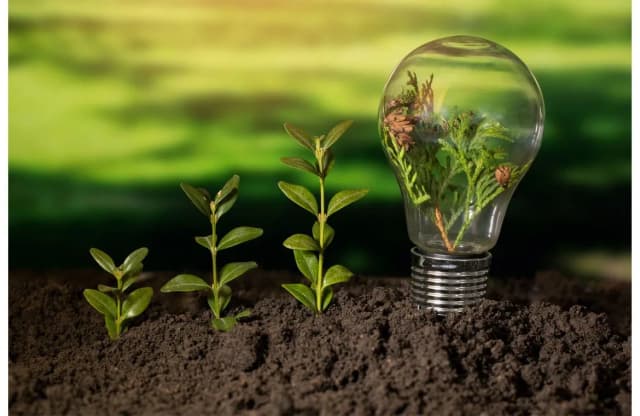
How AI is improving sustainability decision-making?

TL;DR:AI is helping organizations make smarter sustainability decisions by turning complex environmental, operational, and ESG data into actionable insights. From predicting climate risks to optimizing resources and strengthening supply chains, AI is enabling a shift from reactive reporting to proactive decision-making. As a result, sustainability leaders increasingly need strategic, analytical, and technology-driven skills.
Imagine being responsible for reducing emissions, building resilient supply chains, meeting ESG targets, complying with evolving regulations, and maintaining profitability, all at the same time.
This is the reality facing sustainability leaders today.
The challenge is no longer a lack of sustainability data. Organizations now have access to vast amounts of information on carbon emissions, energy consumption, supplier performance, climate risks, resource usage, and regulatory requirements.
The real challenge is turning that information into action.
As sustainability becomes increasingly tied to business performance, leaders are being asked difficult questions:
- Which sustainability initiatives should be prioritized?
- How can environmental impact be reduced without compromising growth?
- Which suppliers pose long-term sustainability risks?
- How can resources be used more efficiently?
- Which investments will create the greatest business and environmental value?
Answering these questions requires more than data. It requires better decision-making.
This is where AI is beginning to play an important role. Rather than simply helping organizations track sustainability metrics, AI is helping them evaluate scenarios, predict outcomes, identify risks, and make smarter business decisions.
Why are sustainability decisions getting harder?
Sustainability has evolved far beyond compliance and reporting.
Today, sustainability influences nearly every aspect of business, including:
- Supply chain operations
- Product development
- Financial planning
- Risk management
- Resource allocation
- Investor relations
- Corporate reputation
At the same time, organizations are navigating growing ESG expectations, stricter disclosure requirements, climate-related disruptions, and increasing pressure from stakeholders.
The challenge isn't that businesses lack information but, the challenge is that they have too much of it.
A single sustainability decision may require leaders to analyze environmental impact, operational feasibility, financial implications, regulatory requirements, and long-term strategic goals simultaneously. Traditional approaches often struggle to process these interconnected variables quickly and effectively.
Also Read: How sustainability influences strategic decision-making?
Why traditional approaches fall short?
Most organizations already collect sustainability data from multiple sources:
- Manufacturing facilities
- Supply chains
- Environmental monitoring systems
- ESG reporting platforms
- Energy management tools
- Climate intelligence platforms
Yet decision-making remains difficult.
| Challenge | Impact |
| Fragmented data systems | Limited visibility across operations |
| Manual reporting processes | Slow decision-making |
| Historical analysis | Reactive responses |
| Large datasets | Missed insights |
| Limited forecasting | Difficulty anticipating future risks |
Traditional sustainability management has largely focused on understanding what has already happened.
Today's leaders need to know what is likely to happen next, they need tools that can help them evaluate trade-offs, simulate outcomes, and make more informed decisions before resources are committed.
How AI is changing the way decisions are made?
The real value of AI is not automation alone, its value lies in helping organizations make better decisions.
AI can process large datasets, identify patterns, generate forecasts, uncover hidden relationships, and model potential outcomes at a scale that would be difficult for humans to achieve manually.
This creates a significant shift in how sustainability is managed.
| Traditional Approach | AI-Driven Approach |
| Reporting past performance | Predicting future outcomes |
| Manual analysis | Automated insights |
| Periodic reviews | Real-time monitoring |
| Reactive actions | Proactive decision-making |
| Limited scenario planning | Predictive modelling |
Instead of simply asking, "What happened?", organizations can increasingly ask:
- What is likely to happen next?
- Which sustainability initiative will create the greatest impact?
- Where are our biggest environmental risks?
- Which supplier relationships need attention?
- How can resources be optimized without affecting performance?
This shift is helping sustainability become a strategic decision-making function rather than a reporting exercise.
A real example: unilever's AI-powered sustainability decisions
One of the strongest examples of AI-enabled sustainability decision-making comes from Unilever's Beauty & Wellbeing factory in Tinsukia, India.
The facility has implemented more than 50 AI-driven initiatives across its end-to-end supply chain. Machine learning-powered planning systems have reduced frozen planning periods from 14 days to just one day, enabling teams to respond faster to changes in demand.
At the same time, AI-powered vision systems have made production-line changeovers 85% faster, improving operational efficiency and enabling shorter production runs.
The site also uses AI-enabled digital twins to test sustainable packaging alternatives before implementing them in production.
What's remarkable is that AI is not simply helping Unilever measure sustainability performance. It is helping teams make better operational and sustainability decisions before taking action.
What we can learn from unilever?
| AI Capability | Sustainability Decision Enabled |
| Machine learning forecasting | Better production planning |
| AI vision systems | Reduced operational inefficiencies |
| Digital twins | Smarter packaging decisions |
| Real-time analytics | Faster response to changing demand |
| Supply chain intelligence | Better resource utilization |
The broader lesson is clear: AI is helping organizations move beyond reporting sustainability outcomes and toward actively shaping them.
Five ways AI is helping sustainability efforts
1. Predicting climate risks
Climate disruptions are becoming more frequent and costly.
AI helps organizations analyze weather patterns, environmental data, and climate scenarios to identify risks before they occur and this allows organizations to prepare for disruptions rather than simply react to them.
2. Building smarter supply chains
Supply chains often represent an organization's largest environmental footprint.
AI can help businesses:
- Identify supplier risks
- Detect emissions hotspots
- Improve procurement decisions
- Increase supply chain visibility
- Optimize inventory and resource planning
The Unilever example demonstrates how AI can simultaneously support sustainability goals and operational performance by helping organizations make faster, more informed supply chain decisions.
3. Using resources more efficiently
Energy, water, and raw material efficiency remain central to sustainability strategies.
AI-powered systems can continuously monitor:
- Energy consumption
- Water usage
- Equipment performance
- Operational efficiency
These insights help organizations identify inefficiencies and make adjustments in real time.
Instead of conducting periodic assessments, businesses can continuously optimize resource use, reducing both costs and environmental impact.
4. Supporting sustainable agriculture
Agriculture faces growing challenges from climate change, water scarcity, and changing weather patterns.
AI is helping organizations make smarter decisions about:
- Crop planning
- Irrigation management
- Yield forecasting
- Resource allocation
- Sustainable sourcing
By combining environmental, climate, and operational data, AI enables more informed agricultural decisions that improve resilience while reducing environmental pressures.
5. Linking sustainability to business strategy
Perhaps AI's most significant contribution is helping organizations connect sustainability with broader business objectives.
Leaders can increasingly use AI-powered insights to answer strategic questions such as:
- Which sustainability initiatives deserve investment?
- Which projects will create measurable impact?
- How do environmental goals support business growth?
- Where are the biggest future risks and opportunities?
This is helping sustainability evolve from a reporting function into a strategic business capability.
The new skills sustainability leaders need
The examples above highlight a fundamental shift.
The sustainability leaders of tomorrow will need far more than environmental expertise.
They will increasingly be expected to:
- Interpret complex datasets
- Understand ESG frameworks
- Evaluate sustainability trade-offs
- Assess financial implications
- Work with AI-enabled insights
- Align sustainability goals with business strategy
In short, sustainability leadership is becoming increasingly interdisciplinary.
Professionals who can combine sustainability knowledge with business understanding, strategic thinking, and technology awareness will be better positioned to drive meaningful impact.
Developing skills for the future of sustainability
Today's sustainability challenges are no longer limited to environmental compliance or ESG reporting. Professionals are increasingly expected to work across multiple business functions and answer questions such as:
- Which sustainability initiatives should be prioritized?
- How can sustainability be integrated into operations and supply chains?
- What role should data and AI play in decision-making?
- How can environmental goals be balanced with financial and operational realities?
- How should organizations measure and communicate ESG performance?
This growing complexity is changing the skills sustainability professionals need.
Beyond understanding environmental issues, leaders are now expected to develop expertise in:
- Sustainability strategy
- ESG frameworks and performance measurement
- Sustainable finance
- Circular economy principles
- Sustainable supply chain management
- Risk, governance, and compliance
- Data-informed decision-making
For professionals looking to develop this broader perspective, structured executive learning can help bridge the gap between sustainability concepts and business application.
The sustainability management course by IIM Mumbai is one example of how professionals can build a multidisciplinary understanding of sustainability. Rather than treating sustainability as a standalone function, the programme explores how sustainability decisions influence business strategy, finance, operations, governance, and supply chains.
The learning experience is particularly relevant in an AI-enabled business environment because it focuses on how sustainability principles can be applied to real organizational challenges. Through case studies and a capstone project, participants examine practical issues related to:
- ESG frameworks and reporting standards
- Sustainable finance and value creation
- Business sustainability management
- Circular economy and resource efficiency
- Supply chain sustainability
- Environmental regulations and governance
- The growing role of analytics and AI in sustainability management
As organizations increasingly seek professionals who can connect environmental priorities with business outcomes, these capabilities are becoming essential for future sustainability leaders.
The programme may be particularly valuable for professionals seeking to:
- Strengthen expertise in sustainable business practices
- Prepare for leadership roles in sustainability initiatives
- Develop practical approaches to implementing sustainable solutions
- Understand sustainability frameworks and industry standards
- Build confidence in managing complex sustainability challenges
Beyond the curriculum, participants become Executive Alumni of IIM Mumbai, gaining access to the institute's wider professional ecosystem through alumni engagement opportunities, institute events, and continued learning and networking opportunities.
The learning experience is further supported by IIM Mumbai faculty, TalentSprint's AI-enabled learning platform, and a network of executive education alumni from diverse industries, creating opportunities to exchange perspectives and learn from real-world experiences.
Ultimately, the programme reflects the reality explored throughout this article: sustainability leadership is becoming increasingly strategic, interdisciplinary, and data-driven. The challenge for professionals is no longer simply understanding sustainability. It is understanding how to make better sustainability decisions in an increasingly complex world.
Conclusion
The future of sustainability will not be defined by how much data organizations collect.
It will be defined by how effectively they use that data to make decisions.
From AI-powered manufacturing and renewable energy forecasting to supply chain optimization and sustainable agriculture, organizations are already using AI to move from reactive sustainability efforts to proactive, data-driven action.
For professionals, this signals an important shift. The most effective sustainability leaders will not simply understand environmental challenges. They will understand how to translate data, technology, ESG principles, and business realities into informed decisions that create long-term value.
Because in the years ahead, sustainability will be less about reporting what happened and more about deciding what happens next.
Frequently Asked Questions
Q1. How Can AI Help Me Make Better Sustainability Decisions?
AI helps sustainability professionals move beyond reporting and compliance by turning large volumes of environmental, operational, and ESG data into actionable insights. It can identify risks, predict outcomes, evaluate trade-offs, and recommend areas for improvement, enabling more informed decisions around resource use, supply chains, investments, and sustainability initiatives.
Q2. Will AI Replace Sustainability Professionals or Help Them Work Better?
AI is more likely to enhance sustainability roles than replace them. While it can automate data analysis and reporting tasks, human expertise remains essential for setting priorities, interpreting insights, balancing stakeholder interests, and making strategic decisions. AI acts as a decision-support tool, allowing professionals to focus on higher-value work.
Q3. What Skills Will Sustainability Leaders Need in an AI-Driven Future?
As AI becomes more integrated into sustainability management, professionals will need a broader mix of skills. Alongside sustainability knowledge, employers increasingly value capabilities in ESG frameworks, data interpretation, sustainable finance, supply chain management, strategic thinking, and technology-enabled decision-making. These skills help professionals translate insights into meaningful business outcomes.
About the Author
TalentSprint
TalentSprint, Part of Accenture LearnVantage, is a global leader in building deep expertise across emerging technologies, leadership, and management areas. With over 15 years of education excellence, TalentSprint designs and delivers high-impact, outcome-driven learning solutions for individuals, institutions, and enterprises. TalentSprint partners with leading enterprises and top-tier academic institutions to co-create industry-relevant learning experiences that drive measurable learning outcomes at scale.
Explore Our Programme

Advance your career with the right program