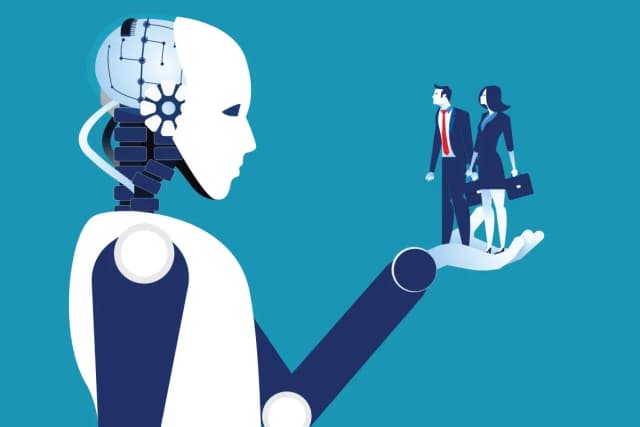
Where artificial intelligence outperforms human intelligence, and where it doesn’t?

Everywhere you look, the narrative is the same: AI is coming for our jobs. And to some extent, it’s understandable. When Netflix predicts what you’ll watch next or Google Maps reroutes you instantly, it’s clear, AI can outperform humans in speed, scale, and precision. In fact, it already exceeds human performance in areas like mathematics, scientific reasoning, and image recognition.
But does that mean AI will replace us? Not quite.
While AI excels at processing data and optimizing outcomes, it cannot truly understand emotions, navigate ethical dilemmas, or interpret real-world context. It can generate answers, but not meaning; recommend decisions, but not own them.
So the real question isn’t whether AI will replace humans, but where it outperforms us, and where it doesn’t. And in that balance lies the truth: AI may transform how we work, but it cannot replace what makes us human.
Also Read: The Surprising Facts: Will AI Replace Human Jobs or Make New Ones?
Understanding the Difference: Artificial vs Human Intelligence
What is Artificial Intelligence?
Artificial Intelligence (AI) refers to systems built by humans that can analyze data, recognize patterns, and make decisions based on algorithms and training data. Tools developed by companies like Google and OpenAI demonstrate how AI can perform tasks such as language generation, image recognition, and predictive analysis at scale.
Key Characteristics:
Data-driven and algorithm-based
Excels at speed, accuracy, and scalability
Learns from large datasets (machine learning)
Performs well in structured, rule-based environments
What is Human Intelligence?
Human intelligence is the natural cognitive ability of humans to think, reason, learn from experience, and adapt to new situations. It goes beyond logic to include emotions, creativity, and ethical judgment.
Key Characteristics:
Emotionally aware and context-driven
Capable of creativity and original thinking
Applies common sense and moral reasoning
Adapts easily to ambiguity and new situations
Aspect | Artificial Intelligence
| Human Intelligence |
Nature | Machine-driven and programmed | Natural and biological |
Learning | Based on data and algorithms | Based on experience and reasoning |
Speed & Scale | Extremely fast and scalable
| Limited by human capacity |
Accuracy | High in structured tasks | Varies, can be influenced by bias
|
Creativity | Limited to existing patterns | Capable of original thinking |
Emotional Intelligence | Absent | Deeply developed |
Decision-Making | Logical and data-driven
| Contextual and intuitive |
Adaptability | Restricted to training data
| Highly flexible and adaptive
|
Consistency | Always consistent | Can vary with context and conditions |
Consciousness | No self-awareness | Self-aware and conscious
|
Where Artificial Intelligence Outperforms Human Intelligence?
While human intelligence brings context, creativity, and judgment, artificial intelligence dominates in environments that demand speed, scale, accuracy, and consistency. These are not just incremental advantages, AI fundamentally changes what’s possible in how work gets done.
1. Speed and Data Processing at Scale
AI’s biggest advantage lies in its ability to process vast amounts of data at extraordinary speed. What would take humans days to analyze, AI can do in seconds, without fatigue or loss of accuracy.
In today’s data-driven world, this capability is critical. Organisations generate enormous volumes of structured and unstructured data, and extracting meaningful insights from it manually is nearly impossible.
Example: Google Search indexes billions of web pages and delivers relevant results in milliseconds, something no human could replicate.
Extended Insight: This speed doesn’t just improve efficiency, it enables real-time decision-making, something humans alone cannot achieve at scale.
2. Pattern Recognition and Predictive Accuracy
AI excels at identifying patterns that are too complex or subtle for humans to detect. By learning from historical data, it can make highly accurate predictions and recommendations.
Unlike humans, who rely on intuition and limited observation, AI can process thousands of variables simultaneously, uncovering correlations that would otherwise go unnoticed.
Example: In healthcare, AI models analyze medical images to detect early signs of diseases like cancer with high accuracy.
Platforms like Netflix and Amazon use AI to predict user preferences and deliver personalized experiences at scale.
Extended Insight: This makes AI especially powerful in forecasting, personalization, and risk assessment, where data patterns drive outcomes.
3. Repetitive and Rule-Based Tasks
AI is highly effective at automating tasks that follow clear rules and require repetition. Unlike humans, it does not experience boredom, fatigue, or inconsistency.
This allows organisations to free up human effort from mundane tasks and redirect it toward higher-value work.
Example: Amazon uses AI-powered robots in warehouses to automate sorting, packaging, and logistics.
Automation tools streamline processes like data entry, invoice processing, and report generation.
Extended Insight: The real value here is not just automation, but productivity transformation, AI enables humans to focus on strategic, creative, and decision-driven roles.
4. Precision and Error Reduction
In high-stakes environments, even small errors can have significant consequences. AI systems, when properly trained, can execute tasks with a high degree of precision and consistency.
Humans, on the other hand, are prone to errors due to fatigue, bias, or oversight, especially in repetitive or complex scenarios.
Example: In manufacturing, AI-powered quality control systems can detect defects at a microscopic level, ensuring consistent product standards.
In industries like aviation and healthcare, AI assists in minimizing risks by flagging anomalies early.
Extended Insight: This makes AI indispensable in risk-sensitive and compliance-heavy industries, where accuracy is critical.
5. 24/7 Availability and Scalability
Unlike humans, AI systems do not need rest. They can operate continuously, delivering consistent performance regardless of time, workload, or scale.
This capability is especially valuable in global, digital-first environments where customer expectations are always “on.”
Example: Google Assistant and Amazon Alexa provide round-the-clock assistance without downtime.
Businesses can scale operations, whether it’s handling customer queries or processing transactions, without proportionally increasing human resources.
Extended Insight: AI enables seamless scalability, allowing organisations to grow without the traditional constraints of time and workforce capacity.
Where human Intelligence still outperforms AI?
While AI dominates in structured, data-driven environments, human intelligence leads in areas that require creativity, empathy, ethics, and adaptability.
1. Creativity and Original Thinking
AI can generate content, designs, and ideas, but it does so by recombining existing patterns. Humans, on the other hand, create something truly new.
Example: While AI can suggest movie scripts or music, it cannot replicate the originality behind groundbreaking storytelling or artistic expression. Platforms like Netflix may use AI for recommendations, but the stories themselves are driven by human creativity.
Why humans win: Creativity involves imagination, intent, and cultural context, things AI cannot genuinely possess.
2. Emotional Intelligence and Empathy
AI can detect emotions through data, but it cannot feel or genuinely understand them.
Example: In healthcare or counseling, while AI may assist with diagnosis or analysis, it is the human professional who builds trust, shows empathy, and connects with patients on an emotional level.
Why humans win: Relationships, trust, and communication are deeply human experiences that go beyond logic.
3. Ethical Judgment and Decision-Making
AI operates based on data and predefined rules, but it cannot make moral or ethical decisions in complex, real-world scenarios.
Example: In situations like medical decisions, legal judgments, or business dilemmas, humans must weigh consequences, values, and societal impact, something AI cannot inherently do.
Why humans win: Ethics require accountability, values, and context, not just computation.
4. Contextual Understanding and Common Sense
AI often struggles with nuance, ambiguity, and real-world context, especially in unfamiliar situations.
Example: Google Search can provide information, but interpreting that information correctly in a specific context still depends on human understanding.
Why humans win: Humans can read between the lines, understand intent, and adapt meaning based on context.
5. Adaptability in Unpredictable Environments
Humans can respond to entirely new situations without prior data, while AI depends heavily on what it has been trained on.
Example: In crisis situations or rapidly changing environments, humans can improvise, make decisions with limited information, and adapt quickly.
Why humans win: Flexibility and intuition allow humans to operate effectively even in uncertainty.
Also Read: What are the human skills beating AI and making you irreplaceable?
What happens when humans and AI work together?
The real transformation doesn’t come from AI replacing humans, it comes from collaboration. When human intelligence and artificial intelligence work together, they create something far more powerful than either could achieve alone: augmented intelligence.
1. Better Decision-Making, Faster and Smarter
AI can process vast amounts of data and surface insights in seconds, while humans apply judgment, context, and experience to make the final call.
2. Enhanced Productivity and Efficiency
AI takes over repetitive and time-consuming tasks, allowing humans to focus on strategic, creative, and high-impact work.
3. Smarter Creativity and Innovation
AI can generate ideas, analyze trends, and provide inspiration, while humans refine, contextualize, and bring originality.
4. Reduced Errors with Human Oversight
AI improves accuracy and consistency, while humans ensure quality, ethics, and accountability.
5. Scalable Yet Human-Centric Experiences
AI enables businesses to scale operations globally, while humans ensure personalization and empathy.
Striking the right balance: how structured learning bridges human and AI intelligence
If the future belongs to those who can combine human intelligence with AI, then the real question becomes, how do you actually build that balance?
It doesn’t happen by simply using AI tools or understanding theory. It requires structured, intentional learning that helps individuals not just use AI, but think with it.
This is where AI Infinity by TalentSprint works as a framework for building equilibrium between human and artificial intelligence.
Moving from Awareness to Application
One of the biggest gaps today is that while AI awareness is high, real capability is low, only a small percentage of professionals feel confident using AI effectively.
Structured learning bridges this gap by focusing on:
Not just what AI is, but how to apply it in real work scenarios
Turning passive knowledge into active, outcome-driven skills
Learning both sides: Functional and Technical thinking
The program is designed with two distinct tracks:
Functional track: for non-technical professionals to use AI effectively
Technical track: for building and deploying AI systems
Hands-on learning, not just theory
The program includes:
40 hours of guided learning
Exposure to 20+ AI tools (like ChatGPT, Copilot, Gemini)
12 real-world projects across industries
How this creates balance:
AI handles execution
Humans learn when, why, and how to use it
This shifts professionals from:
“Using AI occasionally” to “Working with AI strategically”
Building human skills alongside AI skills
What makes the program stand out is that it doesn’t just teach tools, it also emphasizes:
Responsible and ethical AI
Decision-making with AI insights
Understanding business context and real-world use cases
Hence, AI without human judgment creates risk.
Human intelligence without AI creates limitations.
Balance happens when both evolve together.
So, it follows a real business context which is learning by doing
With projects like:
AI-powered customer support systems
Financial insight assistants
Marketing and HR automation tools
Learners don’t just understand AI, they see how it integrates into real workflows.
Which will turn into outcomes which will help in:
Better decision-making
Smarter automation
Clear understanding of where AI should lead, and where humans should step in
Continuous learning for an evolving landscape
With 1-year access to updated content and tools, the learning doesn’t stop after completion.
Therefore, AI is evolving rapidly, and so should human skills.
Because balance is not a one-time achievement. It’s a continuous process.
Conclusion
Artificial intelligence has undoubtedly redefined what machines can achieve, outperforming humans in speed, scale, accuracy, and data-driven tasks. But intelligence is not just about processing power. It’s also about understanding, creativity, empathy, and judgment, areas where human intelligence continues to lead.
The real value, therefore, does not lie in choosing between humans and AI, but in understanding where each excels. AI can enhance efficiency and unlock insights, while humans bring meaning and direction to those outcomes.
As the boundaries between human and artificial intelligence continue to evolve, the future will belong to those who can leverage both effectively. Because in the end, AI may change how we work, but it cannot replace what makes us human.
Frequently Asked Questions
Q1. In which areas does artificial intelligence outperform human intelligence?
Artificial intelligence outperforms humans in tasks involving large-scale data processing, pattern recognition, and repetitive operations. It can analyze massive datasets quickly, detect anomalies with precision, and operate continuously without fatigue, making it highly effective in industries like finance, healthcare, and logistics.
Q2. Where does human intelligence still have an advantage over AI?
Human intelligence excels in creativity, emotional understanding, ethical reasoning, and complex decision-making. Humans can interpret context, handle ambiguity, and make value-based judgments, which AI cannot fully replicate, especially in dynamic, real-world scenarios that require empathy and nuanced thinking.
Q3. Can AI replace human intelligence completely in the future?
AI is unlikely to fully replace human intelligence because it lacks consciousness, emotions, and true understanding. While it can automate tasks and enhance efficiency, it still depends on human input, oversight, and decision-making, especially in complex and unpredictable environments.
Q4. How do AI and human intelligence complement each other in the workplace?
AI and human intelligence work best together, AI handles data-driven, repetitive tasks, while humans focus on strategy, creativity, and decision-making. This collaboration improves productivity, reduces errors, and enables organisations to achieve better outcomes by combining speed with contextual understanding.
Q5. Why is it important to understand the difference between AI and human intelligence?
Understanding the differences helps individuals and organisations use AI effectively without over-relying on it. It enables better decision-making, clearer role definition, and smarter adoption strategies, ensuring that human strengths are leveraged alongside AI capabilities for maximum impact.
About the Author
TalentSprint
TalentSprint, Part of Accenture LearnVantage, is a global leader in building deep expertise across emerging technologies, leadership, and management areas. With over 15 years of education excellence, TalentSprint designs and delivers high-impact, outcome-driven learning solutions for individuals, institutions, and enterprises. TalentSprint partners with leading enterprises and top-tier academic institutions to co-create industry-relevant learning experiences that drive measurable learning outcomes at scale.
Advance your career with the right program