No math in 12th? You can still build a career in computer Science

For many students, not choosing Math in Class 12 feels like closing the door to computer science.
But what if that door is not actually closed?
The truth is, technology careers today are evolving fast. While math still matters in some specialised fields, many tech roles now value practical learning, problem-solving, and adaptability just as much.
Is math still necessary for a career in computer science?
The honest answer? It depends on the path you choose.
Yes, some advanced domains in computer science may involve mathematical concepts. Areas such as advanced machine learning, research-based computing, or data modelling may require stronger mathematical foundations.
But modern computer science has expanded far beyond traditional expectations.
Today, many technology careers focus more on:
Logical thinking
Problem-solving skills
Creativity and innovation
Practical application of technology
Curiosity and continuous learning
Think about it this way.
When developers build websites or applications, cybersecurity professionals protect systems, or UI/UX designers improve digital experiences, much of the work revolves around solving real-world problems , not solving equations.
That is why more students from biology and non-math backgrounds are now exploring technology careers with confidence.
Because computer science today is increasingly about building solutions, not just mastering mathematics.
Also Read: From Biology to Technology: how NEET aspirants can enter computer science
Then why do so many students still feel stuck?
If opportunities are growing, why do many students without Math in Class 12 still hesitate?
The answer is simple: The problem is often not capability, it is uncertainty.
For beginners, computer science can feel overwhelming.
You search online and suddenly find thousands of tutorials, coding videos, certifications, and conflicting advice. Everyone seems to recommend a different programming language. Technical terms sound unfamiliar. Career paths feel confusing.
Questions start piling up:
Where do I even begin?
What skills actually matter?
Am I already behind because I did not study maths?
As a result, many students spend more time doubting themselves than actually starting.
And this is where the real challenge appears.
The real challenge isn’t math, it’s finding the right learning path
Many students assume success in computer science depends entirely on prior knowledge.
But for beginners, success often depends more on structure than background.
Learning computer science through random online videos may feel exciting at first. But without direction, confusion quickly follows.
Students often end up:
Jumping between disconnected tutorials
Learning concepts without understanding applications
Losing confidence midway
Feeling unsure about career outcomes
What most beginners actually need is a clear roadmap, one that starts with basics, builds confidence gradually, and connects learning to real-world careers.
Because technology is easier to learn when someone helps you understand why you are learning something, not just what to learn.
What does the right learning path look like?
A strong technology foundation usually starts small.
Instead of rushing into advanced topics, beginners should first build confidence through:
Strong Fundamentals
Learning concepts like computational thinking, programming basics, logical reasoning, and problem-solving helps students understand how technology works step by step.
Practical Learning
Computer science is not something you learn only through theory.
Writing code, building projects, solving problems, and experimenting with tools often build confidence much faster than simply watching tutorials.
Real-World Exposure
Understanding how technology is applied in actual industries helps students make better career decisions.
For example:
How are AI tools used in businesses?
What does a cybersecurity role actually involve?
How do developers build digital products?
This practical understanding makes learning feel more meaningful.
This is exactly where structured programs can make a meaningful difference.
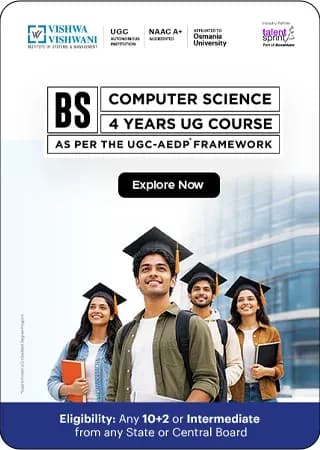
The BS in Computer Science by VVISM Hyderabad, delivered in collaboration with TalentSprint part of Accenture, is designed to help students build technology skills gradually, even if they come from non-math or non-technical backgrounds.
Instead of expecting students to already know coding, the program focuses on building foundations through areas like computational thinking, Python programming, IT fundamentals, logic building, and problem-solving.
Students also learn through coding labs, projects, assignments, and capstone experiences that make learning practical rather than purely theoretical.
As confidence grows, students can explore fast-growing domains such as Artificial Intelligence, Cybersecurity, Data Science, Full Stack Development, Cloud Computing, and UI/UX Design.
The program’s Apprenticeship Embedded Degree Program (AEDP) model also gives students early exposure to industry environments, mentorship, and career-focused learning while they study.
Also Read: What Is a BS in Computer Science Degree? Everything Students and Parents Should Know
Final Thoughts
Not having Math in Class 12 may shape where you begin, but it does not define where you can go.
Technology careers today are opening doors for students from different academic backgrounds, especially those willing to learn, practice, and stay curious.
The real question is no longer: “Can I build a career in computer science without math?”
Frequently Asked Questions
Q1. Can I pursue computer science without Maths in Class 12?
Yes, depending on the programme and institution. While some traditional engineering routes require Mathematics, several computer science degree programs now accept students from non Maths backgrounds and focus on foundational learning to help them transition smoothly into technology.
Q2. Will I struggle in computer science if I did not study Maths in 12th?
Not necessarily. Many computer science careers focus more on logic, problem solving, programming, and practical skills. Some concepts involve basic mathematics, but structured programs often teach these fundamentals gradually for students from different academic backgrounds.
Q3. What computer science careers can I explore without a Maths background?
Students can explore careers in software development, UI and UX design, cybersecurity, data analysis, product management, technical support, and digital technologies. Many roles prioritise coding, creativity, logical thinking, and practical experience over advanced mathematics.
Q4. How can non Maths students prepare for a career in computer science?
Students can begin with beginner friendly coding courses, logical reasoning exercises, and hands on projects. Choosing a programme that offers foundational support, practical learning, mentorship, and industry exposure can also make the transition easier into technology.
About the Author
TalentSprint
TalentSprint, Part of Accenture LearnVantage, is a global leader in building deep expertise across emerging technologies, leadership, and management areas. With over 15 years of education excellence, TalentSprint designs and delivers high-impact, outcome-driven learning solutions for individuals, institutions, and enterprises. TalentSprint partners with leading enterprises and top-tier academic institutions to co-create industry-relevant learning experiences that drive measurable learning outcomes at scale.
Explore Our Programme
Advance your career with the right program