Careers Beyond Engineering and Medicine: What’s Next?

TL;DR:Engineering and medicine remain valuable career paths, but they are no longer the only routes to success. Emerging opportunities in business, analytics, sustainability, digital marketing, product management, and entrepreneurship are creating new possibilities. Students who build adaptable, technology-aware, and future-focused skills will be better prepared for tomorrow's workforce.
For generations, career conversations in Indian households have followed a familiar pattern. A student performs well academically, chooses either engineering or medicine, earns a degree, and builds a stable career. While these professions continue to be respected and rewarding, the world of work is changing faster than ever before.
Artificial intelligence, digital transformation, sustainability initiatives, data-driven decision-making, and the rapid growth of new industries are reshaping how organizations operate. As a result, students today have access to career opportunities that barely existed a decade ago.
This shift raises an important question, “If the future workplace is changing, what careers should students be exploring beyond engineering and medicine?”
The answer begins with understanding what makes a career truly future-proof.
What does a future-proof career really mean?
Many people assume a future-proof career is one that cannot be affected by technology or change. In reality, no career is completely immune to disruption.
A future-proof career is one that evolves alongside change and continues to create value because it relies on skills that remain relevant across industries.
These careers typically share a few characteristics:
- They require critical thinking and problem-solving.
- They combine human judgment with technology.
- They encourage continuous learning and adaptability.
- They involve collaboration, communication, and leadership.
- They help solve real-world business, social, or technological challenges.
The workplace is shifting from degree-based employability to skill-based employability.
| Traditional View | Future-Ready View |
| Choose one profession for life | Build skills that adapt across careers |
| Degree determines success | Skills determine opportunities |
| Technical expertise alone matters | Human and technical skills matter |
| Learning ends after graduation | Learning continues throughout a career |
As this mindset evolves, students are beginning to explore a broader range of career possibilities.
Why more students are looking beyond engineering and medicine?
The growing interest in alternative career paths is not because engineering and medicine are becoming less important. It is because the economy itself is becoming more diverse.
Today, organizations need professionals who can:
- Understand customer behavior
- Analyze data
- Lead digital transformation
- Build products and services
- Solve sustainability challenges
- Work with AI-powered technologies
- Drive business growth
This has created opportunities at the intersection of business, technology, creativity, and innovation.
Increasingly, careers are no longer built within a single discipline.
Today's professionals often combine:
- Business + AI
- Design + Technology
- Sustainability + Management
- Data + Decision-Making
- Psychology + Consumer Insights
This convergence of skills is creating entirely new career opportunities for the next generation.
7 Future-Proof Career Paths Worth Exploring
1. Business and management careers
Modern businesses need professionals who can connect strategy, operations, technology, and customer needs.
Popular career paths include:
- Product Manager
- Business Analyst
- Strategy Consultant
- Growth Manager
- Innovation Manager
Why these careers are future-ready
- They require human judgment and decision-making.
- They exist across industries.
- They adapt easily to technological change.
- They combine analytical and leadership skills.
Also Read: Why are more students exploring management careers after class 12?
2. Data and analytics careers
Organizations generate enormous volumes of data every day. However, data only becomes valuable when someone can interpret it and transform it into meaningful decisions.
Career opportunities include:
- Data Analyst
- Business Intelligence Analyst
- Analytics Consultant
- Data Visualization Specialist
Skills that matter
- Analytical thinking
- Statistics
- Data interpretation
- Communication and storytelling
As businesses increasingly rely on evidence-based decisions, professionals who can work with data are becoming essential.
3. Digital marketing and customer experience careers
Every organization needs customers. In today's digital-first world, understanding how customers discover, evaluate, and engage with brands has become a highly valuable skill.
Career options include:
- Digital Marketing Specialist
- SEO Analyst
- Performance Marketer
- Customer Experience Manager
- Brand Strategist
These careers combine creativity, technology, analytics, and consumer psychology, making them highly adaptable to future workplace trends.
Also read: AI-Enabled Marketing: Driving Customer Growth Through Personalisation at Scale
4. Sustainability and environmental careers
Climate change, responsible business practices, and environmental regulations are encouraging organizations to rethink how they operate.
This is creating demand for professionals who can balance business objectives with environmental responsibility.
Emerging career paths include:
- Sustainability Consultant
- ESG Analyst
- Renewable Energy Specialist
- Circular Economy Strategist
- Sustainable Supply Chain Manager
As sustainability becomes a business priority rather than a standalone initiative, opportunities in this space are expected to continue growing.
Also Read: What Is the Role of Sustainability in Reshaping Careers in India? A Guide for 2026
5. Technology-enabled business careers
Not every student interested in technology wants to become an engineer.
Many organizations need professionals who understand technology well enough to apply it to business challenges. Roles such as AI Business Strategists, Digital Transformation Consultants, and business technology professionals demonstrate how organizations increasingly need people who can connect technological possibilities with business outcomes. Beyond marketing and finance.docx discusses this growing demand for professionals who combine business understanding with technology and innovation.
Career options include:
- Digital Transformation Consultant
- Technology Analyst
- AI Business Strategist
- Business Technology Consultant
- Innovation Specialist
These careers focus on helping organizations use technology more effectively rather than building the technology itself.
6. Design and user experience careers
Technology is becoming increasingly sophisticated. Yet, people still expect products and services to be simple and intuitive.
This creates opportunities for professionals who can improve how people interact with technology.
Career options include:
- UX Designer
- Interaction Designer
- Service Designer
- Human-AI Experience Designer
Organizations increasingly value professionals who can create user-centered experiences across digital products and services.
7. Entrepreneurship and startup careers
Today's students have more opportunities than ever to create businesses, launch digital ventures, or build personal brands.
The rise of:
- E-commerce
- Creator platforms
- AI tools
- Digital communities
- Startup ecosystems
has reduced many traditional barriers to entrepreneurship.
Even students who do not plan to start a company can benefit from entrepreneurial thinking, as organizations increasingly value initiative, creativity, and innovation.
The skills that matter more than any job title
Although these career paths appear different, they are built on a common set of capabilities.
| Human Skills | Future Skills |
| Communication | AI Literacy |
| Critical Thinking | Data Analysis |
| Collaboration | Digital Fluency |
| Leadership | Technology Awareness |
| Adaptability | Problem Solving |
Workforce trends increasingly show that employers value professionals who can combine human capabilities with technological understanding. Beyond marketing and finance.docx highlights communication, problem-solving, leadership, adaptability, decision-making, and AI awareness as increasingly valuable capabilities for future workplaces, while Thinking about a career change.docx emphasizes the growing importance of digital fluency and data-driven decision-making.
In many cases, these skills will have a greater impact on long-term career success than a specific job title.
How students can choose the right career path?
With so many options available, choosing a career can feel overwhelming.
Instead of focusing only on job titles, students can start by asking:
- What kinds of problems do I enjoy solving?
- Do I enjoy working with people, data, technology, or ideas?
- Which industries excite me the most?
- What skills will remain valuable in a changing world?
- How can I build flexibility into my career journey?
The goal is not to predict the future perfectly.
The goal is to develop skills that allow you to adapt as opportunities evolve.
Preparing for careers that are still evolving
One of the biggest challenges students face today is preparing for jobs that may look very different by the time they graduate.
As industries continue to evolve, career success is becoming less about choosing a single profession and more about building a versatile set of skills. Business understanding, digital fluency, critical thinking, and adaptability are now valuable across a wide range of career paths.
This is one reason why higher education itself is evolving.
Traditional degree programmes were often built around clearly defined career paths. Today's learners, however, need an education that prepares them for a world shaped by artificial intelligence, digital business models, automation, and continuous innovation.
As a result, a new generation of undergraduate programmes is emerging that combines academic foundations with real-world industry exposure.
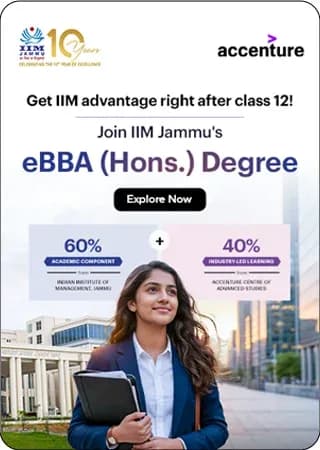
For example, the online BBA by IIM Jammu has been designed around the idea that future careers will require more than business knowledge alone. Developed through an industry-academia partnership between Indian Institute of Management Jammu and Accenture Centre of Advanced Studies, the programme seeks to bring together academic rigor and workplace relevance.
What makes this approach relevant for future careers?
The programme follows a 60% academic and 40% industry learning model, helping students connect classroom learning with real-world business challenges.
Academic learning focuses on:
- Live online classes with IIM Jammu faculty
- Research-driven pedagogy
- Case-study-based learning
- A future-focused business curriculum
Industry learning focuses on:
- Sessions with industry experts
- Hands-on labs and simulations
- Real-world business projects
- Internship opportunities
- Career readiness training
Learning for an AI-driven business world
The workplace of the future will reward professionals who can work across business and technology rather than operate within a single silo. To reflect this shift, students gain exposure to areas such as:
- Artificial Intelligence
- Generative AI
- Data Analytics
- Cloud Technologies
- Digital Transformation
- AI-powered Business Applications
This exposure helps students understand how emerging technologies are influencing business decisions, customer experiences, operations, and innovation across industries.
Why does this matter?
Whether students eventually pursue careers in:
- Business and Management
- Product Management
- Business Analytics
- Digital Marketing
- Consulting
- Entrepreneurship
- Technology-enabled business roles
they will increasingly be expected to combine analytical thinking, business understanding, technological awareness, and problem-solving skills.
Programmes designed around this interdisciplinary approach aim to prepare students for that reality. By bringing together management education, future-focused technology exposure, practical learning experiences, internships, and industry engagement, they help build capabilities that remain relevant even as career opportunities continue to evolve.
In many ways, this reflects the broader shift taking place across industries. Employers are no longer looking only for graduates with theoretical knowledge. They increasingly seek professionals who can adapt, learn continuously, and apply their knowledge to real-world challenges.
Conclusion
Engineering and medicine will continue to be among the world's most respected and impactful professions.
But they are no longer the only pathways to meaningful, successful, and future-ready careers.
The next decade will create opportunities across business, analytics, sustainability, digital marketing, product management, entrepreneurship, and many other emerging fields.
Students who focus on developing adaptable skills, embracing technology, and continuously learning will be better positioned for success regardless of how the job market evolves.
Because ultimately, the most future-proof career is not a specific profession.
It is the ability to learn, adapt, and create value in a changing world.
Frequently Asked Questions
Q1. What are some future-proof careers beyond engineering and medicine?
Future-proof careers extend across business management, data analytics, digital marketing, sustainability, product management, entrepreneurship, and technology-enabled consulting. These fields continue to grow because they combine human judgment, problem-solving, technology adoption, and adaptability, which are increasingly valuable across industries.
Q2. Why are students exploring careers outside traditional professional degrees?
Students today are witnessing rapid changes driven by AI, digital transformation, and evolving business models. As industries create new roles and opportunities, many students are looking for career paths that offer flexibility, transferable skills, and opportunities across multiple sectors rather than a single profession.
Q3. What makes a career future-proof?
A future-proof career is built on skills that remain relevant despite technological and industry changes. Critical thinking, communication, leadership, digital literacy, problem-solving, adaptability, and the ability to work alongside emerging technologies are among the most valuable long-term career assets.
About the Author
TalentSprint
TalentSprint, Part of Accenture LearnVantage, is a global leader in building deep expertise across emerging technologies, leadership, and management areas. With over 15 years of education excellence, TalentSprint designs and delivers high-impact, outcome-driven learning solutions for individuals, institutions, and enterprises. TalentSprint partners with leading enterprises and top-tier academic institutions to co-create industry-relevant learning experiences that drive measurable learning outcomes at scale.
Explore Our Programme
Advance your career with the right program