What is industry-integrated education?

After Class 12, choosing a degree can feel overwhelming.
Students are trying to figure out what interests them, what career makes sense, and what might actually help them build a good future. Parents, meanwhile, are thinking about something just as important,“Will this degree actually help my child become career ready?”
And honestly, that is a valid question.
Because today, getting a degree and feeling confident about a career are not always the same thing.
Many students do well in college, score good marks, and complete their degrees successfully. But when internships, interviews, or first jobs begin, a common realisation kicks in that studying something and actually knowing how to apply it are two very different things.
And that is exactly why more students and parents are start to explore industry-integrated education.
But what does it actually mean? And why are more students choosing it after 12th?
So, what exactly is industry-integrated education?
Industry-integrated education combines classroom learning with real-world industry exposure throughout the degree.
Instead of studying for three or four years and only then figuring out how jobs work, students begin understanding the workplace while they are still learning.
This could include:
real-world projects
business case studies
internships
sessions with industry experts
hands-on learning and simulations
so, Instead of only learning theory, students also begin learning how work actually happens.
The goal is not just to help students earn a degree, It is to help them feel more prepared and confident about their careers before graduation.
Also Read: How Industry collaboration is changing education?
Why are more students looking beyond traditional Degrees?
Even though Traditional learning still matters but, the workplace has changed faster than many learning models.
Think about how jobs work today.
Marketing teams use data and AI tools to understand customer behaviour.
Finance professionals rely on analytics and digital systems to make decisions.
HR teams increasingly use technology for hiring and workforce management.
This means employers are increasingly looking for people who can:
Think practically
Solve real problems
Work with tools and technology
Adapt quickly
Communicate clearly
And this is where many students begin to feel the gap.
Traditional learning vs Industry-integrated learning
A simple way to understand industry-integrated education is to compare it with how traditional learning usually works.
In many traditional degree programs, students spend most of their time learning concepts in classrooms, attending lectures, preparing for exams, and only later figuring out how workplaces actually function.
Industry-integrated learning takes a different approach.
Instead of waiting until graduation to understand jobs, students begin connecting classroom concepts with real-world work much earlier.
Comparison Table
Feature | Traditional BBA | Industry-Integrated |
Learning Approach | Theory-heavy learning with limited practical exposure | Application-led learning with real-world exposure from day one |
Industry Integration | Occasional guest lectures | built-in industry integration through projects, labs, and internships |
Curriculum Design | Standard academic curriculum | Curriculum co-designed with premium institutes and industries |
Classroom Experience | Mostly lectures and exams | Live interactive learning with faculty + industry experts |
Real-World Exposure | Starts late (mostly internships) | Continuous exposure through projects, simulations, and case studies |
Tools & Technology Exposure | Limited or theoretical | Hands-on learning with real tools, platforms, and simulations |
Skill Development | Focus on concepts and theory | Focus on job-ready skills, decision-making, and application |
Career Readiness | Preparation starts closer to graduation | Structured training in resumes, communication, aptitude, and interviews throughout |
Industry Interaction | Minimal and occasional | Regular sessions with working professionals and practitioners |
Learning Format | Traditional classroom or campus-based | Blended learning with flexible access and real-world integration |
Outcome | Degree-focused learning | Degree + skills + real-world readiness |
Also Read: Traditional BBA vs Industry-Integrated Online BBA: Learn the Difference
Why this matters more today?
One of the biggest concerns students have after 12th is simple,“Will this degree actually help me build a good career?”
Parents ask the same question too.
Because nobody wants students to spend years studying and still feel unsure about what comes next.
The reality is, Careers today are changing quickly.
Companies increasingly value people who can:
solve problems
think practically
understand technology
communicate effectively
work in teams
adapt to changing environments
In simple words, what students know still matters. But today, how well they can apply what they know matters just as much.
And that is one reason why industry-integrated learning is becoming more relevant.
So, what does a career-ready degree actually look like?
Some newer programs are already designed around this changing reality.
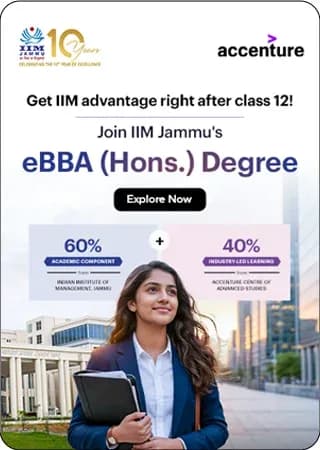
One example is the industry-integrated online BBA by IIM Jammu, developed in collaboration with the Accenture Centre of Advanced Studies (ACoAS).
What makes this program different is that it tries to solve one of the biggest concerns students have,“Will I actually feel ready for a career after graduation?”
Rather than treating academics and workplace learning separately, the program combines both from the beginning.
In many ways, it reflects what industry-integrated education is trying to achieve.
A different way of learning
The program follows a 60% academic and 40% industry-integrated learning model.
What this means is simple, Students continue building strong business fundamentals through IIM Jammu faculty, while also learning how those concepts work in real business environments through industry-led exposure.
Learning includes:
live online sessions with IIM Jammu faculty
hands-on labs and simulations
real business case studies
industry mentored live projects
sessions with industry professionals
self-paced learning for flexibility
annual campus visits to IIM Jammu
So instead of only studying business,
students gradually begin understanding how business actually works.
Learning business in an AI-driven world
Business today increasingly depends on technology.
That is why students are also introduced to areas such as:
Data and AI
Cloud and AI
digital infrastructure
AI enabled business applications
The idea is not to turn students into technical experts.
It is to help future business professionals feel comfortable in workplaces where business and technology increasingly work together.
Building career readiness early
Perhaps one of the biggest differences is students begin preparing for careers early.
Instead of waiting until graduation, they gain exposure through:
industry internships
live projects
industry mentoring
practical business exposure
Career readiness support is also built into the experience through:
resume building sessions
communication training
aptitude preparation
LinkedIn profile creation
personalized mock interviews
career readiness reports
Students also gain access to opportunities connected with 700+ global recruiters, helping create stronger pathways between education and employability.
Alongside this, students graduate with an online BBA degree and alumni status from IIM Jammuj, adding long term value to their professional journey.
Final thoughts: choosing a degree is also choosing how you learn
Today, success is not only about what students study. It is also about how they learn and how early they begin understanding the real world of work.
Industry-integrated education is not replacing traditional learning. It is simply helping students connect classroom knowledge with practical experience much earlier.
And in a world where careers are changing quickly, that extra confidence can make all the difference.
Frequently Asked Questions
Q1. What is industry integrated education?
Industry integrated education combines academic learning with practical industry exposure. Students learn through real business projects, internships, workshops, and mentorship from professionals. The goal is to help students build workplace skills alongside theoretical knowledge from the beginning of their degree.
Q2. Why are more students choosing industry integrated education after Class 12?
Many students are choosing industry integrated education because they want career focused learning and better job readiness. Traditional education often focuses heavily on theory, while industry integrated programs help students gain practical exposure, professional skills, and confidence for workplaces.
Q3. How is industry integrated education different from regular degree programs?
Regular degree programs mainly focus on classroom learning and academic concepts. Industry integrated education combines academics with practical experiences such as internships, live projects, industry mentorship, and career readiness support, helping students understand how workplaces actually function
About the Author
TalentSprint
TalentSprint, Part of Accenture LearnVantage, is a global leader in building deep expertise across emerging technologies, leadership, and management areas. With over 15 years of education excellence, TalentSprint designs and delivers high-impact, outcome-driven learning solutions for individuals, institutions, and enterprises. TalentSprint partners with leading enterprises and top-tier academic institutions to co-create industry-relevant learning experiences that drive measurable learning outcomes at scale.
Explore our Programme
Advance your career with the right program