Job-ready skills every business student needs

If you’re choosing business studies after Class 12, your thought process usually sounds like this:
“I like marketing… maybe business is for me.”
“I want to start something of my own someday.”
“Business feels flexible, corporate jobs, MBA later, entrepreneurship… lots of options.”
And then the “advice season” begins.
Parents, relatives, neighbours, even random uncles at family functions, everyone has a take:
“Choose the right college.”
“Pick a degree with scope.”
“BBA is good, but which one?”
“Look at subjects… look at fees… look at placements.”
They’ll discuss everything, college brand, degree name, subjects, duration.
But here’s what usually gets missed in all that noise, "What skills will you actually graduate with?"
Because in the real world, your first job (and your growth after that) depends less on what you studied… and more on what you can do with what you studied. Employers consistently look for evidence of skills like problem-solving, teamwork, and communication, not just a degree title on paper.
So let’s make this simple: if you’re a business student, what are the skills that actually make you job-ready, and how do you build them during your degree?
So, what does being “job-ready” mean for a business student?
Being job-ready doesn’t mean you know every definition from your textbook.
It means you can:
understand a real business situation,
break it down,
communicate your thinking clearly,
work with others,
and use tools that businesses actually use.
The job-ready skills every business student needs
1) Problem-solving and critical thinking
In college, questions come with answers.
In jobs, problems come with pressure.
In business roles, you’ll hear questions like:
“Why are sales dropping?”
“Why is this campaign not working?”
“What should we do next quarter?”
This is why employer surveys highlight problem-solving as one of the most important skills recruiters look for in graduates.
2) Communication
Business is communication, presentations, emails, pitching, meetings, negotiations.
A lot of students assume communication is a “soft skill” that comes automatically. It doesn’t. It’s built through practice, speaking, writing, presenting, and getting feedback.
Employers actively look for written and verbal communication in graduates because it directly affects workplace performance.
3) Teamwork and collaboration
In real companies, you don’t work “in one department” forever. Marketing works with sales. Sales works with ops. Ops works with finance. Everyone works with everyone.
Teamwork is a top hiring signal because employers want people who can collaborate, manage conflicts, and deliver with others.
4) Digital & data awareness
Business today isn’t just:
marketing
finance
HR
operations
It’s all of that plus data, digital tools, and technology-driven decisions.
Even entry-level roles now expect comfort with dashboards, digital platforms, and data-backed thinking. That’s why many modern business programs are integrating exposure to areas like AI, data-driven systems, cloud, and digital business into the curriculum, not to make students “technical,” but to make them relevant.
5) Employability and job readiness (the missing piece most students realise too late)
Here’s what many students experience: They study well, score well… and still feel stuck when it’s time for interviews.
Because interviews don’t test theory, they test clarity:
“Tell me about yourself.”
“Explain a project.”
“Why should we hire you?”
That’s why structured career readiness support, resume building, Linkedin profile building, aptitude practice, interview prep, matters. And it works best when it’s built throughout the degree, not only at the end.
So… how do you actually build these skills?
This is where degree design matters.
Most degrees focus on content coverage.
Job-ready degrees focus on capability building, making sure you graduate with skills you can show.
That’s why industry-integrated business programs are growing: they combine academic learning with structured real-world exposure, so students don’t have to “figure it out later.”
Where the Online BBA by IIM Jammu fits in?
If you’re reading this and thinking,
“Okay, I understand the skills… but where do I actually build them?”
That’s where degree design starts to matter.
Because not all BBA programs are built the same.
Why this program stands out
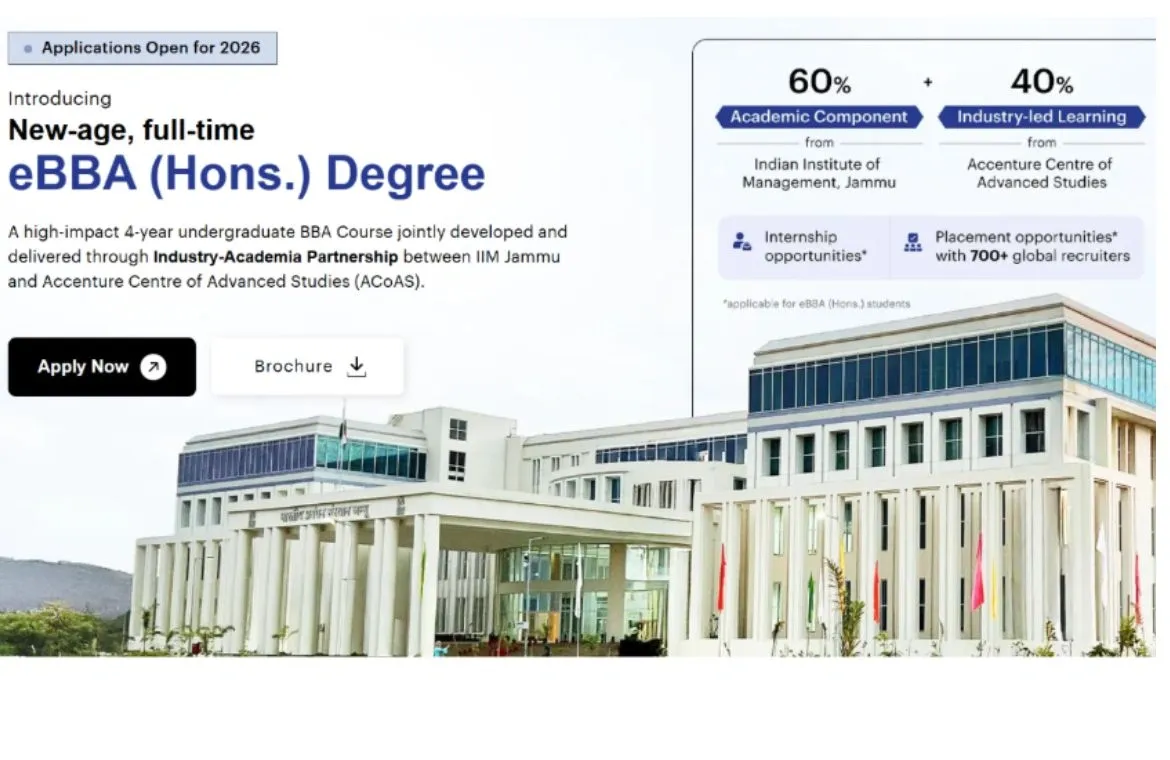
The Online BBA from IIM Jammu is a 4-year undergraduate degree designed for students after Class 12 who want to build a strong career foundation early.
What makes it different is how it brings academics and real-world exposure together.
It is developed through a unique industry–academia partnership between:
IIM Jammu (for academic learning)
Accenture Centre of Advanced Studies (ACoAS) (for industry exposure)
And the learning is structured as:
60% academic learning- business fundamentals from IIM Jammu
40% industry-led learning- projects, labs, internships, and real-world exposure through Accenture
This ensures students don’t just study concepts, they understand how those concepts work in real business environments.
A techno-managerial approach to learning
What makes this program especially relevant today is that it follows a techno-management approach.
That means students learn:
core business subjects (marketing, finance, economics)
along with emerging technologies and their applications in business, such as:
AI in business
data and analytics
cloud and digital systems
So instead of learning business in isolation, students learn
business + technology + real-world application together
How this builds job-ready skills?
The structure directly connects to the skills we talked about earlier:
Problem-solving: through projects, simulations, and applied learning
Communication: through live sessions with faculty and industry experts
Teamwork: through collaborative, industry-mentored work
Digital awareness: through exposure to AI, data, and business tools
Career readiness
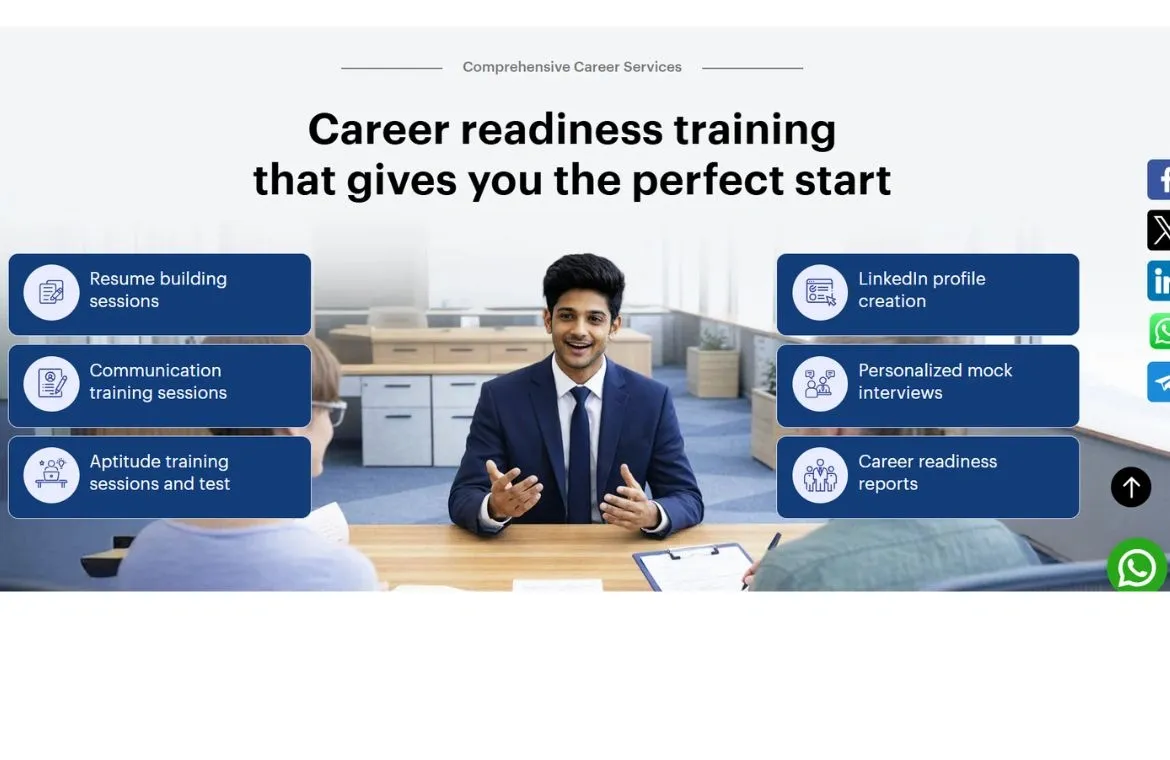
through built-in support like:
resume building
LinkedIn profile development
aptitude and interview preparation
So instead of preparing at the end, students build readiness throughout the degree
Real exposure before graduation
Students don’t have to wait until after graduation to understand how work happens.
They get:
internships as part of the program
industry interaction and mentorship
exposure to real business challenges
This helps them build confidence early, not after finishing the degree.
Career outcomes and opportunities
By the time students graduate, they don’t just have a degree, they have:
access to 700+ global recruiters
exposure to real work environments
an IIM Jammu degree along with alumni status
Which means they step into careers with:
skills
confidence
and a strong professional network
Why this matters
This kind of structure changes one important thing:
You don’t just complete a degree and then figure out your career
You start building your career while pursuing the degree
And that’s what ultimately makes the difference between:
having knowledge
andbeing ready to use it
Quick “student checklist”: How to know if a business degree will make you job-ready
Before you choose any BBA, ask yourself:
Will I do projects ,cases or simulations or only study theory?
Will I get industry exposure during the degree or only after graduation?
Will I build the skills employers actually look for, problem-solving, teamwork, communication?
Is job readiness a built-in process or a last-minute rush?
If the answer is “yes” to most of these, you’re not just doing a degree, you’re building a career foundation.
Final thoughts
After 12th, everyone will talk to you about college, degree, subjects.
But the smart students ask one question that changes everything:
“What skills will I graduate with, and will I be able to prove them?”
Because a job-ready business student isn’t the one who knows the most.
It’s the one who can apply what they know in the real world.
Frequently Asked Questions
Q1. What are the most important job-ready skills business students should develop?
Business students should focus on communication, problem solving, analytical thinking, teamwork, digital literacy, and adaptability. Employers increasingly value candidates who can apply business concepts, interpret data, collaborate effectively, and respond confidently to changing workplace demands.
Q2. Why are communication skills important for business students?
Communication skills help business professionals present ideas, negotiate, collaborate, and build relationships. Whether speaking with clients, managers, or teams, strong written and verbal communication improves decision making and workplace effectiveness across industries such as marketing, HR, finance, and management.
Q3. How important is digital literacy for business careers today?
Digital literacy has become essential as businesses increasingly rely on technology, analytics, and AI enabled systems. Business students who understand digital tools, data interpretation, and workplace technologies are often better prepared for modern roles and evolving employer expectations.
Q4. Do internships really help business students become job ready?
Yes, internships provide practical exposure that classrooms often cannot replicate. They help students understand workplace culture, apply theoretical knowledge, develop problem solving abilities, and build confidence while gaining experience that employers often value during recruitment.
Q5. Why is adaptability considered an important business skill?
Business environments change rapidly due to technology, market trends, and customer expectations. Adaptability helps students adjust to new challenges, learn emerging tools, solve unexpected problems, and remain effective in fast changing professional environments.
About the Author
TalentSprint
TalentSprint, Part of Accenture LearnVantage, is a global leader in building deep expertise across emerging technologies, leadership, and management areas. With over 15 years of education excellence, TalentSprint designs and delivers high-impact, outcome-driven learning solutions for individuals, institutions, and enterprises. TalentSprint partners with leading enterprises and top-tier academic institutions to co-create industry-relevant learning experiences that drive measurable learning outcomes at scale.
Explore our Programme
Advance your career with the right program