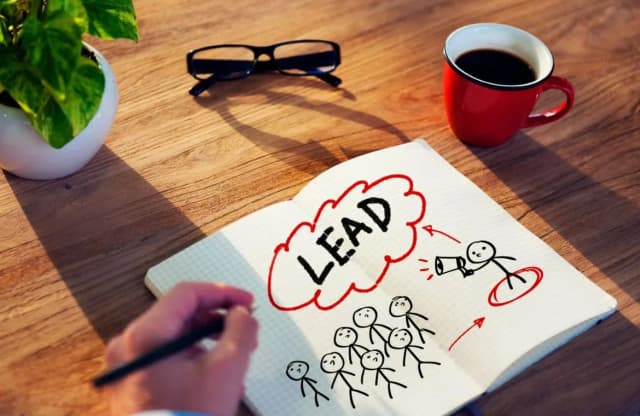
Why do leadership gaps exist in organisations? How to address it?

Leadership gaps arise when the capabilities organisations rely on today no longer match what’s required to lead through complexity, uncertainty, and rapid change. This isn’t a lack of leaders it’s a gap in leadership readiness. As roles expand and environments become more ambiguous, leaders are expected to make sharper decisions, align diverse teams, and adapt quickly at scale.
At the same time, a widening delta is emerging between the speed of the market and organisations’ internal ability to respond. To bridge this void, we must look beyond technical expertise and ask the hard questions: Who do we have? What will the future require them to do? And are they truly equipped to do it? Success requires a culture where leadership isn't a title, but a daily practice.
Understand the leadership gaps
We must recognize that a leadership gap is rarely about empty chairs or missing headcounts; it is a readiness gap. On paper, an organisation may look fully staffed, with succession charts that seem perfectly adequate. Yet, the gap persists because it isn't about seniority it’s about the ability to lead in a non-linear, high-pressure operating context.
The most dangerous thing about a leadership gap is its invisibility. It doesn't announce itself with a sudden collapse. Instead, it shows up in subtle friction:
- Decisions slow down as leaders struggle with shared authority.
- Priorities fracture across silos when alignment replaces individual control.
- High performers overcompensate, quietly absorbing the ambiguity left by leadership voids.
Because performance doesn't fail outright, we often mistake these signals for "market conditions" or "execution issues." However, when a leader who was successful in a stable environment fails to deliver under sustained pressure, it isn't a resume problem it’s a capability gap. By the time we recognise it, the cost has already been paid in eroded engagement and stalled growth. To fix the gap, we must first learn to see it in behavior, not just on paper.
Factors causing a leadership gap
These are two primary identifies as drivers of the leadership gap: a lack of mastery (a matter of skill degree) and a lack of focus (a matter of substance). While organisations often have high-priority goals, current leadership capacity frequently falls short of future requirements.
Research highlights nine critical competencies where skills are dangerously thin:
- Strategic Agility: Specifically in change management, initiative, and strategic planning.
- Relational Intelligence: Including inspiring commitment, leading employees, and building collaborative relationships.
- Operational Mindset: Managing participative teams and being a quick, adaptive learner.
The gap is most severe in high-stakes areas like self-awareness and employee development. Without shifting the focus to these essential behaviors, the leadership deficit will only continue to grow.
How to identify leadership gaps in any organisation?
To bridge the leadership gap effectively, organisation’s need to move beyond guesswork and gut feelings. A targeted assessment strategy is the only way to transform abstract talent concerns into a concrete roadmap for growth.
Here is how an organisation can systematically identify and address these shortcomings:
- Conduct Leadership Audits & Skill Mapping: Rather than looking at titles, look at capabilities. Audits reveal the "ground-level" reality of how united a team truly is. By using visual tools like skill heat maps, an organisation can immediately spot where strategy-execution skills are missing and decide whether to build, buy, or borrow talent.
- Deploy 360-Degree Feedback: Strategic leaders often suffer from "intent vs. impact" blindness. By gathering insights from peers, direct reports, and superiors, we can uncover the blind spots that traditional reviews miss turning moments of friction into opportunities for behavioral change.
- Analyze Retention and Engagement Data: Employee engagement and retention data often point to the quality of day‑to‑day leadership rather than the organisation itself. Low engagement scores and high attrition rates can serve as early indicators of leadership capability gaps at the team or manager level. By closely tracking these metrics, organisations can identify emerging leadership issues and take corrective action before isolated skill gaps escalate into broader organisational challenges.
- Benchmark Against Future Goals: Organisations can strengthen leadership resilience by assessing current capabilities against future skill requirements identified by the World Economic Forum. This forward‑looking approach helps ensure leadership pipelines are prepared for ongoing and emerging waves of digital disruption.
By combining these four pillars, an organisation moves from generic training to a high-impact, data-driven development engine.
Strategies to address and close the leadership gap
Successful organisations move beyond ad-hoc training, focusing instead on systematic development to build long-term capability. The most effective strategies involve a blend of continuous learning, structured support, and real-world application:
- Prioritize Continuous Upskilling: An entity should provide equitable access to development that balances technical knowledge with vital soft skills. Personalized programs, collaborative online learning, and leadership coaching help maintain strategic agility and credibility.
- Implement Formal Mentorship: Professional coaching offers a good ROI and significantly boosts individual performance. By establishing structured mentorship with clear guidelines, organisations ensure emerging leaders receive the guidance needed to navigate complex transitions.
- Encourage Internal Mobility: Organisations benefit from offering short‑term “stretch roles” that challenge leaders beyond their comfort zones. These internal opportunities help identify high‑potential talent while also improving retention.
- Redefine Success Criteria: Technical excellence alone is no longer sufficient. Organisations are shifting evaluation models to prioritize human‑centered capabilities such as emotional intelligence and adaptability to identify and develop future leaders.
By moving toward these human-centered, mobile, and mentored leadership models, an organisation can ensure the teams are not just managed but truly inspired.
Building a Culture That Sustains Leadership Growth
A robust cultural foundation is the "soil" in which leadership grows; without it, even the most expensive development programs will fail to take root. To build lasting resilience, we must shift from a focus on individual training to creating an environment that breathes leadership at every level.
These four cultural pillars are essential for sustaining growth:
- Foster Radical Psychological Safety: Leadership is inherently risky. Organisation’s must create a "safe-to-fail" environment where emerging leaders can challenge the status quo and ask for help without fear of retribution. When trust replaces authority, innovation accelerates.
- Reward Behaviors, Not Just Results: People repeat what is recognised. The performance systems must evolve to acknowledge how goals are met. By rewarding values-aligned behaviors like mentorship and collaboration reinforcing the desired leadership standards.
- Normalize "Daily Feedback" Loops: High-trust environments see less stress and significantly higher engagement. Organisations are moving away from traditional annual performance reviews toward real‑time coaching models such as Situation‑Behavior‑Impact (SBI), turning everyday interactions into opportunities for continuous growth.
- Anchor Development in Core Values: More than 70% of employees do their best work when they feel connected to company values. By tying leadership models directly to organisational "North Star," organisation can ensure that every new leader is an ambassador for our collective mission.
By intentionality building this culture, organisations ensure that leadership development isn't just an HR initiative, it becomes a competitive advantage.
Also Read: Creating a Coaching Culture in Your Organisation: A Leadership Guide
The Path Forward
Leadership gaps are not a talent shortage, they are a readiness challenge shaped by complexity, speed, and change. Organisations that address them proactively move beyond reactive fixes to build leadership as a continuous capability. By investing in structured development, cultural reinforcement, and real‑world application, leadership becomes a daily practice rather than a positional title.
In this context, well‑designed leadership courses play a critical role equipping leaders with the mindset, skills, and confidence needed to lead through uncertainty and sustain long‑term growth.
Frequently Asked Questions
Q1. What is a leadership gap and why is it important?
A leadership gap refers to the disparity between the leadership skills an organisation needs and those it currently possesses. It's crucial because it can significantly impact an organisation’s performance, growth potential, and ability to meet future challenges.
Q2. How can organisations identify leadership gaps?
Organistions can identify leadership gaps through various methods, including conducting leadership audits, using 360-degree feedback, analyzing retention and engagement data, and benchmarking against future business goals.
Q3. What are some common barriers to closing leadership gaps?
Common barriers include outdated views on leadership, lack of investment in leadership development, misaligned performance and reward systems, and resistance to change within leadership teams.
Q4. What strategies can help address leadership gaps?
Effective strategies include investing in continuous upskilling and soft skills development, creating formal mentorship and coaching programs, encouraging internal mobility and stretch roles, and redefining leadership criteria beyond technical skills.
Q5. How can organisations create a culture that sustains leadership growth?
To sustain leadership growth, organisations should foster psychological safety for emerging leaders, recognise and reward leadership behaviors, embed feedback into daily operations, and align leadership development with company values.
About the Author
TalentSprint
TalentSprint, Part of Accenture LearnVantage, is a global leader in building deep expertise across emerging technologies, leadership, and management areas. With over 15 years of education excellence, TalentSprint designs and delivers high-impact, outcome-driven learning solutions for individuals, institutions, and enterprises. TalentSprint partners with leading enterprises and top-tier academic institutions to co-create industry-relevant learning experiences that drive measurable learning outcomes at scale.
Advance your career with the right program