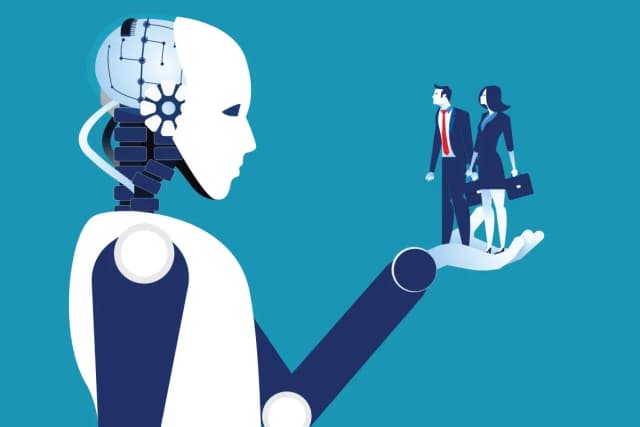
The Real limitations of AI in real-world Workflows

TL;DR:AI is transforming workplaces, but it isn't fully autonomous. Organizations still face challenges around oversight, consistency, workflow design, integration, measurement, and human judgment. The real value of AI comes not from replacing people, but from combining intelligent automation with effective workflows and skilled professionals who understand how to implement AI responsibly and at scale.
“AI can do it.”
That’s often where the conversation starts.
But once AI becomes part of everyday work, organizations begin asking a different question:
“If AI is so capable, why does it still need supervision, validation, approvals, and workflow redesign?”
The answer lies in understanding AI’s real limitations. Not the limitations you see in demos, but the ones that emerge when AI meets real people, real systems, and real business processes.
Limitation 1: AI still needs human oversight
One of the biggest expectations surrounding AI is that it can eventually manage workflows independently.
And in many situations, it can go surprisingly far.
A customer support chatbot can answer common questions. An AI assistant can draft emails. An AI agent can automate multi-step tasks.
However, real-world work is full of exceptions.
Imagine a customer support team handling a request from someone facing a medical emergency or financial hardship. While the AI may follow company policy perfectly, it cannot fully understand nuance, empathy, or business consequences the way a human can.
That is why accountability continues to sit with people, not systems.
AI can execute tasks.
Humans are still responsible for outcomes.
So, what's holding AI back?
If AI still requires supervision, what stops it from operating completely on its own?
The answer often begins with another limitation: consistency.
Also Read: Can AI Think Like Humans?
Limitation 2: AI doesn't always deliver consistent results
Many professionals discover this limitation almost immediately.
Ask an AI tool to summarize customer feedback and it highlights pricing concerns. Ask a similar question later and the focus may shift to customer support or product features.
This variability is a natural part of how modern AI works.
Unlike traditional software, AI uses probabilities, context, and patterns to generate responses rather than following fixed rules every time.
While this flexibility makes AI powerful, it can also create uncertainty in business environments where consistency matters.
When two employees receive slightly different outputs for the same task, someone has to determine which version is correct.
And that creates another challenge.
Once human verification becomes part of the workflow, organizations start wondering whether AI is saving as much time as expected.
Limitation 3: AI reduces work, but rarely eliminates It
One of the most common misconceptions about AI is that automation removes people from processes completely.
In reality, AI often changes work rather than eliminating it.
Consider a marketing manager who spends hours preparing campaign reports each week. AI can generate a draft in minutes, dramatically reducing manual effort.
Yet someone still needs to review the numbers, validate recommendations, and ensure the report reflects business priorities.
The work hasn't disappeared.
It has evolved.
Employees spend less time producing outputs and more time evaluating them.
Naturally, organizations start asking, If people are still involved, are we even automating the right things?
Limitation 4: Not every task should be automated
AI is incredibly effective in some situations and far less valuable in others.
Tasks such as:
- Content drafting
- Data extraction
- Meeting summaries
- Workflow routing
- Routine support requests
often benefit significantly from automation.
However, areas involving leadership, negotiation, relationship-building, ethics, and strategic decisions usually require human involvement.
The most successful organizations don't try to automate everything.
They focus on automating the right things.
But even selective automation has its limits.
Some decisions still require something AI cannot fully replicate.
Limitation 5: AI cannot fully replace human judgment
AI can analyze information faster than any human team.
It can identify trends, recommend actions, and surface insights that might otherwise be missed.
But decision-making is rarely based on data alone.
- A hiring manager may choose a candidate because of leadership potential.
- A business leader may approve a strategy based on intuition developed through years of experience.
- A healthcare professional may weigh ethical considerations before taking action.
In these situations, context matters just as much as analysis.
AI can recommend but humans still get to decide.
Even when organizations understand this balance, a new challenge appears.
The AI works but, the surrounding systems don't.
Limitation 6: AI struggles within complex business environments
Watching an AI demonstration can make implementation seem effortless.
In reality, businesses operate across multiple platforms, departments, databases, and workflows.
- Data may live in different systems.
- Processes may have evolved over years.
- Legacy applications may not integrate easily with modern AI tools.
As a result, many organizations spend more time preparing their environment than deploying AI itself.
The challenge often isn't the model.
It's the infrastructure surrounding it.
Once AI becomes operational, leaders face another difficult question.
How do we know whether it's actually creating value?
Limitation 7: AI success is harder to measure than expected
Many organizations initially evaluate AI through activity metrics.
- How many queries were answered?
- How many reports were generated?
- How many employees use the tool?
While useful, these measures don't necessarily indicate impact.
The better questions are:
- Did productivity improve?
- Were errors reduced?
- Are employees working more efficiently?
- Is customer satisfaction improving?
Without clear success metrics, AI can easily become an exciting experiment rather than a business capability.
And measuring outcomes often reveals another reality.
AI requires a larger investment than most organizations initially expect.
Limitation 8: The true cost of AI goes far beyond technology
When businesses budget for AI, they usually focus on software and infrastructure.
But those costs are only part of the picture.
Organizations must also invest in:
- Employee training
- Governance frameworks
- Change management
- Workflow redesign
- Monitoring and optimization
These investments often determine whether AI succeeds or struggles.
Looking across these limitations, a pattern emerges.
Most challenges have less to do with AI itself and more to do with the way organizations work.
Limitation 9: AI cannot fix broken workflows
This may be the most important limitation of all.
Organizations often expect AI to transform inefficient processes.
Instead,
- AI exposes them.
- Disconnected systems.
- Unclear ownership.
- Multiple approvals.
- Poor information flow.
AI amplifies whatever workflow already exists.
If the process works well, AI makes it faster but, if the process is broken, AI simply reveals the cracks more clearly.
And this realization is changing what organizations look for in AI talent.
They no longer need people who can simply use AI tools.
They need professionals who understand how AI works within workflows.
From understanding AI's limitations to building AI-ready skills
If there's one lesson these limitations teach us, it's this, Using AI is easy. Making AI work in the real world is much harder.
Organizations today need professionals who understand not only how AI generates outputs, but also how AI agents, automation systems, business processes, and human oversight work together.
They need people who can answer questions like:
- Which workflows should be automated?
- Where should human approval remain?
- How can AI agents be integrated into business processes?
- How should AI outputs be evaluated and improved?
- How can organizations move from AI experimentation to measurable business impact?
The Generative AI & Agentic AI course by Talentsprint is designed around exactly these challenges.
Delivered in a 100% online, instructor-led format across 18 weekends, the program helps professionals build applied Generative AI and Agentic AI skills while continuing their careers.
The learning experience combines:
- Live online sessions with expert faculty and mentors
- Hands-on labs using 20+ AI tools and techniques
- Real-world use cases based on business scenarios
- Industry masterclasses from experienced practitioners
- Capstone projects focused on solving practical challenges
Rather than stopping at AI concepts, the focus is on applying AI to real workflows and business problems.
Backed by TalentSprint, part of Accenture, the program emphasizes practical, industry-relevant learning that helps professionals develop the ability to work with:
- Generative AI applications
- AI agents and agentic systems
- Workflow automation solutions
- Business process transformation initiatives
In a market where organizations are looking beyond AI experimentation, these are the skills that can help professionals contribute to AI-driven transformation and stay relevant in an evolving workplace.
Conclusion
The real limitations of AI are not signs of weakness.
They are realities that organizations must understand to unlock AI's full potential.
The businesses creating the most value from AI aren't trying to remove humans from workflows. They're finding the right balance between human judgment, intelligent automation, and effective workflow design.
Because ultimately, AI alone doesn't transform organizations.
People who know how to apply AI effectively do.
Frequently Asked Questions
Q1. Why does AI still need human oversight if it is so advanced?
AI can automate tasks and generate recommendations, but it lacks human judgment, context, empathy, and accountability. In real-world workflows, humans are still needed to review critical decisions, handle exceptions, and ensure outcomes align with business goals, compliance requirements, and customer expectations.
Q2. Can AI replace human decision-making in business workflows?
Not completely. AI can analyze large amounts of data and suggest actions, but important decisions often involve ethics, experience, strategic thinking, and relationship management. Human expertise remains essential in areas where context and accountability significantly influence outcomes.
Q3. What skills are needed to work effectively with AI in modern organizations?
Professionals need more than prompt-writing skills. They must understand AI-powered workflows, AI agents, automation opportunities, output evaluation, governance, and integration with business processes. These capabilities help organizations move from AI experimentation to creating measurable business value through AI adoption.
About the Author
TalentSprint
TalentSprint, Part of Accenture LearnVantage, is a global leader in building deep expertise across emerging technologies, leadership, and management areas. With over 15 years of education excellence, TalentSprint designs and delivers high-impact, outcome-driven learning solutions for individuals, institutions, and enterprises. TalentSprint partners with leading enterprises and top-tier academic institutions to co-create industry-relevant learning experiences that drive measurable learning outcomes at scale.
Explore Our Programme
Advance your career with the right program