The End of Repetitive Work? What AI Really Changes (and What It Doesn't)

TL;DR:AI isn't replacing jobs as much as it's replacing repetitive tasks. As routine work becomes automated, human skills such as creativity, critical thinking, collaboration, and leadership become more valuable. The future belongs to professionals who can combine human expertise with AI capabilities and apply AI effectively to create real-world impact.
What if you started your workday with your emails sorted, reports drafted, and routine tasks already completed?
Thanks to AI, that's no longer a futuristic idea, it's becoming the new normal.
But despite the headlines, AI isn't replacing work. It's changing how work gets done by automating repetitive tasks while making human skills like critical thinking, creativity, collaboration, and decision-making more valuable than ever.
As AI reshapes the workplace, the real question isn't whether jobs will disappear, but which tasks AI can handle and where human expertise will continue to matter most.
So, the Real shift isn't jobs disappearing, It's tasks disappearing
Whenever a new technology emerges, concerns about job replacement follow close behind. AI is no exception.
From customer support and content creation to data analysis and operations, professionals across industries are wondering whether their roles are at risk. However, the reality unfolding in workplaces today is far less dramatic than many headlines suggest.
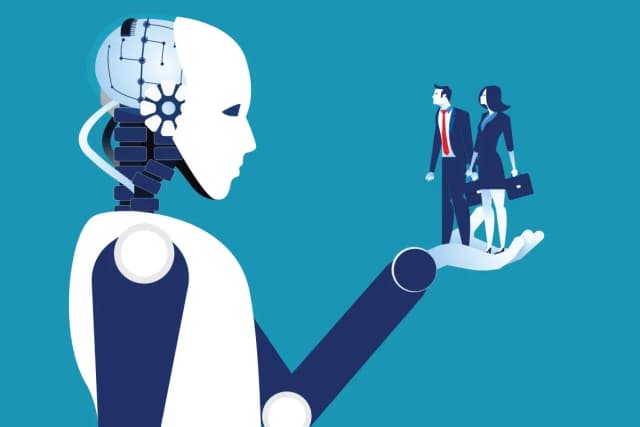
AI is not replacing entire professions overnight.
Instead, it is taking over specific tasks that are repetitive, predictable, and time-consuming.
Think about the activities that often consume hours every week:
- Summarizing meetings
- Organising large volumes of information
- Drafting routine emails
- Creating standard reports
- Managing repetitive workflows
- Answering frequently asked customer questions
These are areas where AI is increasingly proving valuable.
What remains firmly human are the activities that require judgment, context, creativity, and relationship-building. While AI can provide recommendations, generate content, or identify patterns, professionals are still responsible for interpreting information, making decisions, and driving outcomes.
As repetitive work shrinks, human skills become the real advantage
One of the most surprising outcomes of AI adoption is that it is making human capabilities more important, not less.
As routine execution becomes automated, organizations are increasingly looking for professionals who can do what machines can't.
Skills such as:
- Critical thinking
- Creativity
- Communication
- Leadership
- Collaboration
- Adaptability
- Complex problem-solving
are becoming more valuable in an AI-enabled workplace.
Take customer service as an example, AI can answer common queries in seconds and provide around-the-clock support. But when a customer is frustrated, confused, or dealing with a complex issue, empathy and human understanding become essential.
The same trend is visible in creative industries.
This is why asking which jobs are safe from AI may not be the most useful question.
A better question is, which skills become more valuable when AI handles routine work?
Increasingly, the answer points toward a combination of human intelligence and AI literacy.
Also Read: AI Skills Gap: What Fresh Graduates Are Missing (And How to Fix It)
The new workplace doesn't need everyone to build AI, but It expects everyone to understand it.
For years, AI was considered a specialist domain reserved for engineers, researchers, and technology teams but today, AI has moved into almost every function of an organization and this shift highlights an important reality.
The future workplace isn't expecting everyone to become an AI expert.
But it is increasingly expecting professionals to become AI-ready.
Just as digital literacy became a critical workplace skill over the last two decades, AI literacy is quickly becoming a capability that professionals across industries can no longer ignore.
The challenge, however, is that AI readiness doesn't look the same for everyone.
Why AI readiness looks different for different people?
- A college student entering the workforce has very different learning needs compared to a manager leading a team through digital transformation.
- Similarly, an entrepreneur scaling a business faces different challenges than someone returning to work after a career break.
Yet all of them are facing the same reality and that is, AI is becoming part of how work gets done.
- Students and freshers are increasingly looking for ways to future-proof their careers and stand out in a competitive job market.
- Working professionals are exploring how AI can help them become more productive and make better decisions.
- Career returnees are seeking ways to rebuild confidence in a rapidly changing workplace.
- Entrepreneurs and freelancers are discovering how AI can help transform ideas into scalable solutions.
Recognizing these diverse needs, learning ecosystems such as AI Infinity are taking a broader approach to AI education.
Rather than focusing solely on technical professionals, the program is designed around the idea that AI is becoming relevant to learners across different career stages and backgrounds, from students and working professionals to entrepreneurs and career returnees, because the future of work isn't being shaped by one type of professional.
It's being shaped by everyone who is learning how to work alongside AI.
Also Read: AI Readiness Assessment: Your Step-by-Step Business Preparation Guide
Some people need to use AI. others need to build It.
One of the biggest misconceptions about AI learning is that everyone needs to become a coder or machine learning engineer.
The reality is far more practical.
As, Many professionals simply need to learn how to use AI tools effectively in their day-to-day work.
They want to automate repetitive tasks, improve productivity, create better outputs, and make more informed decisions.
Others want to understand how AI systems are built, deployed, and integrated into business environments.
These are very different learning goals.
That's why modern AI education is moving away from one-size-fits-all approaches.
The AI Infinity program acknowledge that AI users and AI builders require different pathways.
- The Functional Track is designed for learners from non-technical backgrounds who want to use AI to simplify, speed up, and scale everyday work.
- The Technical Track is aimed at those interested in understanding and building AI-powered solutions.
- The program also offers a specialized pathway focused on AI-powered engineering workflows for developers.
This reflects what organizations increasingly need, People who can use AI effectively and people who can build the systems that power it.
Both have an important role to play in the future workplace.
In the AI Era, knowing about AI isn't enough, you need to actually apply It
As AI adoption accelerates, awareness alone is no longer enough.
Employers are increasingly looking for professionals who can apply AI meaningfully in real-world situations.
That could involve:
- Improving workflow efficiency
- Automating manual processes
- Solving business challenges faster
- Supporting data-driven decisions
- Driving innovation within teams
The competitive advantage doesn't come from simply understanding what AI is.
It comes from understanding what AI can do in practice.
This is why hands-on experience is becoming such an important part of AI learning.
Professionals need opportunities to experiment with real tools, test ideas, and apply concepts to realistic scenarios.
The AI Infinity emphasize practical learning through exposure to leading AI tools, assignments, and industry-relevant projects that help learners move beyond theory and develop confidence in applying AI in professional environments.
Because ultimately, organizations aren't searching for people who can talk about AI.
They're looking for people who can create value with it.
The professionals who thrive won't compete against AI instead they'll collaborate with It
Throughout history, technological progress has rewarded people who adapted.
The same principle applies today.
The professionals most likely to thrive in the AI era are not necessarily those with the deepest technical expertise.
They are the ones who understand how to combine human strengths with AI capabilities.
They use AI to manage routine work more efficiently.
They use their time to focus on strategy, innovation, creativity, leadership, and relationship-building.
And they continuously learn as technology evolves.
This is perhaps the most important shift of all.
The future workplace will not separate humans from AI.
It will increasingly reward professionals who know how to bring the best of both together.
Conclusion: AI Isn't the End of Work, It's the End of Certain Types of Work
AI is transforming the workplace, but not in the way many fear.
It isn't eliminating the need for human contribution.
It is reducing the need for humans to spend valuable time on repetitive and predictable tasks.
As those tasks become automated, the importance of human skills only grows stronger.
- Creativity.
- Judgment.
- Empathy.
- Leadership.
- Strategic thinking.
These are the qualities that continue to drive innovation, solve complex problems, and create meaningful impact.
So now the question is, "How can I use AI to become better at the work only humans can do?"
Because the future of work won't belong to humans alone,or AI alone.
It will belong to those who know how to combine the strengths of both.
Frequently Asked Questions
Q1. Will AI replace jobs completely in the future?
Not entirely. AI is primarily automating repetitive and rule-based tasks rather than replacing entire professions. Most jobs will evolve instead of disappear, with professionals spending less time on routine work and more time on creativity, decision-making, problem-solving, leadership, and building meaningful human relationships.
Q2. What skills will matter most in an AI-driven workplace?
As AI handles routine tasks, employers increasingly value skills that machines cannot easily replicate. These include critical thinking, creativity, communication, collaboration, adaptability, leadership, empathy, and strategic decision-making. Combining these human skills with AI literacy can create a strong competitive advantage in the future workplace.
Q3. Do I need a technical background to become AI-ready?
No. AI readiness is not limited to programmers or engineers. Many professionals simply need to learn how to use AI tools effectively to improve productivity and decision-making. Depending on individual goals, learners can focus on applying AI in their work or explore more technical pathways to build AI-powered solutions.
About the Author
TalentSprint
TalentSprint, Part of Accenture LearnVantage, is a global leader in building deep expertise across emerging technologies, leadership, and management areas. With over 15 years of education excellence, TalentSprint designs and delivers high-impact, outcome-driven learning solutions for individuals, institutions, and enterprises. TalentSprint partners with leading enterprises and top-tier academic institutions to co-create industry-relevant learning experiences that drive measurable learning outcomes at scale.
Advance your career with the right program