
What are intrapersonal skills, and how to develop them?

“Knowing yourself is the beginning of all wisdom.”, Aristotle
Before we learn how to communicate with others, we need to learn how to communicate with ourselves. The quiet conversations in our minds, how we handle stress, stay motivated, reflect on mistakes, and set goals, are shaped by intrapersonal skills. These inner skills influence how we think, feel, and act every single day.
Because,“You are your longest commitment.”
In a fast-moving world filled with external noise, intrapersonal skills help us pause, understand our emotions, and make thoughtful decisions.
What Are Intrapersonal Skills?
Intrapersonal skills are specific abilities that psychologists say you need to understand yourself better. These self-directed behaviours help you understand and manage your emotions, motivations, beliefs and goals better. They show how you connect with yourself and the world around you.
Key Intrapersonal Skills
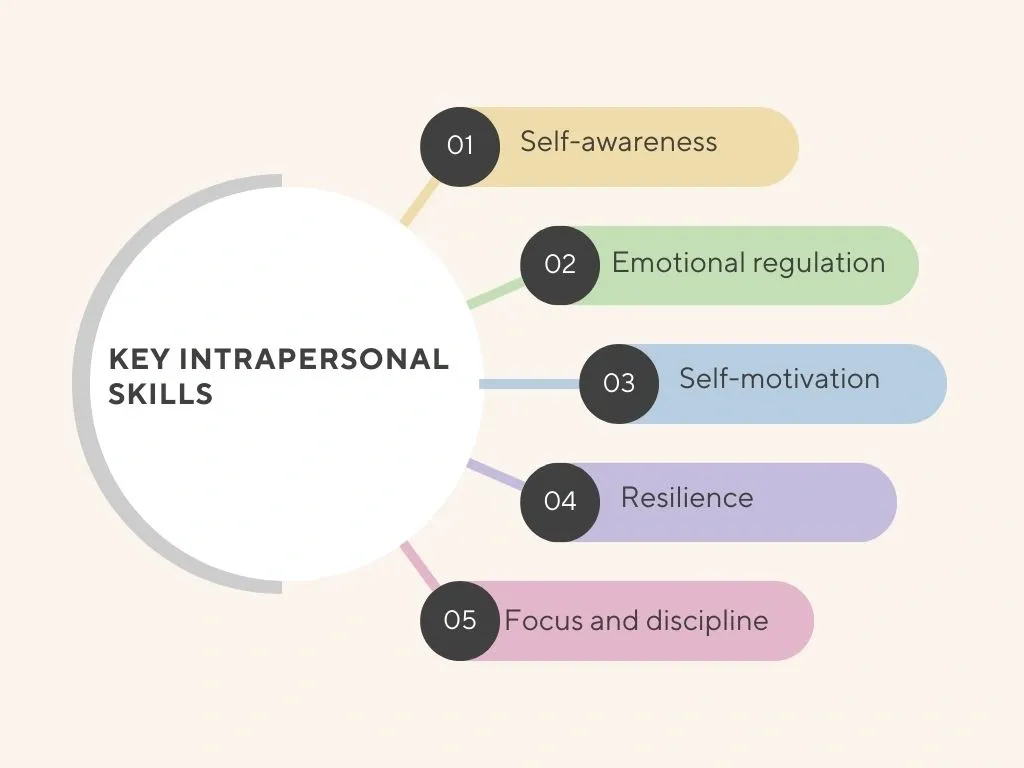
You need several connected abilities to improve your relationship with yourself and build strong intrapersonal skills.
1.Self-awareness
Self-awareness helps you understand your thoughts, emotions, strengths, and weaknesses. It shows you what matters to you and how your actions affect others. Daniel Goleman says self-awareness is the starting point of emotional intelligence.
2. Emotional regulation
Knowing how to manage emotions in a healthy way stands out as a crucial intrapersonal skill. This doesn't mean pushing feelings aside - it's about finding balance so emotions don't take over.
3. Self-motivation
Self-motivation pushes you toward goals without needing outside praise or rewards. This inner drive comes from a strong sense of purpose and personal drive that helps you push through tough times. Clear, measurable goals create direct paths to achievement and keep you focused even when things slow down.
4. Resilience
Resilience helps you recover from setbacks while staying positive. Resilient people learn from failures instead of giving up when plans fail. They adjust their approach and try again.
5. Focus and discipline
Focus and discipline help you tackle priority tasks despite distractions around you. These skills mean committing fully to finish important work before moving to less urgent tasks.
Also Read: Why is Strategic Thinking Essential for Every Leader?
Why Intrapersonal Skills Matter?
Your inner world mastery brings deep benefits that touch almost every part of life. Intrapersonal skills are the foundations for both personal effectiveness and professional success.
1. Better decision-making
Self-awareness helps you review situations objectively and recognise emotional biases that could cloud judgement. You make more balanced and informed choices, which becomes valuable during high-pressure situations or ethical dilemmas.
2. Improved emotional intelligence
Intrapersonal abilities build the base for emotional intelligence. Your self-understanding grows and improves your ability to recognise and manage emotions. This skill becomes particularly valuable in uncertain situations and helps you manage stress better. These internal competencies create positive changes throughout your emotional functioning.
3. Stronger leadership and collaboration
Intrapersonal competencies strengthen leadership through vision, resilience, continuous learning, and innovative thinking. Leaders who know themselves well can assign tasks better by understanding their strengths and weaknesses. This proves how internal awareness creates external effectiveness.
4. Greater personal fulfilment
Intrapersonal skills encourage continuous self-improvement and growth. Self-reflection and internal awareness help you bounce back from setbacks and push through difficulties. These often-overlooked skills help you manage stress proactively and maintain psychological well-being. A stronger relationship with yourself guides you toward more confidence, competence, and life satisfaction.
Also Read: What is Professional Development?
Examples of Intrapersonal Skills in Daily Life
Intrapersonal skills show up in daily scenarios and these internal capabilities directly affect external outcomes.
1. Handling stress at work
The workplace creates many stressors that put your intrapersonal capabilities to test. You need emotional control to stay calm and composed under pressure.
A simple pause to breathe, gather your thoughts, and process information before responding shows self-regulation in high-pressure situations. Deep breathing, mindfulness, and reframing negative thoughts give you valuable tools to manage workplace stress.
Also Read: How to Manage Stress at Work: What Actually Works?
2. Setting and achieving personal goals
Goal-setting is vital to personal growth. You need vision, commitment, and persistence to establish realistic targets, create action plans, and track progress. The SMART framework (Specific, Measurable, Achievable, Relevant, Time-bound) helps provide structure and direction.
Self-motivation pushes you forward without external rewards because it comes from an internal sense of purpose. Perseverance ended up being significant to overcome the inevitable challenges on your path to achievement.
Also Read: Effective Goal Setting Strategies for Freshers
3. Managing emotional reactions in relationships
Emotional regulation shapes relationship quality by stopping stress from hurting interactions. People who have developed intrapersonal skills can handle difficult conversations without aggression, blame, or defensiveness.
This skill helps you listen carefully without emotional overwhelm and lets you acknowledge and prove your partner's feelings right. Better communication builds trust and intimacy that deepens your interpersonal bonds.
How to Develop Intrapersonal Skills?
Developing intrapersonal skills is a gradual process that begins with understanding yourself, your thoughts, emotions, habits, and motivations.
These skills shape how you respond to challenges, make decisions, and grow both personally and professionally. The good news is that intrapersonal skills can be learned and strengthened with consistent practice.
1. Practice intentional self-reflection
Make time to reflect on your day, your reactions, and your choices. Journaling, quiet thinking, or asking yourself questions like What went well today? or What could I handle better next time? helps build deeper self-understanding.
2. Build stronger self-awareness
Notice patterns in your behavior and emotions. Pay attention to what energizes you, what stresses you out, and how you typically respond to pressure. Self-awareness is the foundation of all intrapersonal skills.
3. Set meaningful and realistic goals
Clear goals give direction and purpose. Break larger goals into small, achievable steps to stay motivated and focused. Reflect regularly on your progress and adjust when needed.
4. Learn to manage emotions, not suppress them
Emotions carry important signals. Instead of ignoring them, learn to recognize and regulate them. Practices such as mindfulness, deep breathing, or pausing before reacting can help you respond thoughtfully in difficult situations.
5. Strengthen self-motivation and discipline
Intrapersonal skills grow through consistency. Create routines that support your goals, stay accountable to yourself, and celebrate small wins along the way.
Also Read: How to Improve Your Personal Development Skills?
Challenges and Benefits in building Intrapersonal Skills
Intrapersonal skills form the foundation of personal growth. When strengthened, they improve emotional intelligence, adaptability, and self-leadership, qualities that are essential in both professional roles and everyday life.
Challenges
| Benefits
|
Lack of self-awareness | Greater self-awareness |
Difficulty managing emotions | Emotional balance and resilience |
Negative self-talk | Stronger self-confidence |
Inconsistent motivation | Better decision-making |
Challenges
- Lack of self-awareness: People who lack self-awareness find it hard to identify their core values, handle their emotions, take feedback well, and see how their behaviour affects others.
- Difficulty managing emotions: People's emotional states can change faster than expected - they might feel peaceful one minute and upset the next. These quick mood swings can hurt relationships, affect mental health, and make people feel powerless.
- Negative self-talk: Your inner critic can substantially affect your mental health. Negative self-talk links directly to depression, anxiety disorders, and low motivation.
- Inconsistent motivation: People struggle to keep up with their self-development goals. Motivation fades when you lack clear direction or concrete plans, which creates obstacles to lasting growth.
Benefits
- Greater self-awareness: You gain clarity about your values, goals, emotions, and behavior. This helps you make better choices and grow with intention.
- Emotional balance and resilience: Managing emotions effectively reduces stress and improves mental well-being. You respond thoughtfully instead of reacting impulsively.
- Stronger self-confidence: Positive inner dialogue builds belief in your abilities, helping you face challenges with courage and optimism.
- Better decision-making: Understanding yourself leads to decisions that align with your goals, values, and circumstances.
Conclusion
Intrapersonal skills live in the quiet moments when you pause before reacting, learn from a mistake, or choose growth over comfort. They shape how you handle setbacks, stay motivated, and make sense of who you are becoming. While the world often focuses on outer success, real strength begins within.
“When you understand yourself, everything else becomes easier to understand.”
Developing intrapersonal skills is a lifelong journey, not a destination. With self-awareness, reflection, and patience, these inner skills become your compass, guiding decisions, building resilience, and helping you show up as a more confident, balanced version of yourself.
Frequently Asked Questions
Q1. What are intrapersonal skills and why are they important?
Intrapersonal skills are internal abilities that help you understand and manage your thoughts, emotions, and behaviours. They include self-awareness, emotional regulation, self-motivation, resilience, and focus. These skills are crucial for better decision-making, improved emotional intelligence, stronger leadership, and greater personal fulfilment.
Q2. How do intrapersonal skills differ from interpersonal skills?
Intrapersonal skills focus on your relationship with yourself, involving self-awareness and self-management. In contrast, interpersonal skills concern your interactions with others. While intrapersonal skills indirectly influence external relationships through self-improvement, interpersonal skills directly impact social interactions.
Q3. What are some effective ways to develop intrapersonal skills?
You can enhance your intrapersonal skills through regular journaling, using self-reflexion prompts, setting realistic personal goals, seeking feedback from trusted sources, engaging in mindfulness and meditation, and working with a coach or therapist. These practises help increase self-awareness and emotional regulation.
Q4. How do intrapersonal skills manifest in daily life?
Intrapersonal skills are evident in various everyday situations. For example, they help in managing workplace stress, setting and achieving personal goals, and navigating emotional reactions in relationships. Strong intrapersonal skills enable you to remain calm under pressure, persist towards your objectives, and communicate effectively with others.
Q5. What are common challenges in developing intrapersonal skills?
Common obstacles in building intrapersonal skills include a lack of self-awareness, difficulty managing emotions, negative self-talk, and inconsistent motivation. Many people overestimate their self-awareness, struggle with emotional regulation, or face challenges in maintaining momentum with self-development goals. Recognising these challenges is the first step towards overcoming them.
About the Author
TalentSprint
TalentSprint, Part of Accenture LearnVantage, is a global leader in building deep expertise across emerging technologies, leadership, and management areas. With over 15 years of education excellence, TalentSprint designs and delivers high-impact, outcome-driven learning solutions for individuals, institutions, and enterprises. TalentSprint partners with leading enterprises and top-tier academic institutions to co-create industry-relevant learning experiences that drive measurable learning outcomes at scale.
Advance your career with the right program