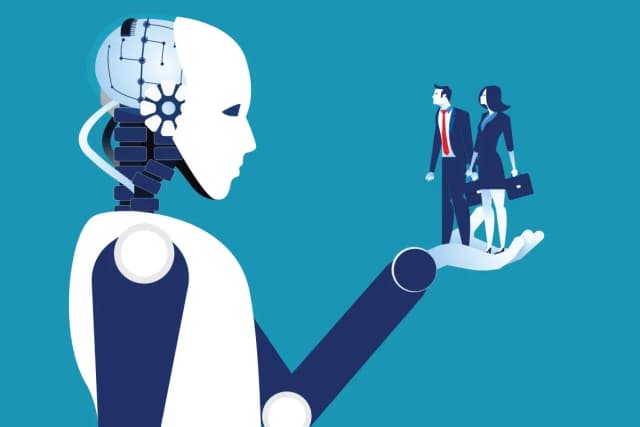
What is Artificial Intelligence?

Artificial Intelligence is a lot like a smart intern who learns by watching. At first, it observes, how you type, what you click, what you search. Over time, it starts anticipating your needs, like suggesting the next song before you even realise you’re bored of the current one.
Think of AI as a mirror with a memory. It reflects human behaviour, learns from patterns, and improves with experience. When your phone recognises your face, it’s like a bouncer who remembers regular guests. When a writing tool suggests the next sentence, it’s like a friend finishing your thought mid-conversation.
What is Artificial Intelligence?
Artificial intelligence stands as one of the most important branches of computer science. It creates intelligent machines that can mimic human thinking. These AI systems learn, adapt, and make decisions by processing information, unlike regular computer programmes that just follow set instructions.
How AI is part of everyday life?
AI combines smoothly with our daily routines in ways most people miss. AI algorithms work quietly when you search online. They understand your query and show relevant results in seconds. This hidden help touches everything in modern life.
Examples you already use
People use many AI applications daily without knowing it. Here are some examples:
- Digital assistants: Siri, Alexa, Google Assistant, and similar voice-activated helpers use AI. They understand natural language, answer questions, set reminders, control smart home devices, and learn from each interaction.
- Social media: AI drives the algorithms that choose your feed content based on past engagement. These systems learn what content appeals to you and adjust.
- Recommendation systems: Netflix suggests shows while Spotify picks music that fits your taste. These platforms analyse your priorities to offer customised suggestions.
These applications grow more sophisticated as AI technology advances. These examples show that artificial intelligence isn't science fiction - it's practical technology working quietly in tools we use every day.
Also Read: What 'AI for Everyone' Really Means?
How AI Works Behind the Scenes?
AI doesn’t think, it learns patterns, predicts outcomes, and gets better with practice, all guided by human-designed rules and goals.
1. It survives on data
AI starts with huge amounts of data, text, images, videos, or numbers. The more relevant and clean the data, the better the AI learns, just like humans learn from experience.
2. Learning through patterns
Using algorithms, AI looks for patterns in the data. For example, it learns what makes email spam or how faces look in photos by spotting repeated signals.
3. Training the model
The system practices data, makes predictions, checks mistakes, and improves itself. This cycle repeats until the model becomes accurate enough.
4. Making decisions
Once trained, AI uses what it learned to make predictions or decisions in real time, suggesting movies, answering questions, or detecting fraud.
5. Continuous improvement
Many AI systems keep learning from new data, improving performance over time while humans monitor, fine-tune, and control the process.
Also Read: How AI Is Transforming Industries in 2025
Different Types of AI
AI systems can be classified in several ways that show their capabilities and functions clearly. These classifications help us understand what AI can and cannot do today, and what might be possible tomorrow.
Types of AI based on capability:
AI systems fall into three capability categories that show different levels of intelligence:
1. Narrow AI (Weak AI)
Narrow AI is designed to perform a specific task or a limited set of tasks. It operates within predefined boundaries and cannot apply its intelligence beyond its trained function. Most AI systems today fall under this category. These systems rely heavily on data and algorithms but do not possess awareness or reasoning abilities.
2. General AI (Strong AI)
General AI refers to machines that can understand, learn, and apply intelligence across multiple domains, similar to human intelligence. Such systems would be capable of reasoning, problem-solving, and adapting to new situations independently. General AI remains theoretical and is a major focus of long-term research.
3. Super AI
Super AI represents a level of intelligence that surpasses human capabilities in all aspects, including creativity, decision-making, and emotional understanding. This form of AI would be self-improving and autonomous. Super AI does not exist today and is largely discussed in speculative and ethical contexts.
Types of AI based on Functionality
We can also categorise AI by how these systems handle and use information:
1. Reactive Machines
Reactive AI systems respond only to current inputs. They do not store memories or learn from past experiences. Their actions are entirely based on present data, making them reliable but limited in scope.
2. Limited Memory AI
Limited Memory AI systems can use past data and experiences to make informed decisions. They learn patterns from historical information and improve over time. This category represents the majority of modern AI systems in use today.
3. Theory of Mind AI
Theory of Mind AI refers to systems that would be capable of understanding human emotions, beliefs, and intentions. Such AI would interact socially and emotionally with humans. This type of AI is still under research and development.
4. Self-Aware AI
Self-aware AI is a hypothetical form of intelligence where machines possess consciousness and self-awareness. These systems would understand their own existence and internal states. This level of AI does not currently exist and remains a philosophical concept.
Benefits and Challenges of AI
Artificial Intelligence is neither a hero nor a villain, it’s a powerful tool. When used responsibly, AI enhances human capabilities and opens new opportunities. The key is not to fear AI, but to understand it, adapt to it, and use it wisely. The future belongs to humans who learn how to work with AI, not against it.
Benefits:
1. It saves time and effort
AI takes care of repetitive tasks, like sorting data or answering common questions, so people can focus on work that actually needs human thinking.
2. It helps us make smarter decisions
By analysing large amounts of information in seconds, AI highlights patterns and insights that humans might miss, helping businesses and individuals make better choices.
3. It makes experiences more personal
Whether it’s content recommendations or learning platforms, AI adapts to individual preferences, making interactions feel more relevant and useful.
4. It boosts creativity and innovation
Instead of replacing creativity, AI often supports it, by generating ideas, drafts, or visual concepts that humans can refine and improve.
5. It works around the clock
AI doesn’t get tired. It can provide support and services anytime, which is especially useful for global businesses and digital platforms.
Challenges
1. Fear of job displacement
One of the most talked-about concerns is job loss. While AI does automate certain tasks, it also creates new roles and shifts existing ones. The real challenge lies in upskilling and adapting to changing job requirements.
2. Bias in AI systems
AI learns from human-generated data, which means it can unintentionally reflect human biases. If not designed carefully, AI systems may produce unfair or inaccurate outcomes.
3. Data privacy and security concerns
AI relies heavily on data, raising questions about how personal information is collected, stored, and used. Protecting user privacy remains a major challenge.
4. Lack of transparency
Sometimes AI makes decisions without clearly explaining how it arrived at them. This “black box” nature can reduce trust, especially in sensitive areas like healthcare or finance.
5. Ethical and regulatory gaps
As AI evolves faster than policies, ethical concerns around accountability, control, and misuse continue to grow. Clear guidelines and responsible usage are essential.
What's next for AI…?
If the last few years were about discovering AI, the next few will be about living with it. AI is moving from being a “cool tool” to becoming an everyday partner, quietly embedded into how we work, learn, and create.
As per a recent Economic Times report, India leads globally in employee AI usage, proving that the future of work in India is being built with AI at its core.
Also Read: The Future Possibilities of AI: What Your Life Will Look Like in 2030
Conclusion
Understanding AI today is like learning to read maps in a digital world. Those who do will navigate change confidently. Those who don’t may feel lost. The future isn’t about AI thinking like humans, it’s about humans learning how to think better with AI.
Frequently Asked Questions
Q1. What is artificial intelligence in simple terms?
Artificial intelligence refers to technology that enables computers and machines to mimic human intelligence, performing tasks that typically require human learning, reasoning, and decision-making. It's like having a smart computer that can learn from experience and solve problems independently.
Q2. How does AI impact on our daily lives?
AI is integrated into many aspects of our daily routines, often without us realising it. It powers search engines, recommends content on streaming platforms, assists in fraud detection in banking, and enables features like facial recognition on smartphones. Over 77% of people use AI-powered services or devices regularly.
Q3. What are the main types of AI?
AI can be categorised by capability (Narrow AI, Artificial General Intelligence, and Superintelligent AI) and by function (Reactive Machines, Limited Memory AI, and Theory of Mind AI). Currently, only Narrow AI exists, excelling at specific tasks but unable to perform outside its designated parameters.
Q4. What are the benefits and challenges of AI?
AI offers significant benefits such as automation, efficiency gains, and reduced human error. However, it also presents challenges including bias and fairness concerns, data privacy and security risks, and potential job displacement. Balancing these pros and cons is crucial as AI becomes more integrated into society.
Q5. How can I stay informed about AI developments?
To stay updated on AI advancements, you can subscribe to curated AI newsletters, dedicate specific time for focused AI learning, and follow credible AI experts on social media platforms. It's also important to keep abreast of regulatory developments in the field of AI.
About the Author
TalentSprint
TalentSprint, Part of Accenture LearnVantage, is a global leader in building deep expertise across emerging technologies, leadership, and management areas. With over 15 years of education excellence, TalentSprint designs and delivers high-impact, outcome-driven learning solutions for individuals, institutions, and enterprises. TalentSprint partners with leading enterprises and top-tier academic institutions to co-create industry-relevant learning experiences that drive measurable learning outcomes at scale.
Advance your career with the right program