
What is Human Resource Management? A Complete Guide for 2026

Walk into any thriving organization today, and you’ll notice one thing in common it’s not just great products or cutting-edge technology driving success, but great people working behind the scenes. And at the heart of it all lies Human Resource Management, the system that connects people, purpose, and performance.
Take Netflix, for example. Its culture of freedom and responsibility didn’t happen by chance it was built through strategic HR practices that value trust, transparency, and continuous feedback. That’s the real power of HRM in action: shaping workplaces where talent can truly thrive.
As we move into 2026, HRM is no longer just about recruitment or payroll. It’s about building resilient teams, adapting to hybrid work models, embracing inclusivity, and using data to drive smarter decisions.
What is Human Resource Management?
Human Resource Management is the strategic process of recruiting, developing, and managing an organization’s workforce to achieve its goals. It focuses on employee performance, training, compensation, and maintaining a positive work culture to enhance both individual and organizational success.
Importance of Human Resource Management
Human Resource Management plays a vital role in shaping an organization’s success by effectively managing its most valuable asset its people. Its primary purpose is to align the workforce with the organization’s mission and foster a positive corporate culture. Through strategic hiring, HR professionals recruit individuals whose skills and values match company goals.
Beyond recruitment, HRM enhances employee training and development, empowering staff to reach their full potential and drive growth. HR managers also monitor market trends to keep the organization competitive, ensuring compensation, benefits, and workplace practices attract and retain top talent.
Additionally, HR professionals promote teamwork, manage conflicts impartially, and ensure legal and ethical compliance. Effective HRM is not just about managing people it’s about unlocking their potential to achieve sustainable business success.
Key Functions of Human Resource Management
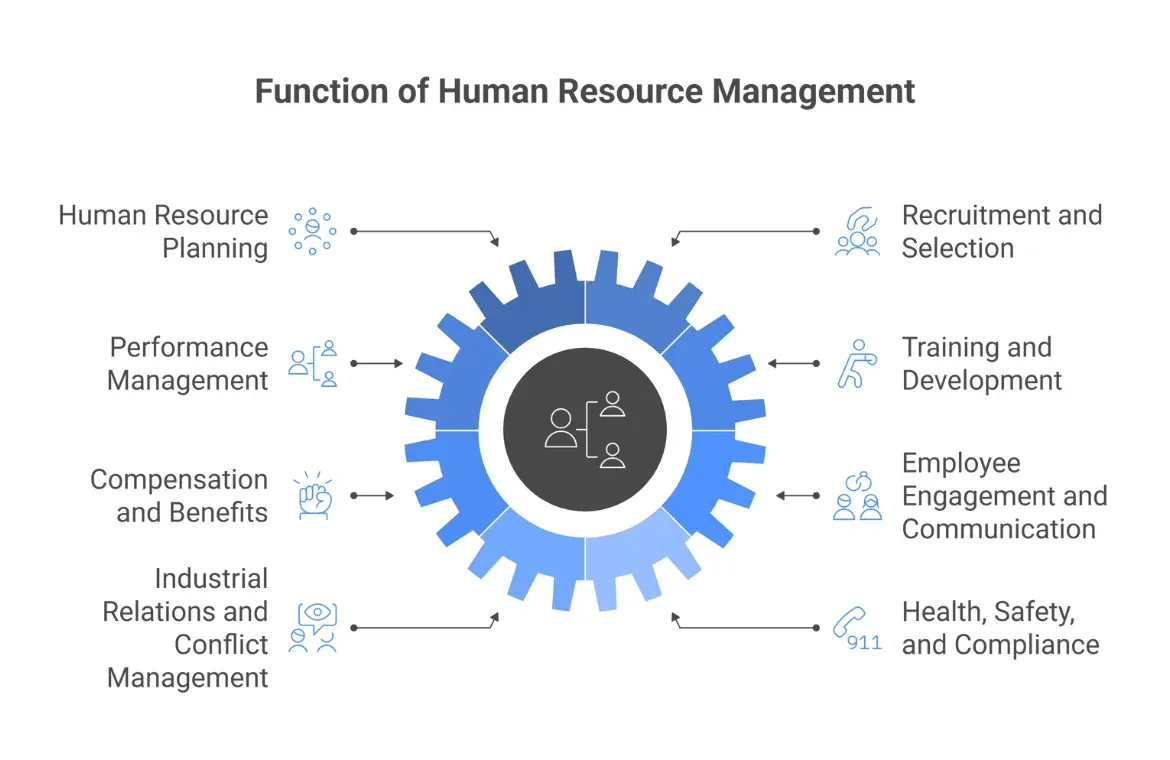
1. Human Resource Planning: HRM forecasts the organization’s future workforce requirements and ensures that the right number of employees with the appropriate skills are available. This function helps avoid talent shortages or excesses and supports long-term strategic goals.
2. Recruitment and Selection: This involves attracting, screening, and hiring candidates whose skills, qualifications, and values align with the organization’s objectives. Effective recruitment ensures the organization has a capable workforce to drive growth.
3. Performance Management: HRM monitors and evaluates employee performance to ensure productivity and goal alignment. This includes setting performance standards, conducting appraisals, and providing constructive feedback for continuous improvement.
4. Training and Development: HR managers organize learning programs to enhance employees’ skills, knowledge, and competencies. This not only improves individual performance but also prepares the workforce for future challenges, fostering organizational growth.
5. Compensation and Benefits: HRM designs and implements fair and competitive compensation structures and benefits packages. This function motivates employees, enhances retention, and ensures alignment with market standards.
6. Employee Engagement and Communication: HR fosters a positive work environment by encouraging open communication, organizing team-building activities, and building strong employee relationships. Engaged employees are more productive, loyal, and satisfied.
7. Industrial Relations and Conflict Management: HR manages relationships between employees, management, and unions. By addressing disputes impartially and ensuring a harmonious workplace, this function maintains organizational stability and employee morale.
8. Health, Safety, and Compliance: HR ensures workplace policies comply with legal regulations, promotes employee safety, and cultivates a healthy work culture. This reduces risks, enhances productivity, and protects the organization from legal issues.
These functions collectively make HRM a strategic partner in building a skilled, motivated, and satisfied workforce, which is essential for achieving organizational success.
Emerging Trends in Human Resource Management for 2026
AI and automation in HR processes
HR leaders have embraced AI at a rapid pace. About 61% of them are either planning or using generative AI as of January 2025. AI now reshapes traditional functions through automated resume screening, customized learning systems, and evidence-based decision-making. HR teams have made progress, with 38% of leaders trying or implementing AI solutions to improve their processes. They've evolved from just supporting AI implementation to becoming strategic partners in AI transformation.[KA1] [VP2]
Focus on employee wellbeing and mental health
Employee wellbeing has grown beyond simple health programs into an integrated approach that covers physical, emotional, and mental health. Companies now understand that integrated wellbeing programs affect performance significantly. Research shows that investing in mental health brings substantial returns through better employee retention and lower healthcare costs.
Rise of skills-based workforce planning
Skills-based workforce planning marks a key change from traditional headcount approaches. This strategy matches people's skills to job requirements rather than formal qualifications. Companies that put skills first are more likely to see positive results in their business metrics. The approach helps create a more adaptable workforce. Organizations using skills-based planning are 57% more likely to spot and handle change successfully.
How Technology is Transforming Human Resource Manager?
Technology is fundamentally reshaping the role of Human Resource Management (HRM), turning it from a traditionally administrative function into a strategic driver of organizational growth. Here’s an insightful look at the transformation:
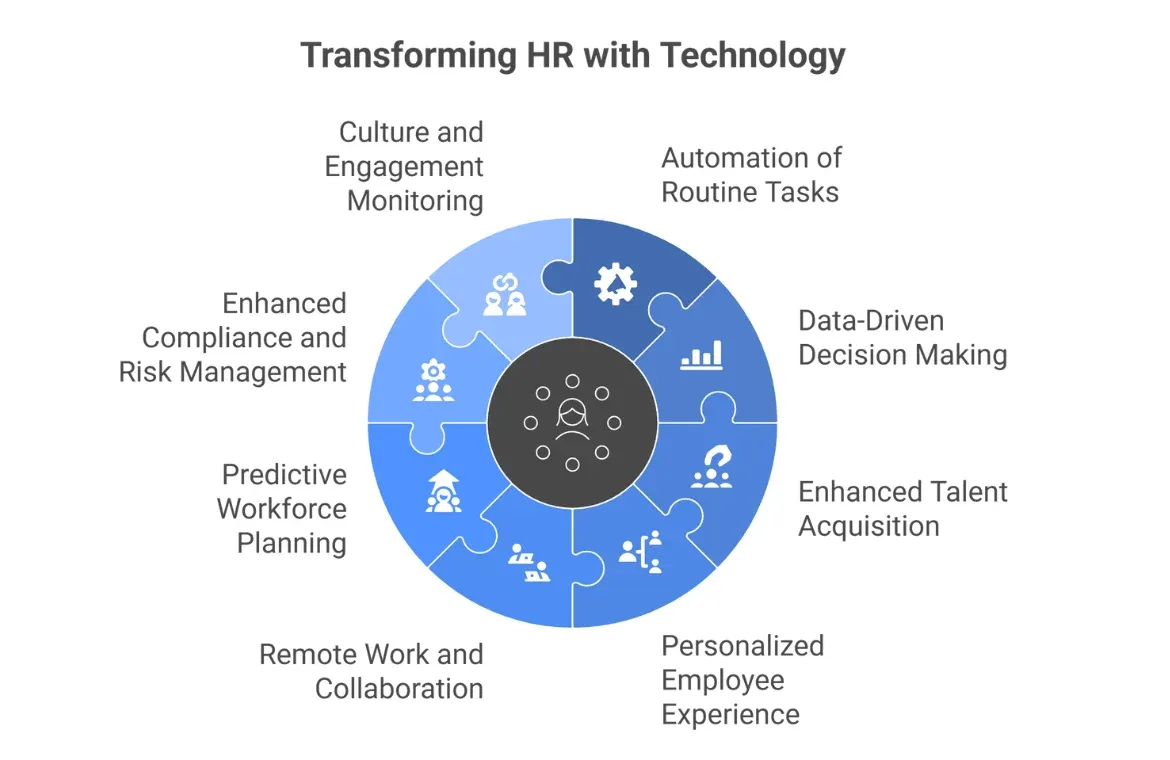
- Automation of Routine Tasks
Technologies like HR software and AI-driven tools automate repetitive tasks such as payroll processing, attendance tracking, and resume screening. This allows HR professionals to focus on strategic initiatives like talent development, workforce planning, and employee engagement. - Data-Driven Decision Making
Advanced HR analytics enable managers to make evidence-based decisions. By leveraging big data, HR can track employee performance, predict attrition risks, and identify skills gaps. This shifts HR from intuition-based to insight-driven management, increasing organizational efficiency. - Enhanced Talent Acquisition
AI-powered recruitment tools analyze large volumes of applications, identify high-potential candidates, and even predict cultural fit. Technology streamlines sourcing, shortlisting, and onboarding processes, reducing hiring time and improving quality of hire. - Personalized Employee Experience
HR technology facilitates personalized learning, career development, and benefits management. Platforms can tailor training programs based on individual learning styles and career paths, boosting employee satisfaction and retention. - Remote Work and Collaboration
Tools like cloud-based HR systems, collaboration platforms, and virtual communication apps enable seamless remote work. HR can now manage distributed teams effectively, monitor productivity, and maintain employee engagement regardless of location. - Predictive Workforce Planning
AI and machine learning allow HR to forecast future workforce needs, assess skill shortages, and plan succession strategies. This ensures that organizations remain agile and prepared for market and industry shifts. - Enhanced Compliance and Risk Management
Technology helps maintain accurate records, track labor law compliance, and monitor workplace safety. Automated alerts and dashboards reduce the risk of non-compliance and safeguard the organization from legal and financial liabilities. - Culture and Engagement Monitoring
Sentiment analysis, pulse surveys, and engagement platforms help HR measure organizational culture and employee morale in real time. This allows for proactive interventions that maintain a positive work environment and improve overall performance.
Future of Human Resource Management
1. Technology and Data
The future of HR will be powered by AI, automation, and predictive analytics. These technologies will move HR beyond administration toward proactive strategy using data to anticipate workforce trends, identify skill gaps, and personalize employee experiences.
Routine HR tasks like payroll, recruitment screening, and performance tracking will become largely automated, freeing HR professionals to focus on innovation and employee engagement.
Ethical AI governance and digital literacy will be critical competencies for HR teams, ensuring that technology enhances rather than replaces the human element.
Emerging Sub-Trends:
- Predictive analytics for workforce planning.
- AI-driven recruitment and talent management.
- Automation of repetitive HR processes.
- Ethical and transparent AI governance.
2. Workforce Evolution
By 2030, the workforce will be more diverse, distributed, and fluid than ever before. Hybrid and remote work will remain central, requiring HR to build flexible systems that support productivity and belonging across geographies.
The gig economy and project-based employment will expand, demanding adaptive talent models and continuous reskilling. HR will also navigate generational transitions, as Gen Z and Millennials redefine leadership, work-life balance, and purpose-driven employment.
Emerging Sub-Trends:
- Hybrid and remote work optimization.
- Rise of gig and project-based talent models.
- Continuous upskilling and digital learning ecosystems.
- Generational diversity and inclusive leadership.
3. Experience and Culture
As technology transforms work, HR’s role in building human connection and culture will become even more vital. Employee wellbeing, inclusion, and trust will be the foundations of engagement and performance. Culture will need to be actively managed embedded into workflows, leadership behavior, and everyday decision-making.
Companies that prioritize mental health, flexibility, and purpose will attract and retain top talent. HR will act as both a strategic architect and a human advocate, ensuring the organization remains empathetic and values-driven.
How to Build an Effective HR Strategy in 2026
Step 1. Understand How HR Delivers Value
HR must go beyond traditional administrative roles and clearly define how its initiatives contribute to overall business success. This involves linking HR activities, like recruitment, learning, and engagement to measurable business outcomes such as innovation, productivity, and customer satisfaction.
Step 2. Consider Emerging Trends
An effective HR strategy must anticipate and adapt to external shifts such as technological advancements, automation, changing employee expectations, and new work models like hybrid or remote work. Staying ahead of these trends ensures HR remains relevant and resilient in a constantly evolving landscape.
Step 3. Conduct a SWOT Analysis
By assessing internal strengths and weaknesses alongside external opportunities and threats, HR leaders can identify gaps and areas for strategic focus. A well-executed SWOT analysis helps tailor HR initiatives to business needs and prepares the organization to mitigate potential workforce challenges.
Step 4. Plan Long-Term Yet Build for Flexibility
While HR strategies typically span three to five years, they must remain adaptable to rapid market or organizational changes. Flexibility allows HR to pivot priorities, implement new technologies, and respond effectively to shifting business goals or workforce dynamics.
Step 5. Secure Leadership Buy-In
Leadership support is critical for successful implementation. HR must communicate the strategic value of its initiatives, align objectives with business priorities, and secure adequate resources and sponsorship from executives to ensure long-term impact.
Step 6. Upskill Your HR Team
The modern HR team needs more than people management skills it must develop business acumen, digital literacy, and data-driven decision-making capabilities. Investing in HR’s professional growth ensures the function remains a strategic partner rather than a support department.
Step 7. Monitor and Measure Progress
Continuous measurement ensures the HR strategy delivers tangible results. HR leaders should use key performance indicators (KPIs) to track outcomes such as employee engagement, retention, and productivity, adjusting the strategy as needed to maintain alignment with business goals.
Looking Ahead
Human Resource Management (HRM) remains the driving force behind every successful organization, ensuring people, performance, and purpose align seamlessly. As we move into 2026, HR is evolving into a data-driven, strategic function powered by technology and analytics. Modern HR leaders must blend emotional intelligence with analytical skills to make smarter, evidence-based decisions.
Strengthening your expertise through a general management course can equip you with the tools to lead in this transformation. Whether you aim to optimize talent, culture, or strategy, the future of HR belongs to professionals who can turn insights into impact start investing in your growth today and shape the next era of human resource leadership.
Frequently Asked Questions
Q1. What are the key trends shaping Human Resource Management in 2026?
The main trends include the widespread adoption of AI and automation in HR processes, an increased focus on employee wellbeing and mental health, and the rise of skills-based workforce planning. These trends are transforming how HR departments operate and deliver value to organizations.
Q2. How is Human Resource Management defined in today's business environment?
Human Resource Management is a strategic approach to managing an organization's workforce. It involves recruiting, selecting, and developing employees, as well as managing their performance and wellbeing. The primary goal is to optimize employee performance to achieve better organizational outcomes.
Q3. What are the core functions of Human Resource Management?
The core functions of HRM include talent acquisition and onboarding, employee training and development, compensation and benefits administration, and employee relations and compliance. These functions work together to support employees throughout their career journey and drive organisational success.
Q4. How is AI impacting Human Resource Management?
AI is transforming traditional HR functions through automated resume screening, personalized learning systems, and data-driven decision-making. As of 2025, 61% of HR leaders are actively planning or already deploying generative AI. HR teams are increasingly becoming co-strategists in AI transformation rather than merely supporting implementation.
About the Author
TalentSprint
TalentSprint, Part of Accenture LearnVantage, is a global leader in building deep expertise across emerging technologies, leadership, and management areas. With over 15 years of education excellence, TalentSprint designs and delivers high-impact, outcome-driven learning solutions for individuals, institutions, and enterprises. TalentSprint partners with leading enterprises and top-tier academic institutions to co-create industry-relevant learning experiences that drive measurable learning outcomes at scale.
Advance your career with the right program