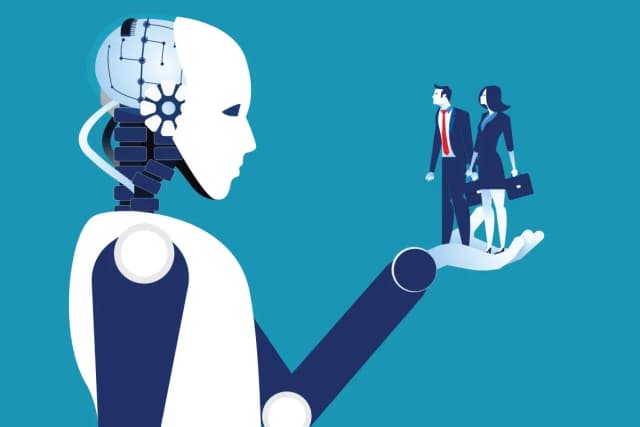
Why Every Fresher Needs AI Literacy, Even If You’re Not Technical?

If you think AI is only for programmers, think again.
The moment you step into your first job, you’ll notice something unusual, AI is everywhere. It’s helping draft reports, analyze performance, screen candidates, suggest marketing strategies, and even support customer conversations.
You may not see it directly, but it’s shaping decisions around you.
And here’s the reality: in today’s workplace, AI literacy is not a technical advantage, it’s a professional necessity.
Also Read: What is AI Literacy? Everything you need to know
What Does AI Literacy Actually Mean?
"AI literacy refers to "a set of competencies that enables individuals to critically evaluate AI technologies as in, communicate and collaborate effectively with AI; and use AI as a tool online, at home, and in the workplace."
AI knowledge is vital in today's data-driven world. AI literacy gives people the skills to assess AI technologies, interact with AI systems, and use them as tools at work and in daily life.
Core Components of AI Literacy
AI literacy has several connected elements that go beyond technical knowledge. Three main abilities make up its foundation:
- Understanding AI at a high level: Knowing what AI can do, how it learns from data, and its limitations. This includes concepts like machine learning algorithms, natural language processing, and neural networks.
- Practical engagement: People need to use AI in their daily work by asking clear questions and building simple processes. They should know how to refine prompts and solve real problems with AI.
- Critical evaluation: Users must assess how accurate and reliable AI outputs are. They should spot potential biases and know when human judgement works better.
AI literacy develops on a spectrum. It starts with simple awareness and grows into deeper understanding of risks and misuse.
What AI Literacy Is Not…?
Many people think that using tools like ChatGPT means they're AI literate, but that's not true. You don't need engineering expertise or technical credentials. Programming skills aren't necessary to benefit from AI knowledge.
AI literacy focuses on making smart decisions about AI use in our tech-driven world, not just technical terms or coding.
AI literacy differs from AI competency. Literacy covers knowledge and skills, while competency focuses on putting that knowledge to good use.
Also Read: Why Every Company Needs AI Literacy to Thrive
Why Non-Technical Freshers Need AI Knowledge?
Many freshers assume AI is only for engineers, data scientists, or developers. But the truth is, AI has quietly become part of almost every workplace, including non-technical roles.
Here’s why AI knowledge matters even if you don’t come from a technical background:
1. AI Is Already Part of Your Job: From resume screening in HR to customer insights in marketing, AI tools are embedded in everyday workflows. Even finance teams use AI for forecasting and risk analysis. Understanding how these tools work helps you use them effectively rather than blindly trusting them.
2. It Makes You More Productive: AI can help draft emails, summarize reports, analyze data, generate ideas, and automate repetitive tasks. A fresher who knows how to collaborate with AI can deliver results faster, without compromising quality.
3. It Sharpens Your Critical Thinking: AI doesn’t always get things right. It can be biased or inaccurate. AI literacy teaches you to question outputs, verify information, and apply human judgment, a skill employers value highly.
4. It Gives You a Competitive Edge: When two candidates have similar qualifications, the one who understands AI tools and applies them strategically often stands out. AI knowledge signals adaptability and future-readiness.
5. It Future-Proofs Your Career: Workplaces are becoming increasingly AI-enabled. Freshers who understand AI won’t just survive change; they’ll grow with it.
Hence, you don’t need to build AI systems. But you do need to know how to work with them. In today’s world, AI literacy isn’t a technical skill, it’s a career skill.
The Competitive Edge AI Literacy Provides
Imagine walking into your first job interview. Two candidates have similar degrees, similar grades, and similar enthusiasm. But one of them understands how AI tools can automate research, analyze trends, generate insights, and improve workflows.
Guess who stands out?
That’s the competitive edge AI literacy creates.
1. You Become a Problem-Solver, Not Just a Task-Doer
AI literacy helps you think in terms of efficiency and impact.
Instead of asking, “What task should I complete?” you start asking, “How can this be done better, faster, and smarter?”
Employers value this mindset immediately.
2. You Understand the Language of the Modern Workplace
Even in non-tech roles, conversations now include data, automation, analytics, optimization, and AI-driven insights.
If you understand how AI works at a basic level, what it can do, where it fails, and how to use it responsibly, you participate confidently in strategic discussions.
That visibility accelerates growth.
3. You Work Smarter from Day One
Freshers who are AI-literate:
- Generate structured reports faster
- Analyze data without advanced coding
- Conduct research efficiently
- Automate repetitive tasks
- Create better presentations and content
While others are figuring out the tool, you’re already delivering results.
4. You Adapt Faster to Change
Industries are evolving rapidly because of AI. Roles are being reshaped. New job profiles are emerging.
AI literacy makes you adaptable. You are not threatened by automation, you collaborate with it.
And adaptability is the most valuable career currency today.
5. You Signal Future Readiness
Recruiters don’t just look at what you know, they look at how ready you are for what’s coming next.
AI-literate candidates signal:
- Curiosity
- Initiative
- Digital confidence
- Strategic thinking
That combination makes you future-proof.
How Freshers Can Start Building AI Literacy?
AI literacy isn’t defined by your background, it’s shaped by your curiosity and the way you learn. Whether you’re a computer science graduate or a business student, the key is to build practical understanding of how AI works and how it can be applied in real work scenarios.
1. Begin with the Basics
- What is generative AI?
- How do models understand language and patterns?
- Where does human judgment still matter?
This foundational understanding removes fear and turns AI into an ally instead of a mystery.
2. Get Hands-On with Tools
AI isn’t just a concept, it’s practical. Try beginner-friendly tools like ChatGPT or image generators. Practice simple tasks like:
- Drafting summaries
- Generating ideas
- Exploring different prompts
- Evaluating output quality
3. Learn with Real Examples and Projects
Merely reading about AI isn’t enough. You need applied experience, solving tasks that mirror real workplace problems. That’s when AI literacy becomes meaningful.
How the AI Infinity Program Helps Freshers Build AI Skills?
If you’re looking for structured support, especially as a fresher, the AI Infinity program by TalentSprint is designed to take you from curious beginner to confident practitioner.
Here’s how it aligns perfectly with the roadmap above:
With AI inifinity you will be getting flexible, Role-Based Learning with
1. Tailored tracks:
- Functional Track: Ideal for non-technical freshers who want to apply AI in business, marketing, HR, and daily workflows.
- Technical Track: Designed for learners who want to understand core AI concepts, explore development frameworks, and build applications.
This means both tech and non-tech freshers can find a path that fits their goals without unnecessary complexity.
2. Hands-On Tool Experience
The program includes practice with 20+ leading AI tools such as ChatGPT, Copilot, Gemini, Perplexity, Claude, and more. This prepares learners to engage with the tools they’ll encounter in real jobs, not just study them theoretically.
3. Real-World Projects & Skill Tasks
- 12 industry-relevant AI projects simulate workplace challenges.
- 20 skill-based assignments build confidence step by step.
Freshers get to apply AI, not just learn about it.
4. Measured Growth & Feedback
With structured assignments, project evaluations, and performance checkpoints, learners can track progress, making their AI literacy measurable and tangible.
5. Year-Long Access & Updates
AI changes fast. AI Infinity provides one year of access to content and tools, so learners stay current even as the ecosystem evolves.
Conclusion
You don’t need to code like a developer or build models like a data scientist to thrive in the age of AI. But you do need to understand it.
AI literacy is no longer a “tech skill.” It’s a workplace skill. Just like knowing how to use email, spreadsheets, or presentations once became essential, understanding how AI works, what it can do, where it fails, and how to collaborate with it, is becoming the new baseline for every professional.
Because the future won’t belong to those only who have built AI. It will belong to those who will actually learn to understand how to use it wisely, ethically, and creatively.
So even if you’re “not technical,” don’t sit on the sidelines. Learn the language. Experiment. Stay curious.
Because in this new world of work, AI literacy isn’t optional. It’s your launchpad.
Frequently Asked Questions
Q1. Can non-technical professionals learn AI?
Yes, non-technical professionals can learn AI. With the availability of no-code courses, beginner-friendly AI tools, and a curious mindset, anyone can become AI-literate. You don't need to be a programmer to master AI; start at your own pace and build your knowledge gradually.
Q2. Why is AI literacy important for everyone?
AI literacy is crucial for all because it enables better decision-making, enhances problem-solving skills, and improves productivity across various industries. It also empowers individuals to use AI tools responsibly, identify potential biases, and ensure AI benefits society ethically.
Q3. How can freshers start building AI literacy?
Freshers can begin building AI literacy by exploring user-friendly AI applications like ChatGPT and Google Teachable Machine. They can also utilise free online resources such as 'Elements of AI' or Microsoft's 'AI for Beginners' course. Engaging in practical projects that address real workplace challenges is another effective way to develop AI skills.
Q4. What are the risks of ignoring AI literacy?
Ignoring AI literacy can lead to professional stagnation, reduced career opportunities, and being outpaced by AI-capable peers. As AI becomes more integrated into various industries, those without AI skills may find themselves at a significant disadvantage in the job market and struggle to remain competitive in their roles.
Q5. How does AI literacy provide a competitive edge in the job market?
AI literacy provides a competitive edge by making job applicants stand out, as 81% of hiring managers prioritise AI-related skills. It also leads to faster career progression, higher productivity from day one, and future-proofs careers. AI-literate professionals often earn 20-40% more due to their ability to deliver superior results in less time.
About the Author
TalentSprint
TalentSprint, Part of Accenture LearnVantage, is a global leader in building deep expertise across emerging technologies, leadership, and management areas. With over 15 years of education excellence, TalentSprint designs and delivers high-impact, outcome-driven learning solutions for individuals, institutions, and enterprises. TalentSprint partners with leading enterprises and top-tier academic institutions to co-create industry-relevant learning experiences that drive measurable learning outcomes at scale.
Advance your career with the right program