How AI Agents Are Shaping Future Work for Product, Engineering, and Analytics

TL;DR:AI agents are set to become valuable workplace teammates for product managers, engineers, and analysts. By handling repetitive and operational tasks, they enable professionals to focus on strategy, innovation, and decision-making. As AI becomes embedded in everyday workflows, understanding Generative AI and Agentic AI can help professionals maximize new opportunities.
“Your next teammate might be the most productive one you've ever had”.
The most interesting hiring trend of the next few years may not involve hiring at all.
Across industries, organizations are beginning to experiment with AI agents that can analyze information, coordinate tasks, monitor systems, and support decisions with minimal human intervention. Unlike earlier AI tools that largely responded to prompts, these systems are designed to work toward goals.
For product managers, engineers, and analysts, this marks an important shift.
Not because AI is taking over their jobs, but because it is changing how those jobs are done.
The hours spent gathering information, tracking updates, creating reports, monitoring systems, or organizing workflows may gradually shrink. In their place comes more time for the work that often creates the greatest value: making decisions, solving complex problems, and driving innovation.
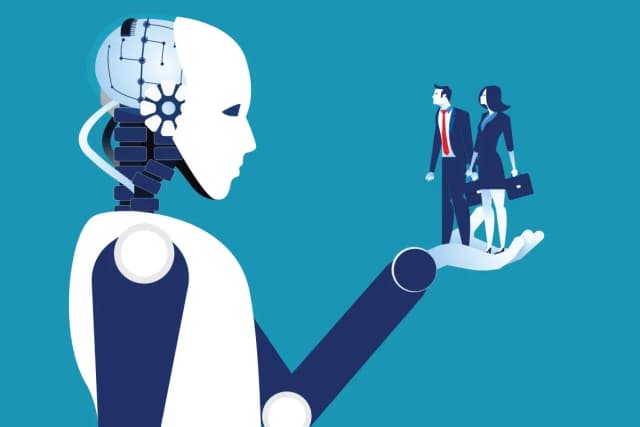
In many ways, AI agents are becoming less like software and more like teammates.
And that raises an interesting question, “How will professionals work when some of their most capable collaborators aren't human?”
From AI tools to AI teammates
The first wave of Generative AI transformed how professionals interact with information. It helped people write faster, search smarter, summarize content, and automate repetitive tasks.
AI agents represent the next stage of that evolution.
Rather than assisting with individual tasks, they can help manage entire workflows. They can gather information, identify patterns, connect tools, and support actions across multiple systems.
The real significance of AI agents, however, isn't technological.
It's organizational.
As AI handles more operational work, professionals gain more space for strategic thinking, creativity, and decision-making.
That's where the real opportunity lies.
Also Read: AI Tools vs AI skills
Product managers may spend less time managing work and more time shaping outcomes
One of the biggest misconceptions about product management is that product managers spend most of their time defining vision and strategy.
In reality, much of the role involves collecting context before decisions can be made. Customer feedback must be reviewed, competitors monitored, priorities aligned, and information synthesized.
AI agents have the potential to absorb much of this groundwork.
Instead of manually sorting through large volumes of feedback or tracking competitive developments, product managers can focus on evaluating opportunities, making trade-offs, and identifying what creates the greatest value for users and the business.
The role becomes less about processing information and more about applying judgment.
What becomes more important?
As routine coordination becomes easier, the most valuable product management skills remain deeply human:
- Strategic thinking
- Customer empathy
- Business judgment
- Stakeholder alignment
- Vision setting
AI may accelerate the path to insights.
Product managers still decide what to do with them.
Engineers may shift from execution to acceleration
Software engineering is already experiencing the impact of AI-assisted development.
The next phase extends beyond code generation.
AI agents can help monitor systems, identify issues, generate tests, maintain documentation, and support development workflows. This doesn't reduce the importance of engineering expertise. If anything, it increases it.
As repetitive tasks become easier to automate, engineers gain more time to focus on architecture, scalability, security, and innovation.
The job becomes less about manually executing every task and more about designing systems, solving complex problems, and guiding technological direction.
What becomes more important?
Engineers will continue to differentiate themselves through:
- Systems thinking
- Technical leadership
- Security and governance
- Architecture decisions
- Innovation
The future engineer isn't replaced by AI but, they're amplified by it.
Analysts may spend more time explaining insights than finding them
For analysts, some of the most time-consuming work happens before analysis even begins. Data must be collected, cleaned, validated, and organized before insights can emerge.
As AI agents become more capable of handling these preparation-heavy activities, analysts can spend more time where they create the most value.
Not in gathering information, but in interpreting it.
Businesses rarely struggle because they lack data rather, they struggle because they lack clarity.
This is why the analyst's role remains critical. Context, critical thinking, and business understanding continue to be essential in transforming data into decisions.
What becomes more important?
As AI becomes better at surfacing patterns, analysts will increasingly focus on:
- Business context
- Strategic recommendations
- Decision support
- Stakeholder communication
- Problem framing
AI may identify what is happening.
Analysts help organizations understand why it matters.
The real opportunity is not automation, it's amplification.
Looking across these roles, a clear pattern emerges.
- AI agents are not creating value because they can replace expertise, they create value because they allow expertise to be applied more effectively.
- Product managers gain more time for strategic thinking.
- Engineers gain more time for innovation.
- Analysts gain more time for insight generation and business impact.
The conversation, therefore, is not really about AI.
It's about how professionals can spend less time on operational work and more time on meaningful work.
| Less Time On | More Time On |
| Administrative coordination | Strategic thinking |
| Information gathering | Innovation |
| Manual reporting | Decision-making |
| Workflow management | Problem-solving |
| Repetitive activities | Value creation |
The organizations that benefit most from AI won't simply automate work rather, they'll elevate it.
Also Read: Rise of AI Agents: Autonomous Systems and the Future of Workflows
Why AI agent literacy could become a valuable career skill?
Every major technology shift creates new opportunities for those who understand it early.
- Cloud computing changed how organizations build technology.
- Data analytics transformed how businesses make decisions.
Today, Generative AI and Agentic AI are beginning to reshape how work gets done.
As AI agents become part of product development, software engineering, analytics, and business operations, professionals are increasingly encountering AI-powered systems in their everyday workflows.
The future may not require everyone to become an AI specialist.
But it is likely to reward professionals who understand how AI can be applied strategically within their roles.
Those who can effectively collaborate with AI systems will be better positioned to identify opportunities, improve workflows, and create greater impact within their organizations.
Understanding the technology behind the shift
As AI agents become part of everyday work, many professionals are naturally becoming curious about the technologies driving this transformation.
They don't necessarily want to become AI researchers or machine learning engineers.
They simply want to understand the tools that are reshaping the workplace around them.
This growing interest is why more professionals are exploring areas such as Generative AI and Agentic AI. A structured learning pathway, such as the Generative AI and Agentic AI course by TalentSprint part of Accenture, can help professionals build familiarity with emerging AI concepts and better understand how these technologies are being applied across modern organizations.
The objective isn't merely to follow a trend.
It's to develop a deeper understanding of a technology that is increasingly influencing how products are built, software is developed, data is analyzed, and decisions are made.
In a workplace where AI capabilities continue to evolve, understanding the possibilities can be just as valuable as using the tools themselves.
The real value of AI agents isn't efficiency. it's focus.
The conversation around AI often starts with productivity. But the bigger opportunity is what professionals gain back.
More time to think strategically. More time to solve meaningful problems. More time to innovate.
For product managers, engineers, and analysts, AI agents can reduce operational work and simplify routine workflows, creating more space for high-impact decisions and innovation.
In that sense, AI agents aren't just changing how work gets done.
They're changing where professionals can create the most value.
Frequently Asked Questions
Q1. What are AI agents, and how are they different from AI assistants?
AI assistants respond to prompts and help with individual tasks such as writing, coding, or summarizing. AI agents go a step further by working toward goals, gathering information, coordinating tasks, and supporting workflows across multiple systems with minimal human intervention.
Q2. How will AI agents help product managers?
AI agents can help product managers analyze customer feedback, track market trends, monitor competitors, and organize information faster. This allows product managers to spend less time on coordination and more time on product strategy, prioritization, and customer-focused decision-making.
Q3. How will AI agents impact software engineering roles?
AI agents can support engineers by monitoring systems, identifying issues, generating tests, and maintaining documentation. Rather than replacing engineers, they can reduce routine work and enable greater focus on architecture, innovation, security, and complex problem-solving.
Q4. How can analysts benefit from AI agents?
AI agents can automate data preparation, identify trends, highlight anomalies, and organize insights from multiple sources. This gives analysts more time to interpret findings, provide business context, and deliver recommendations that support better organizational decisions.
Q5. Will AI agents replace product managers, engineers, and analysts?
AI agents are more likely to transform these roles than replace them. While they can automate repetitive and operational tasks, human skills such as judgment, creativity, communication, leadership, and strategic thinking remain essential for driving business outcomes.
About the Author
TalentSprint
TalentSprint, Part of Accenture LearnVantage, is a global leader in building deep expertise across emerging technologies, leadership, and management areas. With over 15 years of education excellence, TalentSprint designs and delivers high-impact, outcome-driven learning solutions for individuals, institutions, and enterprises. TalentSprint partners with leading enterprises and top-tier academic institutions to co-create industry-relevant learning experiences that drive measurable learning outcomes at scale.
Explore Our Programme
Advance your career with the right program