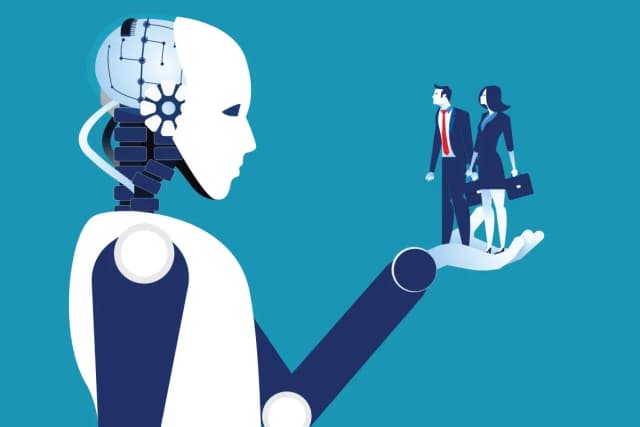
What are top AI skills and why do they matter in today's workplace?

Walk into any modern workplace today and you will see a quiet shift unfolding. A human resources manager uses AI to screen resumes within minutes. A retail analyst predicts sales far more accurately with machine learning tools. A designer creates five campaign variations in seconds using generative AI.
These are not futuristic stories but everyday examples of how AI is reshaping work.
According to a Pwc report, 2025 Global AI Jobs Barometer, it is being shown that workers with AI skills saw a 56% wage premium and industries exposed to AI achieved drastically higher productivity growth and revenue per employee than less-exposed industries.
What are AI Skills?
"AI is going to reshape every industry and every job.", Reid Hoffman, Co-founder of LinkedIn
AI skills are the abilities that help individuals understand and use artificial intelligence tools effectively. They include both technical skills like data analysis, machine learning basics, and working with AI models, as well as non technical skills like prompt engineering, AI powered decision making, automation knowledge, and using generative AI tools for everyday tasks.
The Top AI Skills Employers Want
The modern job market demands candidates with practical AI skills beyond theoretical knowledge. A recent IBM report reveals that 87% of executives expect AI to increase rather than replace jobs.
1. AI Literacy and Prompt Design
Prompt engineering is becoming essential as language models move into real business use. It involves crafting clear and effective prompts so AI produces accurate results. Professionals must know how to structure prompts, build reusable templates, and refine outputs. Strong prompt skills consistently lead to better generative AI performance.
Also Read: Why Every Company Needs AI Literacy to Thrive
2. Machine Learning Fundamentals
Companies value professionals who can turn real problems into predictive tasks. Basic ML knowledge includes understanding supervised, unsupervised, and reinforcement learning, and using common algorithms like decision trees or neural networks. Familiarity with frameworks like scikit learn, PyTorch, or TensorFlow helps deploy models efficiently.
3. Data Skills and Data Engineering
AI succeeds only when the data is clean and well prepared. Key skills include data cleaning, processing, visualisation, and feature engineering. SQL remains important for extracting data, while tools like pandas help manage and manipulate datasets effectively.
4. Natural Language Processing and Multimodal Understanding
Modern AI combines text, images, audio, and video. Professionals who understand multimodal systems can build solutions that connect different data types, such as analysing medical images alongside patient notes or combining visual cues with text for better insights.
5. Model Deployment and MLOps
Strong models need proper deployment and maintenance. MLOps skills include building automated pipelines, containerising applications, monitoring model performance, and updating systems as new data arrives. These practices ensure AI remains reliable in real world environments.
6. Responsible AI and Explainability
Businesses must ensure AI is fair, transparent, and compliant. Professionals should be able to explain model decisions, detect biases, and apply fairness metrics. These skills build trust and are crucial in regulated sectors.
7. Soft Skills That Matter
As AI reshapes workplaces, soft skills have become just as valuable as technical expertise. These human abilities help professionals use AI wisely, make better decisions, and work effectively in teams.
- Critical thinking and judgement: AI can generate answers fast, but it still needs human oversight.
- Communication and storytelling: Great ideas only create impact when communicated clearly.
- Adaptability and continuous learning: AI evolves quickly, and so must professionals. Being open to learning new tools, experimenting with new workflows, and adapting to change helps employees thrive in a fast moving environment.
- Creativity and problem solving: AI improves efficiency, but creativity remains uniquely human.
- Collaboration and leadership: AI projects often bring together data teams, business leaders and domain experts.
Also Read: Soft Skills Every IT Fresher Should Build
Why AI skills matter in the workplace?
AI skills bring value that goes way beyond the reach and influence of career growth. Companies that invest in these capabilities see transformative effects throughout their operations. AI now plays a central role in business strategy rather than just serving specific applications.
1. Enhanced Productivity and Efficiency
AI can automate repetitive tasks, process large amounts of data, and generate insights quickly. Professionals with AI skills can leverage these tools to work smarter, focus on high-value tasks, and deliver results faster.
2. Better Decision Making
AI provides data-driven recommendations, but humans interpret them. Skills like critical thinking, AI literacy, and model understanding allow employees to make informed, accurate, and ethical decisions.
3. Innovation and Problem Solving
AI amplifies creativity by enabling scenario simulations, predictive analysis, and idea generation. Professionals with AI skills can use these tools to solve complex problems and develop innovative solutions that drive business growth.
4. Competitive Advantage
Companies increasingly rely on AI to remain competitive. Employees who understand AI tools, machine learning, data management, and generative AI help their organizations stay ahead and create market-leading strategies.
5. Adaptability in a Rapidly Changing Environment
AI and technology evolve rapidly. Professionals with AI skills, both technical and human-centered, can adapt to change, learn new tools quickly, and stay relevant in the modern workforce.
6. Collaboration Across Teams
AI projects often involve cross-functional teams. Professionals who combine technical expertise with communication, leadership, and strategic thinking can bridge gaps between business and technical teams, ensuring successful implementation.
7. Ethical and Responsible AI Use
As AI becomes integral, ethical use and compliance are critical. Understanding responsible AI practices, fairness, and explainability helps organizations build trust and avoid risks.
Overall AI skills empower professionals to work smarter, think critically, innovate, and lead responsibly. They are no longer optional, they are key to thriving in today’s AI-driven workplace.
Also Read: How AI is reshaping Job opportunities for freshers?
How Can Individuals Build These Skills?
You need a well-laid-out approach and regular practice to develop AI competencies. The path to becoming skilled at artificial intelligence technology needs both theory and hands-on experience.
Start with foundational courses
A solid grasp of AI fundamentals should be your first step. Talentsprint’s AI Infinity equips professionals with practical, hands-on AI skills for today’s workplace. Through real projects and popular AI tools, learners can apply AI in business, creative work, and daily tasks. It’s the perfect program to stay relevant and thrive in an AI-driven world.
Work on real-world projects
The next step is putting theory into ground application. You should think over joining Kaggle competitions that let you apply your learning and connect with other practitioners. These projects are a great way to get hands-on experience that helps you grasp AI concepts better.
Join AI communities and forums
Learning works better when you involve yourself with AI communities like Hugging Face and DeepLearning.AI give resources where developers, researchers, and enthusiasts work together. These spaces speed up your learning through mentorship, real-life insights, and networking.
Earn certifications from trusted platforms
The next logical step is to confirm your skills through recognised certifications. According to some research it is said that, employers prefer candidates with AI experience.
Conclusion
In a world where adaptability is the strongest currency, AI skills have become the modern professional’s greatest investment.
Companies want people who can think creatively, understand intelligent systems, and use AI to amplify their potential in meaningful ways. This is why many professionals are now enrolling in AI courses to strengthen their capabilities and learn how to apply AI tools in practical, real workplace scenarios.
Employees who build the right AI skills through consistent learning not only stay relevant, they become the driving force behind innovation.
With every industry becoming data informed and technology enabled, the future workplace clearly belongs to those who blend human judgement with AI driven efficiency. These are the professionals who will lead, inspire, and shape the next era of work.
Frequently Asked Questions
Q1. What are the most important AI skills employers are looking for in 2025?
The top AI skills employers seek include AI literacy and prompt design, machine learning fundamentals, data engineering, natural language processing, model deployment, and responsible AI practises. Soft skills like leadership, critical thinking, and adaptability are also highly valued.
Q2. How can individuals effectively build AI skills?
Individuals can develop AI skills by starting with foundational courses, working on real-world projects, joining AI communities and forums, and earning certifications from trusted platforms. Consistent practise and hands-on experience are crucial for mastering AI concepts.
Q3. Why are AI skills important for organisations?
AI skills are vital for organisations as they drive innovation, improve efficiency, reduce operational costs, enhance decision-making with data, and help maintain competitiveness in the digital economy. Companies successfully implementing AI report faster revenue growth and higher employee satisfaction.
Q4. What resources are recommended for learning AI in 2025?
Recommended resources include online platforms like Coursera and Google AI Essentials, books such as "Artificial Intelligence: A Guide for Thinking Humans", podcasts like The Lex Fridman Podcast, and certifications from Stanford University and Google. Regularly following AI trends through newsletters and webinars is also advised.
Q5. How can organisations enable AI skill adoption among their employees?
Organisations can foster AI skill adoption by creating internal training programmes, offering learning stipends or reimbursements, encouraging cross-functional collaboration on AI projects, and promoting a culture of continuous learning. Establishing "AI academies" and appointing internal AI champions can also be effective strategies.
About the Author
TalentSprint
TalentSprint, Part of Accenture LearnVantage, is a global leader in building deep expertise across emerging technologies, leadership, and management areas. With over 15 years of education excellence, TalentSprint designs and delivers high-impact, outcome-driven learning solutions for individuals, institutions, and enterprises. TalentSprint partners with leading enterprises and top-tier academic institutions to co-create industry-relevant learning experiences that drive measurable learning outcomes at scale.
Advance your career with the right program