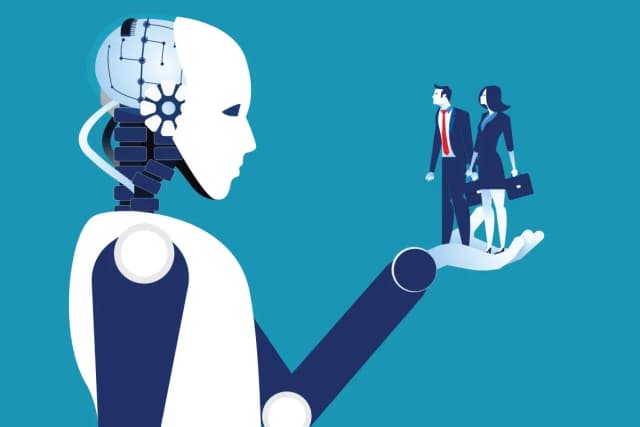
AI Transformation Strategies for Mid-Sized Companies

Artificial intelligence is no longer limited to large enterprises with extensive resources and specialised teams. Today, small and mid-sized businesses are increasingly recognising AI as a practical tool to improve efficiency, enhance customer experiences, and stay competitive in a rapidly evolving market.
In fact, 76% of small and mid-sized businesses are either actively using or exploring AI, signalling a major shift in how organisations of all sizes approach technology adoption. This growing interest highlights that AI is becoming more accessible, affordable, and relevant for businesses looking to scale operations and make smarter, data-driven decisions.
Why AI Matters for Mid-Sized Businesses?
Mid-sized businesses often operate in a unique position. They are large enough to compete with established enterprises but may not always have the same level of resources, infrastructure, or workforce scale.
At the same time, they must move faster than large organisations to stay competitive. This is where Artificial Intelligence can become a powerful enabler, helping mid-sized companies improve efficiency, make better decisions, and unlock new growth opportunities.
Improving Operational Efficiency
AI helps automate repetitive and time-consuming tasks, allowing employees to focus on higher-value work. Functions such as data processing, customer support, inventory management, and financial analysis can be handled more efficiently with AI-powered tools.
For example, many retail companies use AI to automate demand forecasting and inventory planning, reducing stock shortages and overstocking.
Similarly, AI-powered chatbots can manage customer queries 24/7, reducing the workload on support teams while improving response times.
Enabling Data-Driven Decision Making
Mid-sized businesses often collect large amounts of data but may struggle to convert it into actionable insights. AI-powered analytics tools can analyse patterns in sales, customer behaviour, and market trends, helping leaders make faster and more informed decisions.
For instance, AI models can predict future demand, identify emerging customer preferences, and highlight operational inefficiencies that may otherwise go unnoticed.
Enhancing Customer Experience
Customer expectations are constantly evolving, and personalised experiences have become a key differentiator. AI enables mid-sized companies to analyse customer data and deliver more relevant interactions.
E-commerce businesses, for example, use AI-driven recommendation systems to suggest products based on browsing behaviour and purchase history. This not only improves customer satisfaction but also increases sales and customer loyalty.
Competing with Larger Enterprises
Large enterprises often have the advantage of scale, but AI can help mid-sized companies level the playing field. By adopting AI-powered tools for marketing, supply chain optimisation, and financial forecasting, mid-sized organisations can operate more efficiently and respond quickly to market changes.
AI allows these companies to scale operations without significantly increasing costs, enabling them to compete more effectively with larger competitors.
Driving Innovation and Business Growth
Beyond operational improvements, AI can open new avenues for innovation. Businesses can use AI to develop new products, improve services, and identify emerging market opportunities.
For example, financial services firms use AI to detect fraud patterns, while logistics companies use predictive analytics to optimise delivery routes and reduce operational costs. These innovations help organisations stay relevant and adapt to changing market demands.
Preparing for the Future of Work
As AI becomes more integrated into business processes, employees increasingly work alongside intelligent systems. Mid-sized businesses that adopt AI early can build a workforce that is comfortable using AI tools for analysis, decision-making, and problem-solving.
This not only improves productivity but also prepares organisations for a future where human expertise and AI capabilities work together to drive business outcomes.
Common Challenges in AI Adoption for Mid-Sized Companies
While AI offers significant opportunities, mid-sized companies often face practical challenges when trying to adopt it effectively. Limited resources and infrastructure can make implementation more complex.
Limited budgets and resources: Mid-sized firms may not have the same financial or technological capacity as large enterprises to invest heavily in AI systems.
Skills and talent gap: Many organisations struggle to find employees with expertise in data science, AI tools, and analytics.
Data readiness issues: AI requires structured and high-quality data, but mid-sized companies often have fragmented or poorly managed data systems.
Integration with existing systems: Introducing AI into older IT systems or legacy software can be technically challenging.
Unclear implementation strategy: Some businesses experiment with AI tools without a clear roadmap for scaling them across operations.
Addressing these challenges is essential for mid-sized companies to move from initial AI experimentation to long-term transformation and business value.
Also Read: AI Adoption Framework for Enterprises
AI Transformation Strategies for Mid-Sized Businesses
For mid-sized businesses, adopting AI successfully requires more than experimenting with new tools. It involves a clear strategy that aligns technology with business goals, workforce capabilities, and long-term growth plans. The following strategies can help organisations implement AI in a practical and scalable way.
1. Start with Clear Business Objectives
One of the most common mistakes companies make is adopting AI simply because it is trending. Instead, organisations should begin by identifying specific business problems that AI can solve. Clear objectives help ensure that AI investments deliver measurable value.
For example, Starbucks uses AI through its “Deep Brew” platform to analyse customer purchasing behaviour and optimise product recommendations. Mid-sized retail companies apply similar AI tools to improve sales forecasting and customer engagement.
2. Build a Strong Data Foundation
AI systems rely heavily on data. Without accurate, organised, and accessible data, AI tools cannot generate meaningful insights. Mid-sized companies should focus on building a structured data infrastructure that allows information to be collected, stored, and analysed effectively.
For example, Walmart uses AI-driven analytics to analyse customer purchase patterns and manage inventory efficiently. Many mid-sized retailers now adopt similar data-driven systems to forecast demand and reduce supply chain inefficiencies.
3. Adopt Scalable and Cloud-Based AI Solutions
Many mid-sized companies may not have the infrastructure required to run complex AI systems on their own servers. Cloud-based platforms make AI adoption more accessible by offering scalable tools and computing resources without heavy upfront investments.
For example, Companies use cloud platforms from Amazon Web Services, Microsoft, and Google to deploy machine learning models, automate workflows, and analyse large datasets without building their own AI infrastructure.
4. Upskill Employees and Build AI Awareness
AI transformation is not only a technology shift but also a workforce transformation. Employees must understand how AI works, how to use AI-powered tools, and how to collaborate with intelligent systems.
For example, IBM runs large-scale AI training initiatives to help employees build AI and data literacy skills. Many mid-sized organisations are adopting similar workforce training programmes to prepare employees for AI-enabled roles.
5. Start Small and Scale Gradually
Instead of launching large-scale AI initiatives immediately, mid-sized companies should begin with pilot projects. These smaller projects allow organisations to test AI applications, measure results, and refine their strategies before expanding implementation.
For example, UPS uses AI-powered route optimisation systems to reduce delivery times and fuel consumption. Smaller logistics companies often start with similar AI-based optimisation tools before expanding AI adoption across operations.
6. Collaborate with External Experts and Technology Partners
AI implementation can be complex, especially for organisations that lack in-house expertise. Partnering with technology providers, consulting firms, or academic institutions can help mid-sized businesses accelerate their AI transformation journey.
For example, Accenture works with organisations across industries to design AI strategies, implement data platforms, and scale AI-driven business solutions.
Also Read: Why AI Is the Driving Force Behind Digital Transformation?
How to Build an AI-Ready Organisation for Mid-Sized Companies?
For mid-sized organisations, becoming AI-ready is not about building complex AI labs or investing heavily in technology from the start.
Instead, it involves preparing the organisation’s strategy, data systems, and workforce so AI can be adopted gradually and effectively. With the right foundation, mid-sized companies can use AI to improve efficiency, make better decisions, and compete with larger enterprises.
1. Define Clear Business Priorities for AI
Mid-sized companies should begin by identifying specific areas where AI can create measurable value. Rather than experimenting with multiple tools, organisations should focus on solving practical business problems.
For example, a mid-sized retail company may use AI for inventory forecasting and demand planning, while a logistics company may apply AI to optimise delivery routes and reduce operational costs. Aligning AI initiatives with business goals ensures that technology investments support growth and efficiency.
2. Strengthen Data Readiness
Data is the backbone of any AI initiative. Mid-sized organisations often have data spread across different systems, making it difficult to analyse effectively. Building an AI-ready organisation requires organising and integrating data across departments.
Companies can begin by:
Consolidating customer, operational, and financial data
Establishing clear data management practices
Using analytics tools to derive insights from existing datasets
A strong data foundation allows organisations to use AI tools more effectively for forecasting, customer insights, and operational optimisation.
3. Build AI Awareness and Skills Within Teams
One of the biggest barriers to AI adoption for mid-sized companies is the skills gap. Employees need to understand how AI tools work and how they can use them in their daily roles.
Organisations can address this by encouraging learning in areas such as:
AI and data literacy
Generative AI applications
AI-driven decision-making
Custom AI training solutions can support this transition. These solutions typically include:
AI readiness assessments
Role-based training programmes, and
Hands-on learning experiences covering areas such as Generative AI, Machine Learning, and Responsible AI.
For mid-sized firms, such structured training can help employees gradually build confidence in using AI tools in their work.
4. Encourage Small Experiments and Pilot Projects
Mid-sized organisations benefit from starting with small, focused AI initiatives. Pilot projects allow companies to test AI applications and evaluate their impact before expanding adoption across the organisation.
For instance, a company might start with an AI-powered customer service chatbot or a predictive analytics tool for sales forecasting. Once these projects demonstrate value, the organisation can gradually scale AI into other functions such as marketing, supply chain management, or finance.
5. Build a Culture of Continuous Learning and Innovation
AI technologies evolve quickly, which means organisations must encourage continuous learning and experimentation. Mid-sized businesses that promote innovation across teams are better positioned to adopt new technologies effectively.
Encouraging employees to explore AI tools, participate in training programmes, and apply insights from data helps create a workplace where technology supports decision-making and problem-solving.
Conclusion
AI transformation is no longer a distant ambition reserved for large enterprises. For mid-sized companies, it has become a practical pathway to improving efficiency, making smarter decisions, and unlocking new growth opportunities.
The key is not to chase every new technology, but to adopt AI with a clear purpose, starting with focused goals, building strong data foundations, and empowering employees to work confidently alongside intelligent systems.
When mid-sized organisations approach AI strategically, experimenting with small initiatives, strengthening skills, and scaling what works, they turn technology into a true business advantage.
In the coming years, the companies that succeed will not simply be those that adopt AI first, but those that learn how to integrate it thoughtfully into everyday work and decision-making.
Frequently Asked Questions
Q1. What does AI transformation mean for mid-sized companies?
AI transformation involves integrating artificial intelligence into core business processes to improve efficiency, decision-making, and customer experiences. For mid-sized companies, it often means adopting AI tools for operations, marketing, customer support, and analytics to scale capabilities without significantly increasing costs.
Q2. Why should mid-sized companies invest in AI transformation now?
AI adoption helps mid-sized companies stay competitive with larger enterprises and agile startups. By automating routine tasks, improving data insights, and enabling faster decision-making, AI allows organisations to optimise resources, enhance productivity, and respond more quickly to market changes.
Q3. What are the first steps mid-sized companies should take toward AI transformation?
Companies should start by identifying high-impact business problems where AI can deliver value. Building data infrastructure, developing internal AI literacy, running small pilot projects, and partnering with AI experts are practical early steps before scaling AI initiatives across departments.
Q4. Which business functions in mid-sized companies benefit most from AI?
AI can significantly improve operations, marketing, finance, and customer service. Use cases include predictive demand forecasting, automated customer support, personalised marketing campaigns, fraud detection, and workflow automation, enabling teams to focus on strategic decision-making and innovation.
Q5. What challenges do mid-sized companies face during AI transformation?
Mid-sized companies often face challenges such as limited AI expertise, data quality issues, integration with legacy systems, and change management. Addressing these challenges requires clear leadership vision, employee upskilling, reliable technology partners, and a phased approach to implementation.
About the Author
TalentSprint
TalentSprint, Part of Accenture LearnVantage, is a global leader in building deep expertise across emerging technologies, leadership, and management areas. With over 15 years of education excellence, TalentSprint designs and delivers high-impact, outcome-driven learning solutions for individuals, institutions, and enterprises. TalentSprint partners with leading enterprises and top-tier academic institutions to co-create industry-relevant learning experiences that drive measurable learning outcomes at scale.
Advance your career with the right program