How AI is Transforming Human Resource Management?

TL;DR:AI is transforming human resource management by helping organizations make smarter talent decisions, personalize employee experiences, automate routine tasks, and build a future-ready workforce. From recruitment to learning and performance, AI enables HR teams to become more strategic, data-driven, and impactful.
For decades, HR was seen as the department that managed people so the rest of the business could focus on strategy. That perception is changing fast. Artificial intelligence is now embedded in how organisations hire, evaluate, and develop talent, and it's forcing HR professionals to ask a sharper question: what does it actually take to lead people functions in an AI-first workplace? For mid-career HR and management professionals eyeing the next stage of their careers, understanding this shift isn't optional anymore it's the difference between managing HR operations and shaping business outcomes.
Why AI is becoming central to HR strategy?
The data behind this shift is hard to ignore. Industry research shows that 89% of CEOs believe HR should play a key role in driving long-term, profitable growth, and 88% of executives say HR should be responsible for building a culture of innovation. Meanwhile, 71% of HR leaders now consider people analytics essential to business growth, and 38% of C-suite leaders anticipate that AI will significantly change roles across their organisations in the near future.
Put together, these numbers tell a clear story: HR is being asked to move from an administrative function to a strategic one, and AI is the catalyst accelerating that move. Rapid technological change, evolving workforce expectations, new regulations, and hybrid work models are redefining what HR professionals are expected to deliver. Today's HR leaders aren't just managing people they're expected to be strategic business partners, change leaders, and custodians of organisational culture.
Also Read: What is Strategic Human Resource Management?
Where is AI already reshaping HR functions?
This isn't a future scenario it's already happening across core HR functions:
- Recruitment and onboarding: AI tools now help screen applications, generate interview questions, and personalise onboarding materials, reducing time-to-hire while improving candidate experience.
- Performance management: AI is enabling continuous, data-backed feedback rather than annual reviews alone, helping reduce bias and giving managers real-time visibility into team performance.
- People analytics and workforce planning: HR teams are increasingly using AI-driven data analysis to forecast talent needs, identify skill gaps, and make workforce decisions grounded in evidence rather than intuition.
- Employee experience and engagement: Conversational AI and self-service tools are handling routine employee queries, freeing HR teams to focus on higher-value engagement and culture-building work.
- HR technology ecosystems: Familiarity with platforms like Workday, CRM, and ERP systems is becoming a baseline expectation for HR professionals leading digital transformation within their functions.
The common thread across all these areas is that AI isn't replacing HR judgment, it's changing what HR professionals need to be good at.
Beyond Automation: Why does this requires strategic judgment, not just tools?
It's tempting to think of AI adoption in HR as a technology rollout a matter of choosing the right software and training people to use it. But the more important shift is one of leadership mindset. Deploying AI in sensitive areas like performance reviews, compensation decisions, or workforce planning raises real questions around governance, fairness, and transparency. Getting this right requires HR leaders who understand both the technology and the human stakes involved, and who can build trust in how AI-driven decisions are made and explained.
This is why AI in HR isn't just a technical upskilling challenge it's a leadership challenge. The organisations getting the most value from AI aren't necessarily the ones with the most advanced tools; they're the ones where HR leaders can translate AI capability into sound, defensible business and people decisions.
Capabilities future HR leaders must build
Given this shift, the capability set for future HR leaders looks noticeably different from what was expected a decade ago. The professionals moving into strategic HR roles today are typically building strength across:
- Strategic HRM, including aligning HR priorities directly with business strategy
- People analytics, using data to inform hiring, retention, and workforce decisions
- AI and digital transformation leadership, understanding how emerging technologies reshape HR processes
- Change management and organisational design, including diversity, equity, and employee experience
- Global and cross-border HR, covering international HR challenges, negotiation, and even HR considerations in mergers and acquisitions
Building this range of capability rarely happens through on-the-job experience alone. It typically requires structured, faculty-led learning that combines strategic frameworks with real-world application.
Also Read: From Fiction to Future, How AI, Data, and Automation Are Redefining Careers
How IIM Mumbai's Future Leadership Program in HR Builds These Capabilities?
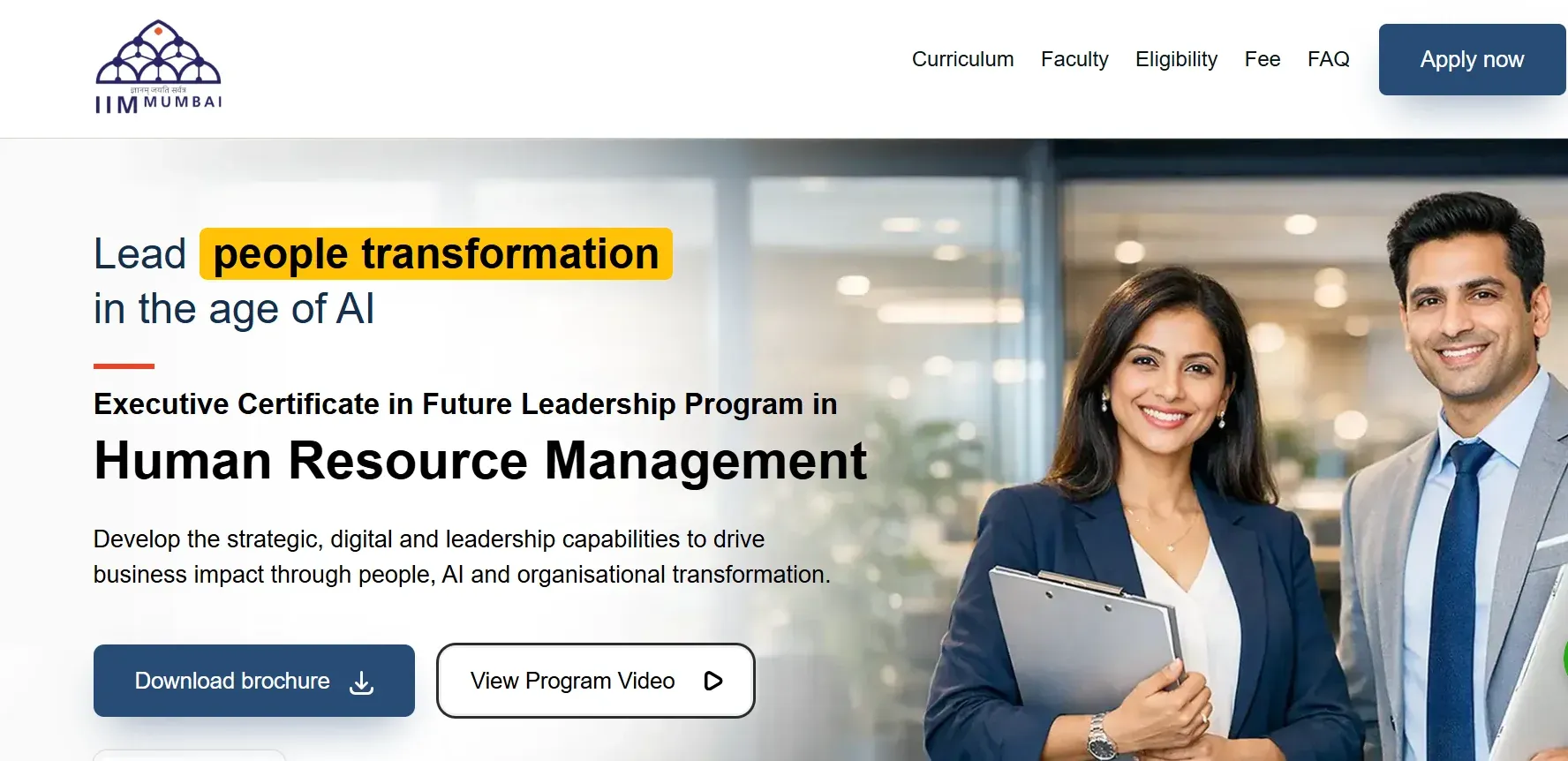
This is exactly the gap that IIM Mumbai's Executive Certificate in Future Leadership Program in Human Resource Management is designed to close. Delivered over 8 months through live, interactive online classes, the program is built around the complete employee lifecycle from talent strategy and organisational design to AI-powered HR and global business transformation.
The curriculum spans HR leadership and personal effectiveness, talent acquisition and retention strategy, compensation and benefits, international HRM, digital transformation and Human-AI integration, organisational design, and strategic leadership culminating in a capstone project where participants apply these concepts to real business challenges. Participants also get a 2-day campus immersion at IIM Mumbai and graduate with Executive Alumni status from the institute, alongside mentorship from IIM Mumbai faculty and sessions from industry and international experts.
For professionals who want to move beyond HR operations into roles shaping business strategy, this structure offers something most on-the-job learning can't: a systematic way to build strategic, analytical, and technology capabilities side by side, rather than picking them up piecemeal.
Who should consider this program?
This program is built for a specific kind of professional: HR practitioners and management professionals with at least 3 years of work experience who are ready to move from operational HR roles into strategic ones. Eligibility requires a recognised graduate degree or diploma with a minimum of 50% marks, along with that 3-year experience threshold.
If you're currently handling HR operations, talent management, or people analytics and want to build the strategic, digital, and leadership capabilities needed to influence business decisions not just execute HR processes this is the profile the program is designed for.
Conclusion
AI isn't replacing HR it's redefining what strong HR leadership looks like. The professionals who thrive in this shift won't just be the ones most comfortable with new tools; they'll be the ones who can combine technological fluency with strategic thinking, sound judgment, and genuine people leadership. Building that combination doesn't happen by accident it comes from deliberate, structured learning. For HR professionals ready to lead this next chapter, that's a capability worth investing in now.
Click here to learn more about the program!
Frequently Asked Questions
1. What are the most common ways AI is being used in HR today?
AI is widely used across recruitment and candidate screening, employee onboarding, continuous performance feedback, people analytics for workforce planning, and employee self-service through chatbots and virtual assistants.
2. What risks should HR leaders keep in mind when using AI?
Key concerns include bias in AI-driven decisions, fairness and transparency in sensitive areas like performance reviews or compensation, and ensuring strong governance so AI recommendations remain explainable and defensible.
3. Does adopting AI in HR require every HR professional to become technical?
No. The priority isn't turning HR professionals into AI engineers but helping them understand AI capabilities well enough to apply the technology thoughtfully, interpret its outputs critically, and lead teams through the change it brings.
4. How is the program structured, and how long does it take?
It runs over 8 months through live, interactive weekend online classes taught by IIM Mumbai faculty, along with sessions from industry and international experts. Participants also complete a capstone project and attend a 2-day campus immersion at IIM Mumbai.
5. What topics does the curriculum cover?
The curriculum spans the full employee lifecycle, including HR leadership and personal effectiveness, talent acquisition and retention, compensation and benefits, international HRM, digital transformation and Human-AI, organisational design, and strategic leadership and functional integration.
About the Author
TalentSprint
TalentSprint, Part of Accenture LearnVantage, is a global leader in building deep expertise across emerging technologies, leadership, and management areas. With over 15 years of education excellence, TalentSprint designs and delivers high-impact, outcome-driven learning solutions for individuals, institutions, and enterprises. TalentSprint partners with leading enterprises and top-tier academic institutions to co-create industry-relevant learning experiences that drive measurable learning outcomes at scale.
Explore Our Programme
Advance your career with the right program