Why being Job ready is as important as a degree itself?

After Class 12, choosing a degree often feels like choosing your future.
But today, that decision is about more than just subjects or college names, it’s about one key question, "Will this actually prepare me for the real world?"
Because the way careers work has changed.
It’s no longer enough to simply complete a degree. Students are now expected to step into roles with confidence, apply what they’ve learned, and contribute from the start.
That’s why being job-ready has become just as important as the degree itself.
Why being “Job-ready” has become the new standard?
A few years ago, getting a degree felt like the finish line. Now, it feels more like the starting point.
There was a time when most of the learning happened on the job. New employees were expected to observe, learn slowly, and grow into their roles. But that has changed.
Today, new joiners are expected to contribute, not just shadow.
Employers now look for graduates who can:
apply concepts in real situations (not just write exams)
work with tools, projects, and real problem‑solving
adapt to workplace expectations like communication, teamwork, and decision‑making
And that’s why students are beginning to rethink what a degree really means, not just the name of the degree, but what it prepares them for.
So, what actually makes you job-ready?
If job readiness is the new standard, the next question is simple:
What does being job-ready actually mean?
It’s not about knowing everything.
And it’s definitely not about skipping fundamentals.
In reality, job readiness comes from a balance of two things:
Academic depth
Real-world application
1) You don’t skip the fundamentals, you strengthen them
At the core of any strong career is understanding.
That means:
clear concepts
structured thinking
knowing why something works, not just how
Whether it’s business or technology, strong foundations give you confidence.
Because without this, application becomes guesswork.
2) You learn by doing, not just studying
But here’s where many students feel the gap.
Knowing something in theory and using it in real situations are very different.
Job-ready learning ensures you:
work on projects
engage with case studies or labs
practice problem-solving in real scenarios
That’s when learning starts to feel real.
3) Exposure happens during the degree, not after
Students often realise after graduation that they’ve never actually seen:
how workplaces function
how teams work
how decisions are made
The right kind of learning changes this.
It gives you exposure early, so you don’t feel lost later.
4) Confidence builds gradually, not suddenly
Job readiness is also about confidence.
Not the confidence of “I’ve studied this,”
but the confidence of:
“I’ve actually tried this before.”
And that only comes when learning and application happen together.
From “choosing a degree” to choosing a direction
Once you understand what makes you job-ready, the decision after Class 12 becomes clearer.
It’s no longer just: “Which degree should I choose?”
It becomes: “Which direction do I want to grow in, and how will I learn in that direction?”
Two popular pathways where students actively look for job-ready outcomes are:
Technology
Business
Let’s look at what each of them really needs. \
Path 1: If you’re choosing technology
A job-ready tech degree today should not feel like just textbooks and exams.
It should feel like:
building real systems
solving actual problems
working in labs, projects, and real scenarios
learning industry tools early
Because technology is no longer theoretical, it powers real-world systems across industries.
What this looks like in practice?
Programs built with this philosophy, like the BS in Computer Science at VVISM Hyderabad by TalentSprint, are structured to move beyond traditional learning.
Instead of separating theory and application, the program is designed around learning by doing.
How the learning structure actually works ?

1. Apprenticeship-Embedded Learning (AEDP Model)
The program integrates an apprenticeship-style approach, where industry exposure is not optional or delayed, it is part of the degree itself.
This means students don’t wait until internships, they start gaining experience while learning.
2. Strong Foundations and Continuous Practice
Students build:
core foundations in programming, computational thinking, and systems
alongside hands-on practice through labs and projects
Learning includes:
coding labs
bootcamps
hackathons
real-world problem-solving exercises
This ensures that concepts are not just understood, but used repeatedly.
3. Industry-Relevant Specialisations
The program provides clarity on career directions through exposure to high-demand domains such as:
AI & Machine Learning
Data Science
Cybersecurity
Full Stack Development
Cloud Computing
UI/UX
Students don’t just learn “Computer Science”, they understand where it leads.
4. Industry-Integrated Delivery + Mentorship
The learning experience is not limited to faculty-led sessions.
It includes:
joint delivery from institute faculty and industry experts.
continuous mentorship
guided skill development
This helps students connect technical learning with industry expectations.
What students actually gain?
By the end of the program, students don’t just have:
theoretical knowledge
They also develop:
practical problem-solving ability
real project experience
a working portfolio
confidence to build and apply
Who should consider this path
This pathway makes sense if you relate to:
“I want to learn by building, not just studying.”
“I want daily hands-on exposure, labs, coding, projects.”
“I want industry experience built into my degree.”
“I want to graduate with skills I can actually use, not just theory.”
Path 2: If you’re choosing business
A business degree today cannot be limited to definitions, models, and frameworks.
Because business itself has evolved.
Modern businesses run on:
data
digital systems
AI-driven insights
technology-led decision-making
Which means business education today is becoming:
Techno-Managerial by design, Business + Emerging Technologies + Application
What techno-management actually means?
It doesn’t mean turning business students into engineers.
It means helping them:
understand how technology shapes decisions
work with data and digital systems
connect strategy with execution
So instead of just learning business theory, students learn: how businesses actually operate today
How this is built into the program structure?
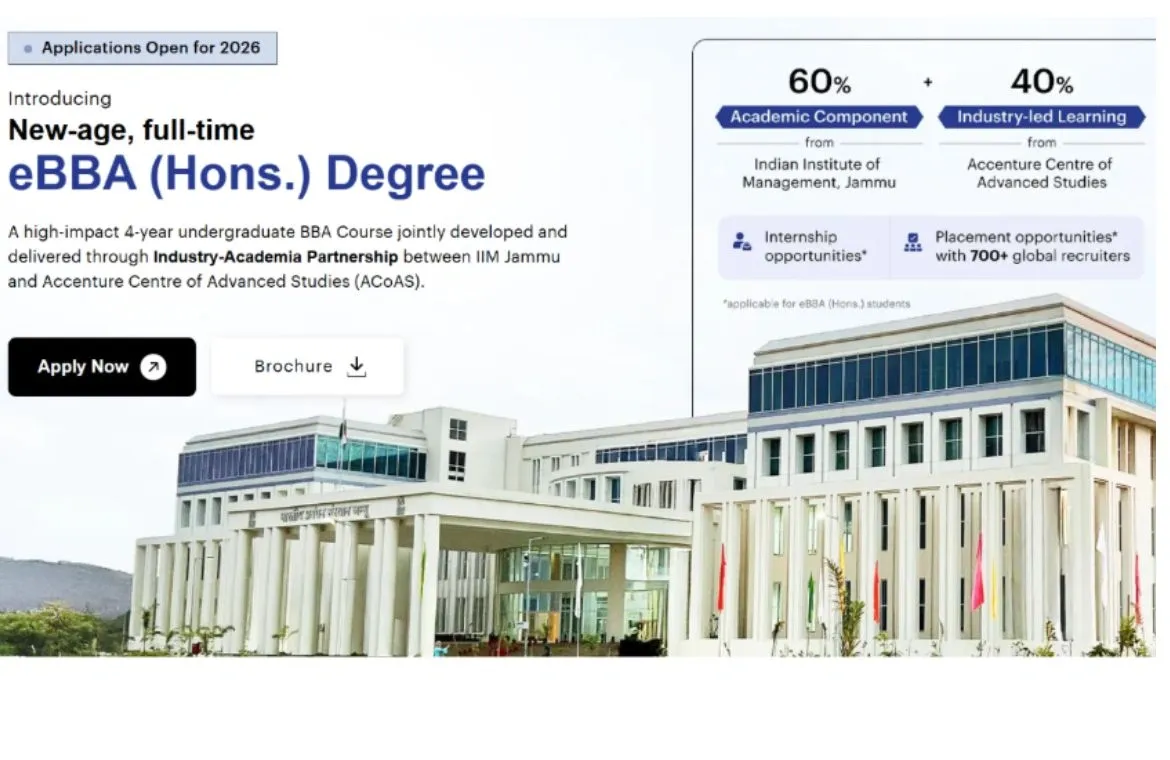
Programs like the Online BBA by IIM Jammu (industry-integrated eBBA) reflect this shift clearly.
The program is designed as a 4-year undergraduate degree with a defined structure:
60% academic delivery through core business fundamentals from IIM Jammu
40% industry-led learning through the Accenture Centre of Advanced Studies (ACoAS) with access to 700+ global recruiters
This ensures that learning is not isolated, it is continuously connected to real-world application.
What students actually learn?
The curriculum combines:
Core Business Foundations
Accounting
Marketing
Economics
Management principles
Business mathematics and communication
Tech-integrated business learning
Artificial Intelligence and its applications in business
Data and analytics
Digital infrastructure and cloud
Computational thinking and data structures
Generative AI and prompt engineering
The key difference: Students don’t learn business first and technology later, they learn both together, in context.
How learning happens?
The program focuses on:
case-based learning
simulations and projects
interaction with faculty and industry experts
application-led assignments
This ensures students see how decisions are made in real organisations, not just how they are described in textbooks.
Career readiness built into the journey
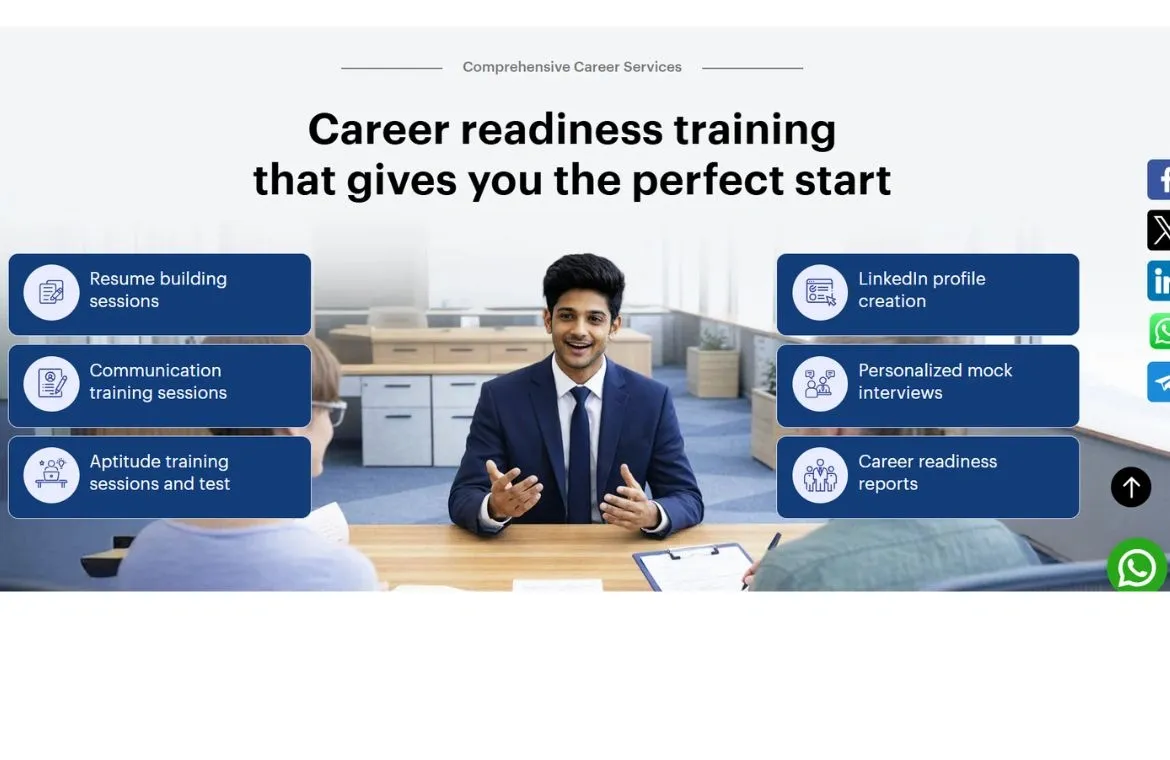
Instead of preparing for careers at the end, students build readiness throughout through:
Resume building sessions
Linkedin profile creation
Communication training sessions
Personalised mock interviews
Aptitude training sessions and test
Career readiness reports
Industry internship opportunity with Access to 700+ global recruiters.
Who should consider this path
This pathway fits students who say:
“I want a business degree that reflects how companies actually work today.”
“I want industry exposure built into my learning, not something I chase later.”
“I want to understand business and technology together.”
“I want structured preparation for real roles, not just academics.”
What connects both paths and why it matters?
At first glance, Computer Science and business may seem very different, one builds systems, the other manages them.
But both aim for the same thing:
helping students become ready for real-world roles
1. Industry + Academics Together
Both programs combine classroom learning with industry exposure.
BS in Computer Science at VVISM Hyderabad by Talentsprint part of Accenture ,includes mentorship, projects, and apprenticeship-style learning
Online BBA by IIM Jammu follows a 60% academic + 40% industry-led model with Accenture centre of advanced studies.
So learning reflects real industry expectations.
2. Learning + Doing Together
Students don’t just study, they apply what they learn through:
labs, coding, and projects (tech)
case studies and simulations (business)
This helps them understand how things work in real life.
3. Real exposure early
Both include:
internships
live projects
industry interaction
Students gain confidence before graduating.
4. Focus on skills that matter
Across both paths, students build:
problem-solving
analytical thinking
practical skills
Confidence
Conclusion
Choosing a path after Class 12 is no longer just about picking a degree, it’s about choosing how you’ll learn and how ready you’ll be for the real world.
Whether you go into technology or techno-managerial business, what matters most is not the stream, but the structure of your learning, how well it combines strong fundamentals, real-world exposure, and continuous application.
Because in today’s world:
a degree helps you understand
but being job-ready helps you perform
And that’s what truly shapes how your career begins.
Frequently Asked Questions
Q1. Why is being job ready important along with a degree?
A degree builds subject knowledge, but job readiness helps students apply that knowledge in real situations. Employers increasingly value practical skills, communication, problem solving, and workplace awareness alongside academic qualifications, making both equally important for career success.
Q2. What does being “job ready” actually mean?
Being job ready means having the skills and confidence needed for professional environments. This includes communication, teamwork, problem solving, digital literacy, practical exposure, and understanding workplace expectations, beyond just theoretical academic learning.
Q3. Can a degree alone guarantee a successful career?
A degree remains important, but it may not always guarantee career success on its own. Many employers now seek candidates who can demonstrate practical experience, adaptability, and the ability to solve real problems in dynamic work environments.
Q4. How can students become more job ready during college?
Students can improve job readiness through internships, live projects, industry exposure, workshops, networking, communication practice, and hands on learning experiences. Choosing programs that combine academics with practical learning can also help build workplace confidence early.
Q5. Why are employers focusing more on skills today?
Industries are evolving rapidly due to technology and changing business needs. Employers increasingly prioritize skills because they want candidates who can adapt quickly, work with modern tools, collaborate effectively, and contribute meaningfully from the beginning of their careers.
About the Author
TalentSprint
TalentSprint, Part of Accenture LearnVantage, is a global leader in building deep expertise across emerging technologies, leadership, and management areas. With over 15 years of education excellence, TalentSprint designs and delivers high-impact, outcome-driven learning solutions for individuals, institutions, and enterprises. TalentSprint partners with leading enterprises and top-tier academic institutions to co-create industry-relevant learning experiences that drive measurable learning outcomes at scale.
Explore our Programme

Advance your career with the right program