Why career readiness matters more than ever for students?

For a long time, students believed that by just getting a degree, a good career is guaranteed, But somewhere along the way, things changed.”
Today, many students graduate only to realise that a degree alone does not always make the transition into work easy. Employers are looking for more than academic scores. They want people who can communicate well, solve problems, adapt quickly, and understand how work actually happens.
At the same time, careers are evolving faster than ever. AI, technology, and changing workplace expectations are reshaping industries across the board.
In fact, the India Skills Report 2026 found that employability in India stands at 56.35%, showing that while opportunities are growing, many graduates still struggle to meet workplace expectations.
That is exactly why career readiness matters more than ever.
Because today, success is not only about what students learn in college. It is also about how prepared they feel to step into the real world.
The Real shift: from degrees to employability
The biggest shift in today’s job market is not just about the number of opportunities, it’s about what those opportunities require.
India continues to produce millions of graduates each year, yet a significant number struggle to find roles that align with their qualifications. In fact, only a small percentage of graduates end up in jobs directly related to what they studied, reflecting a deeper mismatch between education and career outcomes.
Why has Career readiness become critical?
1. Careers Are Becoming Skill-First
Across industries, employers are shifting towards skills-first hiring, focusing on what candidates can do rather than just what they have studied.
There is especially strong demand for:
- AI and digital skills
- Data-driven decision-making
- Analytical and problem-solving abilities
This means even business graduates are expected to go beyond theory and demonstrate practical capability.
2. Entry-Level Expectations Have Changed
The idea of “learning on the job” is still relevant, but expectations have moved forward.
Employers increasingly look for candidates who can:
- Understand basic workflows
- Use tools and systems
- Contribute from early stages
Even at the fresher level, readiness matters more than ever.
Employers are not just hiring potential anymore.
They are hiring the ability to adapt quickly.
3. Learning and Careers Now Overlap
Traditionally, learning and working were two separate phases:
First you study then you work
Today, that boundary is blurring.
Students who are able to:
- Gain exposure during their degree
- Work on real-world problems
- Build confidence alongside learning are often better prepared to transition into careers smoothly.
Career readiness is no longer a final step, it is part of the entire learning journey.
Where most degrees fall short?
Despite this shift, many traditional degrees are still structured around older models of learning.
Common gaps include:
- Strong theoretical focus with limited application.
- Minimal exposure to real business environments.
- Lack of familiarity with tools and workflows
- Limited career preparation support
This creates a disconnect where students graduate with knowledge, but without clarity on how to use it.
If this is the gap, what needs to change?
If career readiness is becoming essential, the next question is:
How should a degree prepare students differently?
The answer lies not just in what is taught, but in how learning is structured.
A career-focused approach to education typically includes:
- Exposure to industry contexts
- Opportunities for hands-on learning
- Integration of technology into business education
- Continuous preparation for professional environments
This shift is not about replacing traditional education, but about making it more aligned with how careers actually work today.
How career-ready programs are bridging the gap?
As the gap between education and careers becomes more visible, a new approach to learning is starting to take shape.
Instead of separating education and career preparation, some programs are designed to bring both together from the beginning. This is where industry-integrated models are making a meaningful difference.
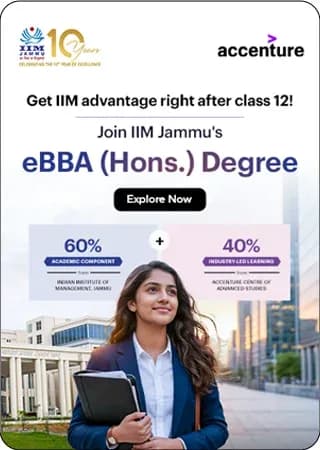
One such example is the online BBA by IIM Jammu, developed through an Industry–Academia partnership with the Accenture Centre of Advanced Studies (ACoAS).
A Learning Model That Combines Theory with Application
What makes this structure relevant is how it balances?
- 60% academic learning led by IIM Jammu faculty, focused on core business concepts and frameworks
- 40% industry-led learning, including projects, simulations, and exposure designed with Accenture
This ensures that students are not only building conceptual clarity, but also understanding how those concepts are applied in real business environments.
Learning that reflects today’s business environment
Alongside traditional subjects like marketing, finance, and economics, students are also exposed to areas shaping modern careers, such as:
- Artificial Intelligence in business
- Data and analytics
- Digital infrastructure
From early in the program, learners engage with concepts like AI fundamentals and its applications, helping them build contextual awareness of how businesses evolve with technology.
Exposure before graduation
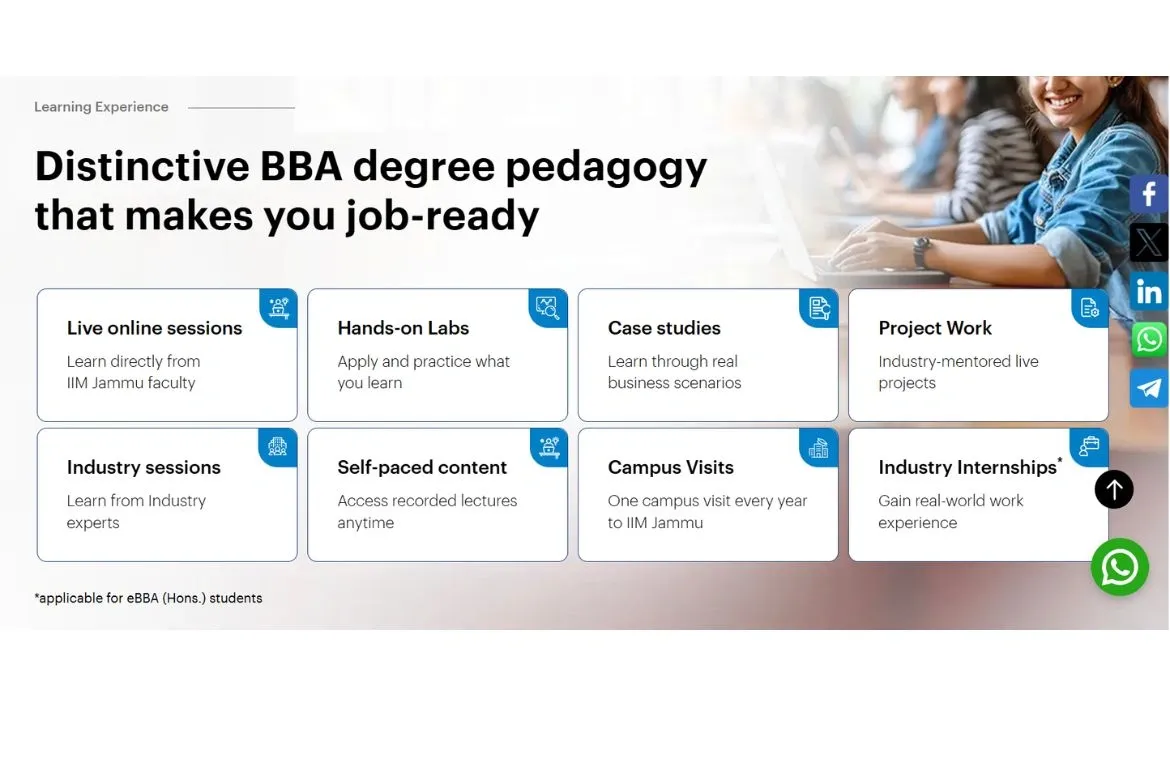
To reduce the gap between learning and work, the program integrates:
- Internships within the degree
- Practical projects and simulations
- Interaction with industry practitioners
This allows students to gain familiarity with real-world expectations while still studying, rather than after graduating.
Career readiness as an ongoing process
Career preparation is also built into the journey, not left to the final stage.
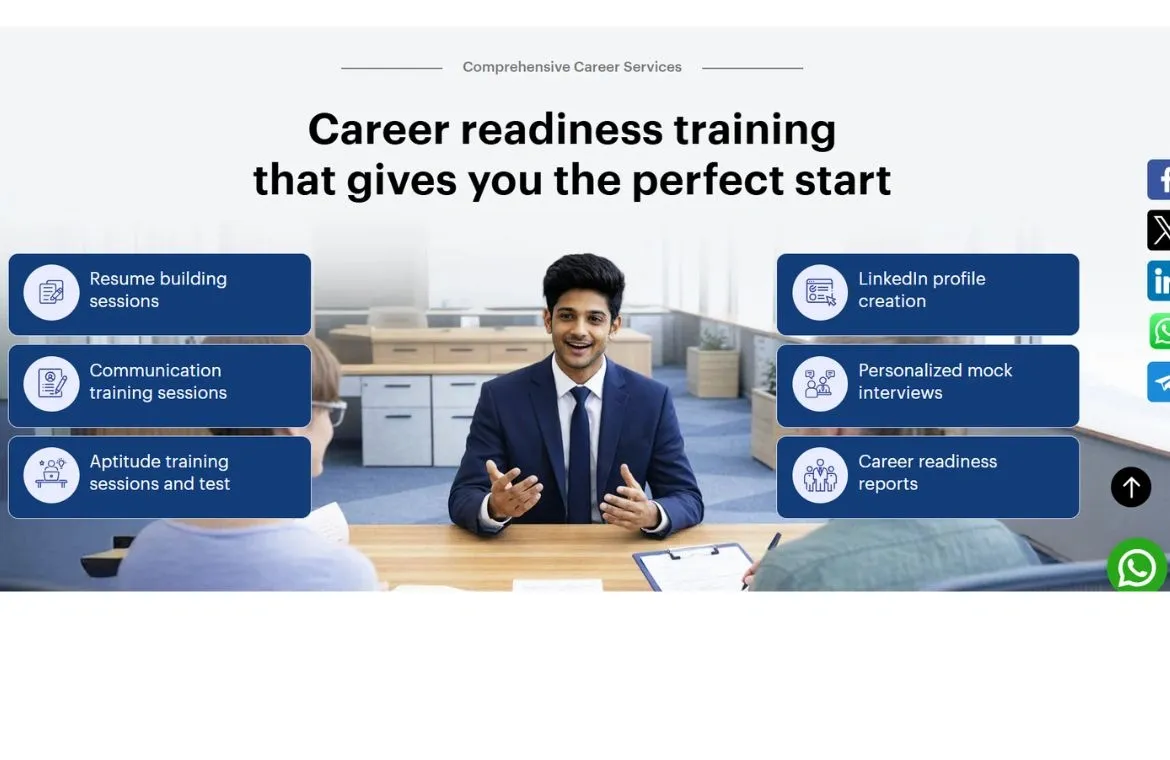
Students gradually develop:
- Communication and aptitude skills
- Resume and interview readiness
- Professional awareness
- With placement opportunities with 700+ global recruiters
What this means in practice?
When learning is structured this way, the outcome naturally shifts.
Students don’t just complete a degree.
They graduate with exposure, applied understanding, and greater confidence to step into real roles.
Final thoughts
Career readiness is no longer an added advantage, it is becoming essential.
As industries evolve and expectations shift, the way students learn also needs to evolve.
“Because today, a degree can open doors, but being prepared is what helps you step through them with confidence.”
Frequently Asked questions
Q1. What does career readiness mean for students?
Career readiness means having the skills, confidence, and practical understanding needed to transition from education to work. It includes communication, problem solving, adaptability, workplace awareness, and the ability to apply academic knowledge in real situations.
Q2. Why is career readiness becoming more important today?
Industries are changing rapidly due to technology, AI, and evolving workplace expectations. Employers increasingly seek candidates who can adapt quickly, work collaboratively, and contribute practically, making career readiness just as important as academic qualifications.
Q3. How can students become more career ready during college?
Students can build career readiness through internships, practical projects, workshops, networking, communication skill development, and hands on learning. Participating in real world experiences alongside academics often improves confidence and workplace preparedness.
Q4. Are good grades enough to build a successful career?
Good grades are valuable, but they are not always enough. Employers also look for communication skills, problem solving ability, teamwork, adaptability, and practical experience that show a student can handle workplace responsibilities effectively.
Q5. How do degree programs support career readiness?
Many modern degree programs include industry exposure, practical learning, internships, mentorship, mock interviews, and skill building activities. These experiences help students understand workplace expectations and prepare more confidently for careers after graduation.
About the Author
TalentSprint
TalentSprint, Part of Accenture LearnVantage, is a global leader in building deep expertise across emerging technologies, leadership, and management areas. With over 15 years of education excellence, TalentSprint designs and delivers high-impact, outcome-driven learning solutions for individuals, institutions, and enterprises. TalentSprint partners with leading enterprises and top-tier academic institutions to co-create industry-relevant learning experiences that drive measurable learning outcomes at scale.
Explore our Programme
Advance your career with the right program