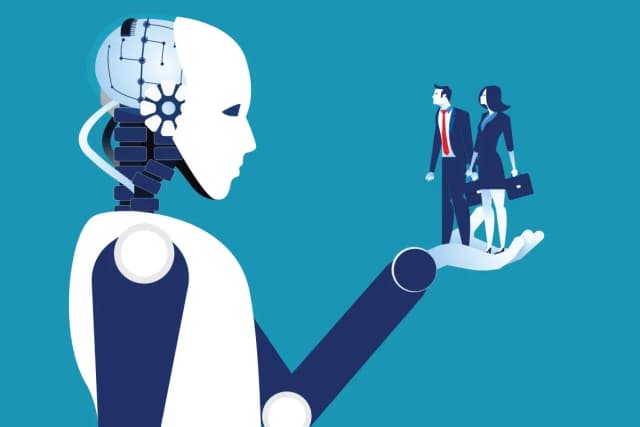
Building a Human-AI Workforce Through a Skills-Based Strategy

A recent global survey highlights a pivotal shift in the future of work as 77% of employers plan to reskill or upskill their workforce by 2030 in response to AI, with many expecting AI to significantly transform their business models.
This is not just a learning initiative, it is a strategic imperative. AI is redefining roles, reshaping workflows, and changing how value is created. Routine tasks are increasingly automated, while human responsibilities are evolving toward analysis, creativity, judgment, and oversight.
Organisations that invest in both technology and talent will gain the true advantage. In the human-AI era, skills are no longer optional, they are the foundation of sustainable competitiveness.
What is a Skill-Based Strategy?
A skill-based strategy is an organizational approach that focuses on identifying, developing, deploying, and rewarding people based on their skills and capabilities rather than just job titles, degrees, or years of experience.
Instead of asking, “What role does this person hold?” a skill-based strategy asks, “What can this person do, and what new skills can they develop?”
What It Means in Practice
Hiring based on skills: Companies prioritize proven competencies over traditional credentials.
Internal mobility: Employees move across projects and roles based on skill fit.
Continuous upskilling: Organizations invest in learning programs to close skill gaps.
Work structured around capabilities: Projects are assigned based on expertise, not hierarchy.
For example, Accenture emphasises reskilling initiatives to prepare its workforce for AI-driven transformations.
Why AI Is Increasing the Need for a Skills-First Strategy?
AI is no longer just an experimental technology, it has become part of everyday business operations. Across industries, companies are realising that adopting AI alone is not enough. Without developing the right skills among employees, businesses can face gaps in productivity and performance.
Here’s how this growing need for skills is appearing in real-world situations:
1. Job Roles Are Being Redefined in Real Time
Banking & Financial Services: AI systems now automate fraud detection, risk modelling, and credit scoring. While repetitive analysis is handled by algorithms, professionals must interpret outputs, manage exceptions, and ensure compliance. The role shifts from data processing to oversight and risk judgment.
Retail & E-Commerce: AI predicts customer behaviour and personalises recommendations. However, merchandising teams now require data literacy to interpret AI insights and align inventory strategies accordingly. Traditional sales intuition alone is no longer enough.
Manufacturing: Predictive maintenance tools forecast equipment failures before they occur. Engineers must understand how to read and act on AI-generated diagnostics, blending mechanical expertise with digital skills.
In each case, the job still exists, but the skills required to perform it effectively have changed.
2. AI Is Becoming a Workplace Collaborator
AI is increasingly embedded in daily workflows.
Marketing Teams: Professionals use generative AI tools for campaign drafts, content ideas, and performance analysis. However, success depends on their ability to craft precise prompts, refine outputs, and ensure brand alignment.
Healthcare Sector: AI-powered imaging tools assist radiologists in detecting anomalies. Yet medical professionals must validate results, consider patient history, and make final decisions. The human role shifts from sole analyser to informed supervisor.
Corporate Strategy Functions: AI models now simulate scenarios and market forecasts. Leaders must evaluate algorithmic insights, question assumptions, and make high-stakes decisions based on a mix of data and experience.
Here, AI does not replace professionals, it augments them. But augmentation demands new cognitive and digital capabilities.
3. Skills Are Becoming Obsolete Faster Than Before
The speed of AI advancement means yesterday’s expertise can quickly lose relevance.
Software tools and analytics platforms evolve rapidly.
Automation reduces demand for purely transactional work.
Hybrid roles, like AI product managers or data-enabled HR leaders, are emerging.
For example, IT professionals who once focused solely on traditional system administration now require cloud, automation, and AI integration knowledge. Marketing specialists must understand algorithm-driven campaign optimisation. Even HR professionals are expected to use predictive analytics for talent planning.
Static skillsets no longer sustain long-term careers.
4. Competitive Advantage Is Shifting
Organisations investing in AI talent are scaling faster. Large consulting and technology firms are aggressively training employees in AI fluency, data capabilities, and automation tools because they recognise that AI value is unlocked through skilled people, not tools alone.
Companies that fail to evolve their workforce risk:
Underutilised AI investments
Increased operational inefficiencies
Talent attrition
Loss of competitive edge
Also Read: AI Adoption Framework for Enterprises
Key AI Skills for the Human-AI Workforce
1. AI & Data Literacy
This is the foundational skill. It doesn’t mean everyone must code, but professionals must understand how AI systems generate outputs, what data they rely on, and where limitations exist.
Example:
At Amazon, recommendation engines predict what customers might buy. Marketing and supply chain teams must interpret these predictions to adjust inventory and campaigns. Without data literacy, AI insights remain underutilised.
2. Prompting & AI Interaction Skills
As generative AI tools become mainstream, knowing how to “communicate” with AI becomes critical.
Example:
Consultants at Accenture increasingly integrate generative AI into research and proposal drafting. However, delivering value depends on guiding AI with precise instructions and validating content before client submission.
The difference between average and exceptional results often lies in the quality of the prompt.
3. Critical Thinking & Validation
AI systems can produce biased, incomplete, or inaccurate results. Professionals must question AI outputs rather than accept them passively.
Example:
In banking, AI tools flag suspicious transactions. Risk analysts review those alerts before action is taken. A misinterpretation could freeze legitimate accounts, affecting customer trust.
AI may identify patterns, but humans ensure fairness and accuracy.
4. AI-Augmented Decision-Making
AI increasingly supports high-level strategic decisions. Leaders must integrate algorithmic recommendations with human context.
Example:
Automotive firms like Tesla rely on AI to analyse driving data for autonomous systems. However, engineers and executives assess safety trade-offs and regulatory implications before deploying updates.
The ultimate responsibility remains human.
5. Process Re-Engineering & Automation Thinking
As AI automates repetitive work, professionals must rethink how workflows are designed.
Example: In HR departments, AI tools screen thousands of resumes. Recruiters now spend more time evaluating soft skills and leadership potential rather than manually filtering applications.
The skill is not just using AI, it’s restructuring processes around it.
6. Ethical & Responsible AI Awareness
AI’s growing influence means professionals must consider fairness, transparency, and compliance.
Example: Tech companies deploying AI-based hiring tools must ensure algorithms do not unintentionally discriminate against certain demographics. Ethical oversight is essential to maintain trust and legal compliance.
7. Adaptability & Continuous Learning
Perhaps the most critical long-term skill is the ability to evolve.
AI tools, platforms, and methodologies change rapidly. Static expertise becomes obsolete quickly.
Example: IT professionals who once focused solely on traditional infrastructure management now need cloud computing and AI integration skills. Those who continuously upskill remain relevant; those who resist change risk redundancy.
Also Read: What are top AI skills and why do they matter in today's workplace?
How Organisation’s Can Build a Skills-Based Strategy?
A skills-based strategy focuses on the capabilities people bring, rather than the titles they hold, and aligns those capabilities with evolving business priorities.
This approach enables organisations to thrive in a human-AI workforce by ensuring that skills, not hierarchy, drive performance.
Here’s how firms can build an effective skills-based strategy:
1. Map Current and Future Skills Needs
The first step is understanding which skills are currently driving value, and which will matter tomorrow.
Analyse strategic business goals and match them with critical skills (e.g., data interpretation, prompt engineering, ethical oversight).
Identify gaps between existing workforce skills and future requirements shaped by AI adoption.
This shifts the organisation away from rigid job roles toward capability clusters that can be developed, assessed, and applied across functions.
At this stage, many firms benefit from structured assessments that benchmark organisational skill readiness. Tailored AI readiness diagnostics help identify where the workforce currently stands and which skills need prioritisation, turning intuition into a clear capability roadmap.
2. Shift from Roles to Capabilities
Traditional HR models prioritise job titles and tenure. A skills-based strategy prioritises what people can actually do.
Instead of hiring, promoting, or deploying talent based solely on experience, firms evaluate demonstrable competencies, digital fluency, analytical thinking, AI collaboration skills, and decision-making ability. This enables:
More accurate talent allocation
Improved internal mobility
Faster response to evolving business needs
Custom AI training interventions further support this shift by creating role-specific development pathways that match strategic priorities.
3. Create Continuous Learning Pathways
In a rapidly evolving AI landscape, learning cannot be occasional. It must be continuous and contextual.
So, Firms must:
Embed a culture of ongoing upskilling
Offer tailored development journeys aligned with business outcomes
Integrate skill-building into performance systems
This is where custom AI training solutions for enterprises play an important role. They are designed to build skills in alignment with business needs.
These solutions typically include:
Readiness benchmarking: Assess workforce capabilities and map gaps
Role-based learning paths: Tailored modules for leadership, managers, and functional teams
Applied projects & real-world use cases: Ensuring learning translates into business outcomes
Ongoing reinforcement: Continuous learning modules and periodic refreshers
Such training ensures that skill development is not generic, but highly relevant to the organisation’s AI strategy and operational context.
4. Embed AI Fluency Across the Organisation
AI is no longer limited to IT or data science teams. It influences marketing, finance, operations, HR, and strategy.
A sustainable skills-based strategy ensures that employees across levels understand:
How AI augments their specific responsibilities
How to interact with AI systems responsibly and ethically
How to interpret and apply AI-generated insights
Enterprise AI readiness solutions help operationalise this across departments in a systematic, measurable manner. Instead of piecemeal training, firms can scale capability building with a cohesive framework that ensures alignment, consistency, and organisational impact.
The Way Forward
The future of work will not be defined by job titles, it will be defined by skills. As AI becomes embedded in everyday operations, the question for organisations is no longer whether to adopt AI, but whether their people are prepared to work alongside it.
A skills-based strategy shifts the focus from hierarchy to capability, from credentials to competence, and from static roles to dynamic potential. It ensures that technology investments are matched by human readiness. Because AI, no matter how advanced, creates value only when guided by skilled professionals who can interpret, question, refine, and apply its outputs.
In a human-AI workforce, machines bring speed and scale. Humans bring judgment, creativity, ethics, and context. The firms that thrive will be those that intentionally build this partnership, mapping future skills, enabling continuous learning, and empowering employees to evolve as fast as technology does.
The competitive edge of tomorrow will not belong to organisations with the most sophisticated algorithms alone. It will belong to those that build a workforce capable of thinking, adapting, and growing with AI.
In the end, skills are not just an HR metric, they are the foundation of sustainable success in the age of intelligent machines.
Frequently Asked Questions
Q1. What does a human-AI workforce mean in a skills-based strategy?
A human-AI workforce combines human expertise with AI capabilities by focusing on skills rather than job titles. Organizations identify tasks where AI can assist and train employees to collaborate with AI tools, improving productivity, decision-making, and innovation across roles.
Q2. Why are skills more important than roles in the age of AI?
AI is rapidly reshaping job responsibilities, making fixed roles less relevant. A skills-based approach helps organizations identify emerging capabilities like data literacy, AI collaboration, and critical thinking, allowing employees to adapt quickly as technology and business needs evolve.
Q3. What skills are essential for employees working alongside AI?
Key skills include data interpretation, prompt engineering, digital literacy, problem-solving, and ethical AI awareness. Equally important are human capabilities such as creativity, communication, and strategic thinking, which complement AI’s analytical strengths and enable more effective human-AI collaboration.
Q4. How can organizations start building a human-AI workforce?
Organizations can begin by mapping existing skills, identifying AI-augmentable tasks, and offering targeted upskilling programs. Integrating AI tools into daily workflows, encouraging experimentation, and fostering a learning culture helps employees gradually build confidence and competence in AI collaboration.
Q5. What are the business benefits of adopting a skills-based human-AI strategy?
A skills-based human-AI strategy improves agility, boosts productivity, and accelerates innovation. It helps organizations deploy talent more effectively, close skill gaps faster, and ensure employees remain relevant while leveraging AI to enhance decision-making and operational efficiency.
About the Author
TalentSprint
TalentSprint, Part of Accenture LearnVantage, is a global leader in building deep expertise across emerging technologies, leadership, and management areas. With over 15 years of education excellence, TalentSprint designs and delivers high-impact, outcome-driven learning solutions for individuals, institutions, and enterprises. TalentSprint partners with leading enterprises and top-tier academic institutions to co-create industry-relevant learning experiences that drive measurable learning outcomes at scale.
Advance your career with the right program