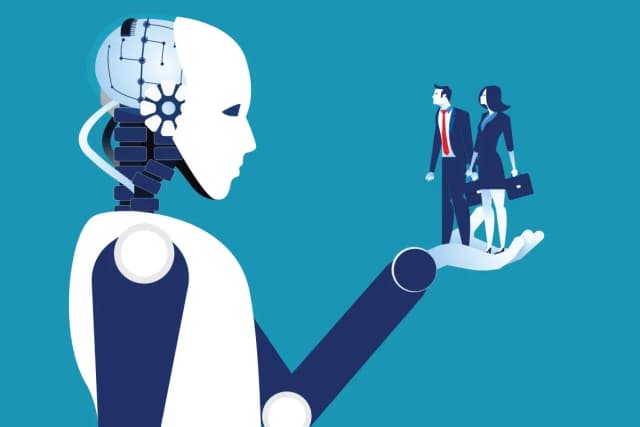
How AI Is Being Used Across Industries?

Artificial Intelligence is no longer a future concept, it’s becoming the foundation of how modern businesses operate. From hiring decisions to financial forecasting, marketing strategies to operational efficiency, AI is quietly reshaping every core function across industries.
What’s even more telling is how widespread this transformation has become. Today, a significant majority of organizations are using AI in at least one business function, and generative AI is quickly becoming a core driver of productivity and innovation.
As Satya Nadella puts it: “AI is going to be the defining technology of our times.”
And that’s exactly what we’re witnessing.
Why AI Adoption Is Accelerating Across Industries?
AI adoption is no longer happening gradually, it’s accelerating at a pace that’s reshaping how businesses operate across every function. What was once limited to pilots and experimentation is now becoming a core part of everyday workflows.
At the center of this shift is a simple reality: businesses today need to move faster, make better decisions, and do more with fewer resources, and AI enables exactly that.
From Experimentation to Real Implementation
One of the biggest reasons for this acceleration is the transition from testing AI to using it at scale.
A 2026 report by Deloitte highlights that employee access to AI tools increased by 50% in 2025, signaling a major shift in how organizations approach AI. Instead of limiting it to specific teams or use cases, companies are now embedding AI directly into daily workflows.
This means AI is no longer a side project, it’s becoming part of how work actually gets done.
The Need for Speed and Efficiency
In today’s competitive environment, businesses cannot afford slow processes or delayed decisions.
AI helps by:
Automating repetitive tasks
Reducing manual effort
Accelerating decision-making
Whether it’s generating reports, analyzing data, or responding to customers, AI allows teams to work faster without compromising quality.
Rise of Generative AI
The emergence of generative AI has played a major role in accelerating adoption.
Unlike traditional AI, generative AI can:
Create content (text, images, code)
Assist in decision-making
Support multiple functions simultaneously
This makes it useful across departments like marketing, HR, finance, and operations, driving widespread adoption across industries.
Pressure to Stay Competitive
As more companies adopt AI, others are forced to follow to remain relevant.
Businesses are realising that:
Competitors are becoming faster
Customer expectations are rising
Innovation cycles are shrinking
This creates a strong push toward adopting AI, not just as an advantage, but as a necessity.
Improved Accessibility of AI Tools
AI is no longer limited to large tech companies. Today:
Cloud-based AI platforms are widely available
No-code and low-code tools make AI easier to use
APIs allow quick integration into existing systems
This accessibility allows even small and mid-sized businesses to leverage AI without heavy investment.
Shift Toward Data-Driven Decision Making
Organizations are increasingly relying on data to guide decisions, and AI makes this process faster and more accurate.
Instead of reacting to events, businesses can now:
Predict trends
Identify risks
Make proactive decisions
AI Across Industries: How It’s Actually Changing the Way Work Gets Done
AI isn’t just another tool businesses are adopting, it’s quietly becoming the engine behind how work happens every day. From managing money to hiring people, from reaching customers to running operations, AI is helping teams move faster, think smarter, and focus on what truly matters.
Let’s break this down in a more real, practical way, how AI is actually being used across key functions, and what it means on the ground.
AI in Finance: From Number Crunching to Smart Decision-Making
Finance has always been about precision. But traditionally, it also meant long hours of manual analysis, reports, and risk evaluation. AI is changing that by taking over the heavy lifting.
What’s really happening?
Instead of manually reviewing spreadsheets or transactions, AI can now:
Scan millions of transactions instantly to detect fraud
Predict financial risks before they become real problems
Automate reports that once took days to prepare
Example
At JPMorgan Chase, AI tools are used to review complex legal and financial documents in seconds, a task that earlier required thousands of hours of human effort.
Also Read: AI in Finance: How Technologies Reshaping Payments, Lending, Insurance, and Risk
AI in HR: Making Hiring and People Management More Human
It might sound ironic, but AI is actually helping HR become more human, not less.
Earlier, HR teams spent a huge amount of time:
Screening resumes
Scheduling interviews
Managing employee data
Now, AI handles much of that groundwork.
What’s really happening?
AI filters and shortlists candidates in minutes
It helps match the right person to the right role
It even predicts if employees might leave, before they actually do
Example
Platforms like LinkedIn use AI to recommend jobs to candidates and suggest potential hires to recruiters, making the entire hiring process faster and more relevant.
Also Read: AI in the Workplace: From Task Execution to True Innovation
AI in Marketing: From Guesswork to Deep Personalisation
Marketing used to rely heavily on intuition and broad messaging. Today, AI is turning it into a highly precise, data-driven function.
What’s really happening?
AI can create content, emails, ads, blogs, in seconds
It understands customer behavior and preferences
It predicts what customers are likely to do next
Example
Tools like HubSpot help businesses automate campaigns, personalize messaging, and track performance in real time.
Also Read: A Complete Overview of AI in Marketing
AI in Operations: Making Businesses Run Smoother Behind the Scenes
Operations is where AI often works quietly, but its impact is huge. It’s the difference between things running okay and running seamlessly.
What’s really happening?
AI predicts demand so companies don’t overstock or run out
It automates repetitive workflows
It detects issues before they disrupt operations
Example
At Amazon, AI is used to manage warehouses, predict what customers will order, and optimize delivery routes, making fast shipping possible.
Also Read: AI in Operations: Forecasting, Automation, and Decision Support
What AI Is Really Changing in today’s world?
When people think about AI, they often focus on automation or tools. But the real change goes much deeper. AI isn’t just improving tasks, it’s changing how we work, think, and make decisions.
Here’s what that shift actually looks like:
1. From Manual Work to Intelligent Automation
A lot of repetitive, time-consuming tasks are now being handled by AI,whether it’s analyzing data, generating reports, or responding to customers.
2. From Guesswork to Data-Driven Decisions
Earlier, many business decisions were based on intuition or past experience. Today, AI can analyze massive amounts of data in seconds and provide insights that are far more accurate.
3. From One-Size-Fits-All to Personalization
AI is making experiences more tailored than ever before.
Whether it’s:
The content you see
The products recommended to you
The emails you receive
4. From Slow Execution to Real-Time Action
AI enables businesses to act instantly.
Detect fraud as it happens
Respond to customers in real time
Adjust strategies on the go
5. From Siloed Work to Connected Systems
Different departments, finance, HR, marketing, operations, used to work in silos. AI is now connecting them through shared data and intelligent systems.
6. From Tools to Intelligent Partners
AI is evolving from being just a tool to becoming more like a collaborator.
With the rise of generative and agentic AI:
It can suggest ideas
Help solve problems
Even take actions on behalf of users
So, Here’s the Big Question: How Do You Get Started with AI?
At this point, one thing is clear, AI is no longer optional. It’s being used across finance, HR, marketing, operations, and almost every industry you can think of.
But here’s the real challenge:
Where do you even begin?
Because learning AI today isn’t just about coding or tools, it’s about understanding how to use AI meaningfully in your work and decisions.
Why Learning AI Has Become So Important?
Think about it. Tasks that once took hours, writing emails, analyzing data, creating reports, can now be done in minutes with AI. Companies are using it to make faster decisions, understand customers better, and run operations more efficiently. Naturally, they now expect people to know how to work with AI, not around it.
AI Infinity is a hands-on AI upskilling course by TalentSprint designed to help people move from simply hearing about AI to actually using it in real-world scenarios.
The course is built around the idea that knowing about AI is no longer enough. Today, the real value lies in knowing how to use AI to solve problems, improve productivity, and make better decisions. AI Infinity helps bridge that gap by giving learners hands-on experience with real tools, real use cases, and real business scenarios.
Also Read: How to Learn AI the Right Way
What Makes AI Infinity Different?
AI Infinity is designed to move you from learning AI to actually using it.
Hands-on learning (40 hours): Focus on real application, not just theory
Work with 20+ AI tools: Learn tools like ChatGPT, Copilot, and more
Real-world projects: Build across marketing, HR, finance, and operations
Two learning tracks: Functional for how to use AI and Technical for how to build AI
GenAI and Agentic AI focus: Learn both current and next-gen AI systems
Flexible learning: Assignments, self-paced access, and updated content
Conclusion
AI isn’t just transforming industries, it’s quietly rewriting the rules of how work happens.
In finance, it predicts.
In HR, it understands people.
In marketing, it personalises.
In operations, it optimises.
But when you zoom out, it’s doing something bigger, it’s connecting everything.
We’re moving into a world where decisions are faster, systems are smarter, and businesses are no longer just run by processes, but by intelligence woven into every layer.
Frequently Asked Questions
Q1. How is AI transforming the way businesses operate across different sectors?
AI is fundamentally changing how organisations work by enabling data-driven decision-making, automating routine tasks, and enhancing efficiency. In finance, it automates payment processing and detects fraud. In HR, it streamlines recruitment and predicts employee turnover. In marketing, it creates targeted campaigns and analyses customer behaviour. In operations, it optimises supply chains and predicts maintenance needs. This transformation shifts human work from reactive, manual tasks towards more strategic, proactive activities.
Q2. What are the main challenges businesses encounter when implementing AI?
Businesses face several key challenges when adopting AI, including data quality and integration issues with legacy systems, algorithmic bias that can perpetuate discrimination, workforce concerns about job displacement, lack of transparency in AI decision-making processes, and privacy and security risks. Additionally, organisations must invest in reskilling their workforce to work effectively alongside AI systems whilst ensuring compliance with regulatory requirements.
Q3. Which practical applications of AI deliver the most value in the workplace?
High-impact AI applications include automating payment processing and fraud detection in finance, streamlining candidate screening and personalising employee development in HR, generating targeted marketing campaigns and automating lead scoring, and optimising inventory management and predicting equipment maintenance in operations. These applications deliver measurable value by reducing manual effort, improving accuracy, and enabling personalisation at scale.
Q4. How should organisations begin their AI adoption journey?
Start by assessing your organisation's readiness, including data infrastructure and team capabilities. Identify high-impact use cases with clear business objectives and available data. Launch small-scale pilot projects lasting 8-12 weeks to test feasibility and demonstrate value. Build cross-functional teams combining technical expertise with domain knowledge, and invest in training programmes. Measure results using defined success metrics before scaling gradually across the organisation.
Q5. Why is AI adoption accelerating so rapidly across industries?
AI adoption is accelerating because it has shifted from experimental to essential for competitive advantage. The global AI market is projected to grow from $621.19 billion in 2024 to $2.74 trillion by 2032. Businesses face rising competitive pressure, as organisations that don't deploy AI risk falling behind. Additionally, AI tools have become more accessible, and proven return on investment is driving faster adoption as companies recognise tangible benefits in efficiency and innovation.
About the Author
TalentSprint
TalentSprint, Part of Accenture LearnVantage, is a global leader in building deep expertise across emerging technologies, leadership, and management areas. With over 15 years of education excellence, TalentSprint designs and delivers high-impact, outcome-driven learning solutions for individuals, institutions, and enterprises. TalentSprint partners with leading enterprises and top-tier academic institutions to co-create industry-relevant learning experiences that drive measurable learning outcomes at scale.
Advance your career with the right program