AI Co-Pilot vs Autonomous Agents: What’s the Difference?

TL;DR:Imagine this: you’re working on a project, and an AI suggests better ideas, corrects your mistakes, and speeds up your work. Now imagine another AI that doesn’t wait for your input, it plans the project, executes tasks, and delivers results on its own. Both sound powerful. Both are AI. But they’re not the same. Welcome to the world of AI Co-Pilots and Autonomous Agents, two technologies shaping how we work, create, and make decisions. The key difference? One works with you, the other can work without you. Also Read: What is Artificial Intelligence? What are AI Co-Pilots? AI co-pilots are intelligent digital assistants that work alongside humans, helping them think, create, and execute tasks more efficiently, without taking control away. Think of a co-pilot in an aircraft. They don’t fly the plane alone, but they assist the pilot with navigation, monitoring, and decision-making. Similarly, AI co-pilots augment your capabilities, making your work faster and smarter while you remain in charge. Key Characteristics of AI Co-Pilots 1. Human-in-the-Loop You are always in control. The AI suggests, but you decide what to accept, modify, or reject. 2. Assistive, Not Autonomous They don’t initiate actions on their own. Their role is to support, not replace, human decision-making. 3. Real-Time Collaboration They work with you as you work, offering instant help instead of delayed outputs. 4. Context-Aware Intelligence They understand the task at hand and provide relevant, tailored suggestions rather than generic responses. 5. Productivity Amplifiers They reduce repetitive work, speed up execution, and help you focus on higher-value thinking. What are Autonomous Agents? Autonomous agents are AI systems designed to act independently, they don’t just assist you, they take ownership of tasks, make decisions, and execute actions with minimal human involvement. If AI co-pilots are like assistants sitting beside you, autonomous agents are more like digital teammates you can delegate work to. Key Characteristics of Autonomous Agents 1. Independence with Purpose They don’t need step-by-step instructions. Once given a goal, they figure out how to achieve it. 2. Goal-Oriented Execution They focus on outcomes, not just tasks, making decisions along the way. 3. Multi-Step Thinking They can plan and execute workflows involving multiple tools, steps, and iterations. 4. System Interaction They can connect with APIs, databases, and software to take real actions (not just generate text). 5. Continuous Feedback Loop They monitor results and refine their approach automatically. Difference between AI Co-Pilots vs Autonomous Agents At a surface level, the distinction seems simple, co-pilots assist, agents act. But when you look closer, the difference goes much deeper. It’s about how work gets done, who is in control, and how decisions are made. Aspect AI-copilots Autonomous agents Primary Role Assist humans in completing tasks Execute tasks independently on behalf of humans Level of Control Human-led (you stay in control) AI-led (you delegate control after setting goals) Decision-Making Suggestive (provides options, you decide) Autonomous (makes decisions within defined boundaries) Task Handling Focused on individual or short tasks Handles complex, multi-step workflows end-to-end Interaction Style Reactive (responds to prompts) Proactive (initiates actions and adapts continuously) Human Involvement Constant involvement required Minimal involvement after initial input Speed vs Oversight Slower but more controlled Faster but requires monitoring Risk Level Lower (human checks every step) Higher (errors can scale if unchecked) Accountability Clear (human is responsible) Shared/complex (requires governance frameworks) Learning Curve Easier to adopt More complex to implement and manage Use Cases Writing, coding, data analysis, productivity tasks Workflow automation, operations, customer support, campaign management 1. Primary Role: Assist vs Execute AI co-pilots are designed to support your work. They help you think, create, and complete tasks, but they rely on you to move things forward. Autonomous agents, on the other hand, are built to execute tasks end-to-end. You give them a goal, and they take responsibility for completing it. Co-pilot says, “Let me help you do this” Agent says, “I’ll handle this for you” 2. Level of Control: Human-Led vs AI-Led With co-pilots, you are always in control. You decide what to ask, what to accept, and what to ignore. The AI never acts without your input. With agents, control shifts. You define the goal and boundaries, but the AI decides how to get there, often without checking in at every step. This makes agents powerful, but also something that needs trust and monitoring. 3. Decision-Making: Suggestive vs Autonomous Co-pilots provide recommendations. They might give you multiple options, drafts, or ideas, but the final decision is yours. Autonomous agents go a step further. They analyze, choose, and act based on the goal and available data. Example: Co-pilot: suggests 3 campaign ideas Agent: selects one, runs it, and optimizes it 4. Task Handling: Individual Tasks vs Multi-Step Workflows Co-pilots are best for specific, well-defined tasks, like writing a paragraph, fixing code, or summarizing data. Agents are designed for complex workflows. They can break down a big goal into smaller steps, execute each one, and connect everything together. This is why agents are often used in operations and automation. 5. Interaction Style: Reactive vs Proactive Co-pilots are reactive. They respond when you ask them to do something. No prompt = no action. Autonomous agents are proactive. They can initiate actions, monitor progress, and make adjustments without waiting for instructions. They don’t just respond, they act continuously toward a goal. 6. Human Involvement: High vs Low Co-pilots require constant human involvement. You guide every step, review outputs, and make decisions. Agents require minimal involvement after setup. Once they start, they can continue working independently. This reduces effort, but also reduces direct control. 7. Speed vs Oversight: Controlled vs Scalable Co-pilots may be slightly slower because they depend on human input at every step, but this ensures accuracy and control. Agents are much faster because they don’t wait for human intervention. They can execute tasks continuously and at scale. Speed increases, but so does the need for oversight. 8. Risk Level: Lower vs Higher With co-pilots, risks are lower because you review everything before it’s used. Errors are easier to catch. With agents, risks are higher. Since they act independently, mistakes can propagate quickly if not monitored. This makes governance and safeguards essential. 9. Accountability: Clear vs Complex In co-pilot systems, accountability is straightforward, the human is responsible for decisions. In agent-based systems, accountability becomes more complex. If an AI makes a decision, questions arise like: Who approved the action? Who is responsible for the outcome? This is why organizations need clear policies and ownership structures. 10. Learning Curve: Easy vs Advanced Co-pilots are relatively easy to use. Most people can start using them with minimal training. Autonomous agents require a deeper understanding of: Workflows AI behavior Risk management System integration They are more powerful, but also more complex to implement effectively. 11. Use Cases: Everyday Tasks vs End-to-End Automation Co-pilots are ideal for day-to-day productivity: Writing content Coding Analyzing data Brainstorming ideas Agents are suited for end-to-end automation: Running campaigns Managing workflows Handling customer support Automating operations Co-pilots enhance work. Agents transform how work is done. 12. Example Scenario: Assistance vs Ownership Let’s bring it all together: A co-pilot helps you draft a report, improve it, and refine it, but you handle the process. An agent gathers data, writes the report, analyzes it, and sends it, without needing your involvement at every step. Which One Should Businesses Choose? The honest answer? It’s not about choosing one, it’s about knowing when to use each. Because AI co-pilots and autonomous agents solve different kinds of problems: AI Co-Pilots are ideal when your business needs control, creativity, and human judgment Autonomous Agents are powerful when your business needs automation, speed, and scale In reality, the most successful organizations don’t choose, they combine both strategically. What’s the Smartest Way to Think About This? Instead of asking “Should we use AI co-pilots or autonomous agents?”, the better question is: “How do we build the capability to use both effectively?” Because the real advantage doesn’t come from the tool itself, it comes from how well your team understands and applies it. Co-pilots help you think better and work faster Agents help you execute and scale operations But without the right understanding, businesses either underuse AI or over-automate without control. The smartest approach is to build a foundation where teams can: Use co-pilots effectively for day-to-day work Identify where automation actually makes sense Design workflows that balance speed, control, and responsibility How a Generative AI Course Helps Build This Capability? Generative AI and Agentic AI course by Talentsprint is a well designed course which doesn’t just introduce tools, it helps professionals and organizations develop a practical understanding of how AI fits into real work scenarios. How this course helps? 1. Build a Strong Foundation in Generative AI The program helps you understand how AI co-pilots actually work, from prompting techniques to output refinement. Learn prompt engineering and how to guide AI effectively Work with real tools to generate, refine, and optimize outputs Understand how to use AI for content, coding, analysis, and decision support This ensures you don’t just use AI, you use it intelligently. 2. Move Towards Agentic AI (Autonomous Systems) Beyond co-pilots, the course introduces you to agentic AI, where systems can act independently. Learn how to design and build autonomous agents Understand how agents plan, execute, and iterate tasks Connect AI with APIs, tools, and workflows This is where you transition from assistance to automation and scale. 3. Hands-On, Real-World Learning Instead of just theory, the program emphasizes: Practical projects and use cases Exposure to multiple AI tools and platforms Real-world scenarios across business functions This makes learning directly applicable to your job or organization. 4. Strategic Application in Business Contexts The program helps you think beyond tasks and focus on business impact: Identify where AI can create value in your workflows Learn how to integrate AI into existing systems Understand how to balance efficiency with control This is what transforms AI from a tool into a strategic advantage. 5. Responsible and Ethical AI Usage As businesses move toward autonomous systems, ethics becomes critical. The course covers: Responsible AI practices Bias, transparency, and accountability Safe deployment of AI systems Ensuring that as you scale AI, you do it responsibly and sustainably. Conclusion The future of AI isn’t a choice between control and automation, it’s a balance between the two. AI co-pilots and autonomous agents represent two powerful ways of working with AI. One keeps you in the driver’s seat, helping you think, create, and decide better. The other takes things a step further, executing tasks, scaling workflows, and unlocking efficiency at a level that wasn’t possible before. But the real shift isn’t about the technology, it’s about how we work with it. Because in a world where AI can both assist and act, the true advantage lies in knowing when to hold the wheel, and when to let go. Frequently Asked Questions Q1. What are the main types of AI agents available today? AI agents are typically categorised into five main types: simple reflex agents that respond to immediate conditions, model-based reflex agents that maintain internal state, goal-based agents that work towards specific objectives, utility-based agents that optimise outcomes, and learning agents that improve performance over time through experience. Q2. What distinguishes an AI co-pilot from an autonomous agent? An AI co-pilot functions as an assistant that provides support, insights, and recommendations whilst you maintain decision-making control. In contrast, autonomous agents are specialised AI systems designed to independently handle specific processes and execute tasks without requiring human approval at each step, taking ownership of entire workflows. Q3. How are AI agents evolving in 2026? The most significant development in 2026 is the emergence of long-running autonomous workflows. Rather than simply responding to single prompts, modern agents now operate through continuous execution loops, analysing tasks, breaking them into sub-tasks, executing actions, and adapting based on results throughout extended processes. Q4. What level of human oversight do co-pilots require compared to agents? Co-pilots demand ongoing input and supervision throughout task execution, with humans guiding the process and confirming results at each step. Autonomous agents, however, require minimal involvement after initial setup, working independently with only occasional check-ins for updates or refinements. Q5. When should organisations choose co-pilots versus autonomous agents? Deploy co-pilots for tasks requiring human judgement, creativity, or ethical oversight, such as strategic planning and content creation. Choose autonomous agents for repetitive, high-volume, structured tasks like financial processing and customer service automation where consistency, scalability, and automation are primary goals.
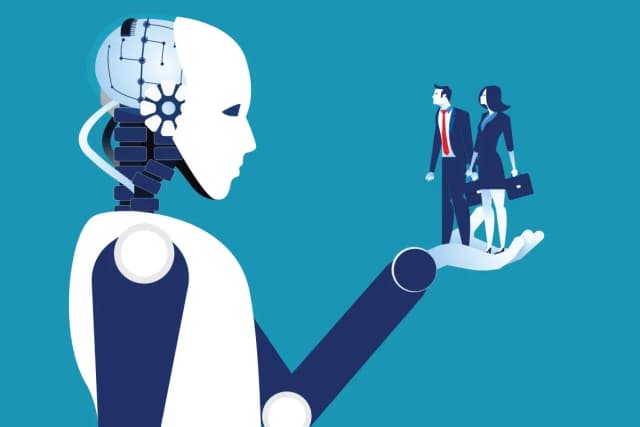
Imagine this: you’re working on a project, and an AI suggests better ideas, corrects your mistakes, and speeds up your work. Now imagine another AI that doesn’t wait for your input, it plans the project, executes tasks, and delivers results on its own.
Both sound powerful. Both are AI. But they’re not the same.
Welcome to the world of AI Co-Pilots and Autonomous Agents, two technologies shaping how we work, create, and make decisions. The key difference? One works with you, the other can work without you.
Also Read: What is Artificial Intelligence?
What are AI Co-Pilots?
AI co-pilots are intelligent digital assistants that work alongside humans, helping them think, create, and execute tasks more efficiently, without taking control away.
Think of a co-pilot in an aircraft. They don’t fly the plane alone, but they assist the pilot with navigation, monitoring, and decision-making. Similarly, AI co-pilots augment your capabilities, making your work faster and smarter while you remain in charge.
Key Characteristics of AI Co-Pilots
1. Human-in-the-Loop
You are always in control. The AI suggests, but you decide what to accept, modify, or reject.
2. Assistive, Not Autonomous
They don’t initiate actions on their own. Their role is to support, not replace, human decision-making.
3. Real-Time Collaboration
They work with you as you work, offering instant help instead of delayed outputs.
4. Context-Aware Intelligence
They understand the task at hand and provide relevant, tailored suggestions rather than generic responses.
5. Productivity Amplifiers
They reduce repetitive work, speed up execution, and help you focus on higher-value thinking.
What are Autonomous Agents?
Autonomous agents are AI systems designed to act independently, they don’t just assist you, they take ownership of tasks, make decisions, and execute actions with minimal human involvement.
If AI co-pilots are like assistants sitting beside you, autonomous agents are more like digital teammates you can delegate work to.
Key Characteristics of Autonomous Agents
1. Independence with Purpose
They don’t need step-by-step instructions. Once given a goal, they figure out how to achieve it.
2. Goal-Oriented Execution
They focus on outcomes, not just tasks, making decisions along the way.
3. Multi-Step Thinking
They can plan and execute workflows involving multiple tools, steps, and iterations.
4. System Interaction
They can connect with APIs, databases, and software to take real actions (not just generate text).
5. Continuous Feedback Loop
They monitor results and refine their approach automatically.
Difference between AI Co-Pilots vs Autonomous Agents
At a surface level, the distinction seems simple, co-pilots assist, agents act. But when you look closer, the difference goes much deeper. It’s about how work gets done, who is in control, and how decisions are made.
Aspect | AI-copilots | Autonomous agents |
Primary Role | Assist humans in completing tasks | Execute tasks independently on behalf of humans |
Level of Control | Human-led (you stay in control) | AI-led (you delegate control after setting goals) |
Decision-Making | Suggestive (provides options, you decide) | Autonomous (makes decisions within defined boundaries) |
Task Handling | Focused on individual or short tasks | Handles complex, multi-step workflows end-to-end |
Interaction Style | Reactive (responds to prompts) | Proactive (initiates actions and adapts continuously) |
Human Involvement | Constant involvement required | Minimal involvement after initial input |
Speed vs Oversight | Slower but more controlled | Faster but requires monitoring |
Risk Level | Lower (human checks every step) | Higher (errors can scale if unchecked) |
Accountability | Clear (human is responsible) | Shared/complex (requires governance frameworks) |
Learning Curve | Easier to adopt | More complex to implement and manage |
Use Cases | Writing, coding, data analysis, productivity tasks | Workflow automation, operations, customer support, campaign management |
1. Primary Role: Assist vs Execute
AI co-pilots are designed to support your work. They help you think, create, and complete tasks, but they rely on you to move things forward.
Autonomous agents, on the other hand, are built to execute tasks end-to-end. You give them a goal, and they take responsibility for completing it.
Co-pilot says, “Let me help you do this”
Agent says, “I’ll handle this for you”
2. Level of Control: Human-Led vs AI-Led
With co-pilots, you are always in control. You decide what to ask, what to accept, and what to ignore. The AI never acts without your input.
With agents, control shifts. You define the goal and boundaries, but the AI decides how to get there, often without checking in at every step.
This makes agents powerful, but also something that needs trust and monitoring.
3. Decision-Making: Suggestive vs Autonomous
Co-pilots provide recommendations. They might give you multiple options, drafts, or ideas, but the final decision is yours.
Autonomous agents go a step further. They analyze, choose, and act based on the goal and available data.
Example:
Co-pilot: suggests 3 campaign ideas
Agent: selects one, runs it, and optimizes it
4. Task Handling: Individual Tasks vs Multi-Step Workflows
Co-pilots are best for specific, well-defined tasks, like writing a paragraph, fixing code, or summarizing data.
Agents are designed for complex workflows. They can break down a big goal into smaller steps, execute each one, and connect everything together.
This is why agents are often used in operations and automation.
5. Interaction Style: Reactive vs Proactive
Co-pilots are reactive. They respond when you ask them to do something. No prompt = no action.
Autonomous agents are proactive. They can initiate actions, monitor progress, and make adjustments without waiting for instructions.
They don’t just respond, they act continuously toward a goal.
6. Human Involvement: High vs Low
Co-pilots require constant human involvement. You guide every step, review outputs, and make decisions.
Agents require minimal involvement after setup. Once they start, they can continue working independently.
This reduces effort, but also reduces direct control.
7. Speed vs Oversight: Controlled vs Scalable
Co-pilots may be slightly slower because they depend on human input at every step, but this ensures accuracy and control.
Agents are much faster because they don’t wait for human intervention. They can execute tasks continuously and at scale.
Speed increases, but so does the need for oversight.
8. Risk Level: Lower vs Higher
With co-pilots, risks are lower because you review everything before it’s used. Errors are easier to catch.
With agents, risks are higher. Since they act independently, mistakes can propagate quickly if not monitored.
This makes governance and safeguards essential.
9. Accountability: Clear vs Complex
In co-pilot systems, accountability is straightforward, the human is responsible for decisions.
In agent-based systems, accountability becomes more complex. If an AI makes a decision, questions arise like:
Who approved the action?
Who is responsible for the outcome?
This is why organizations need clear policies and ownership structures.
10. Learning Curve: Easy vs Advanced
Co-pilots are relatively easy to use. Most people can start using them with minimal training.
Autonomous agents require a deeper understanding of:
Workflows
AI behavior
Risk management
System integration
They are more powerful, but also more complex to implement effectively.
11. Use Cases: Everyday Tasks vs End-to-End Automation
Co-pilots are ideal for day-to-day productivity:
Writing content
Coding
Analyzing data
Brainstorming ideas
Agents are suited for end-to-end automation:
Running campaigns
Managing workflows
Handling customer support
Automating operations
Co-pilots enhance work. Agents transform how work is done.
12. Example Scenario: Assistance vs Ownership
Let’s bring it all together:
A co-pilot helps you draft a report, improve it, and refine it, but you handle the process.
An agent gathers data, writes the report, analyzes it, and sends it, without needing your involvement at every step.
Which One Should Businesses Choose?
The honest answer? It’s not about choosing one, it’s about knowing when to use each.
Because AI co-pilots and autonomous agents solve different kinds of problems:
AI Co-Pilots are ideal when your business needs control, creativity, and human judgment
Autonomous Agents are powerful when your business needs automation, speed, and scale
In reality, the most successful organizations don’t choose, they combine both strategically.
What’s the Smartest Way to Think About This?
Instead of asking “Should we use AI co-pilots or autonomous agents?”, the better question is: “How do we build the capability to use both effectively?”
Because the real advantage doesn’t come from the tool itself, it comes from how well your team understands and applies it.
Co-pilots help you think better and work faster
Agents help you execute and scale operations
But without the right understanding, businesses either underuse AI or over-automate without control.
The smartest approach is to build a foundation where teams can:
Use co-pilots effectively for day-to-day work
Identify where automation actually makes sense
Design workflows that balance speed, control, and responsibility
How a Generative AI Course Helps Build This Capability?
Generative AI and Agentic AI course by Talentsprint is a well designed course which doesn’t just introduce tools, it helps professionals and organizations develop a practical understanding of how AI fits into real work scenarios.
How this course helps?
1. Build a Strong Foundation in Generative AI
The program helps you understand how AI co-pilots actually work, from prompting techniques to output refinement.
Learn prompt engineering and how to guide AI effectively
Work with real tools to generate, refine, and optimize outputs
Understand how to use AI for content, coding, analysis, and decision support
This ensures you don’t just use AI, you use it intelligently.
2. Move Towards Agentic AI (Autonomous Systems)
Beyond co-pilots, the course introduces you to agentic AI, where systems can act independently.
Learn how to design and build autonomous agents
Understand how agents plan, execute, and iterate tasks
Connect AI with APIs, tools, and workflows
This is where you transition from assistance to automation and scale.
3. Hands-On, Real-World Learning
Instead of just theory, the program emphasizes:
Practical projects and use cases
Exposure to multiple AI tools and platforms
Real-world scenarios across business functions
This makes learning directly applicable to your job or organization.
4. Strategic Application in Business Contexts
The program helps you think beyond tasks and focus on business impact:
Identify where AI can create value in your workflows
Learn how to integrate AI into existing systems
Understand how to balance efficiency with control
This is what transforms AI from a tool into a strategic advantage.
5. Responsible and Ethical AI Usage
As businesses move toward autonomous systems, ethics becomes critical.
The course covers:
Responsible AI practices
Bias, transparency, and accountability
Safe deployment of AI systems
Ensuring that as you scale AI, you do it responsibly and sustainably.
Conclusion
The future of AI isn’t a choice between control and automation, it’s a balance between the two.
AI co-pilots and autonomous agents represent two powerful ways of working with AI. One keeps you in the driver’s seat, helping you think, create, and decide better. The other takes things a step further, executing tasks, scaling workflows, and unlocking efficiency at a level that wasn’t possible before.
But the real shift isn’t about the technology, it’s about how we work with it.
Because in a world where AI can both assist and act, the true advantage lies in knowing when to hold the wheel, and when to let go.
Frequently Asked Questions
Q1. What are the main types of AI agents available today?
AI agents are typically categorised into five main types: simple reflex agents that respond to immediate conditions, model-based reflex agents that maintain internal state, goal-based agents that work towards specific objectives, utility-based agents that optimise outcomes, and learning agents that improve performance over time through experience.
Q2. What distinguishes an AI co-pilot from an autonomous agent?
An AI co-pilot functions as an assistant that provides support, insights, and recommendations whilst you maintain decision-making control. In contrast, autonomous agents are specialised AI systems designed to independently handle specific processes and execute tasks without requiring human approval at each step, taking ownership of entire workflows.
Q3. How are AI agents evolving in 2026?
The most significant development in 2026 is the emergence of long-running autonomous workflows. Rather than simply responding to single prompts, modern agents now operate through continuous execution loops, analysing tasks, breaking them into sub-tasks, executing actions, and adapting based on results throughout extended processes.
Q4. What level of human oversight do co-pilots require compared to agents?
Co-pilots demand ongoing input and supervision throughout task execution, with humans guiding the process and confirming results at each step. Autonomous agents, however, require minimal involvement after initial setup, working independently with only occasional check-ins for updates or refinements.
Q5. When should organisations choose co-pilots versus autonomous agents?
Deploy co-pilots for tasks requiring human judgement, creativity, or ethical oversight, such as strategic planning and content creation. Choose autonomous agents for repetitive, high-volume, structured tasks like financial processing and customer service automation where consistency, scalability, and automation are primary goals.
About the Author
TalentSprint
TalentSprint, Part of Accenture LearnVantage, is a global leader in building deep expertise across emerging technologies, leadership, and management areas. With over 15 years of education excellence, TalentSprint designs and delivers high-impact, outcome-driven learning solutions for individuals, institutions, and enterprises. TalentSprint partners with leading enterprises and top-tier academic institutions to co-create industry-relevant learning experiences that drive measurable learning outcomes at scale.
Explore Our Programme
Advance your career with the right program