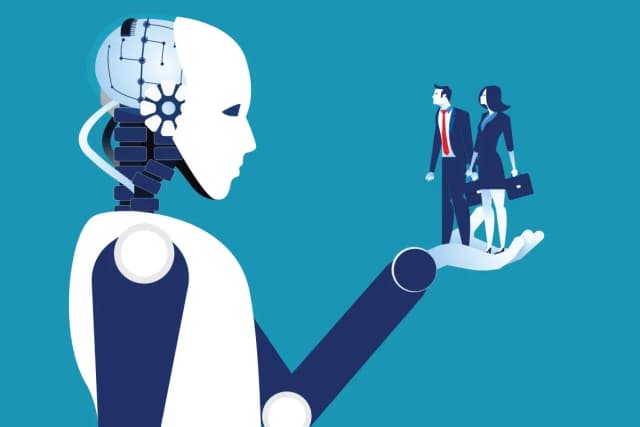
How companies are building internal AI assistants?

Consider a typical workday, constant tool-switching, fragmented information, and repetitive tasks that disrupt flow rather than enable it. The challenge isn’t a lack of tools, but their siloed nature, which creates inefficiencies across workflows.
This is where a subtle yet significant shift is emerging. Instead of relying on generic AI for isolated tasks, organisations are building internal AI assistants tailored to their workflows and data, systems that not only respond, but intelligently retrieve knowledge, automate processes, and enable real-time decision-making.
Understanding internal AI assistants
Internal AI assistants are AI-powered systems built specifically for an organisation’s internal use, designed to understand its data, workflows, and processes, and support teams in their day-to-day work.
The shift: From AI adoption to AI ownership
AI is no longer just about using tools, it’s about taking control. So, instead of relying on ready-made solutions, organisations are now building, customising, and owning their AI to fit their unique needs.
As organizations move from adopting AI to truly owning it, the focus shifts from using external tools to building capabilities in-house. This is exactly where internal AI assistants come into play.
So, what’s exactly driving this growing investment in internal AI assistants?
Organisations are moving beyond adopting AI to investing in internal AI assistants that eliminate everyday inefficiencies and streamline workflows. By automating tasks and unifying tools, these assistants improve operational efficiency while enabling instant access to relevant data.
This leads to faster, more informed decision-making, backed by real-time insights. At the same time, businesses retain greater control over data, security, and compliance. Most importantly, these assistants are tailored to specific processes, making AI a seamless, integrated part of how work gets done.
How companies are building internal AI assistants?
So, before we get to know, here’s a quick question, What if your organization had an assistant that didn’t just respond, but actually understood how your business works?
Companies don’t build internal AI assistants all at once, they follow a structured, step-by-step approach:
They start by identifying where AI can help the most
They look for repetitive tasks, frequent queries, and workflow inefficiencies that slow teams down.They organize and prepare their internal data
Information from documents, knowledge bases, and systems is cleaned and structured so AI can access it effectively.They choose the right AI tools and models
Based on their needs, they select platforms or models that can be customized and integrated into their systems.They integrate AI into existing workflows
Instead of adding another tool, they embed AI into platforms employees already use, like internal dashboards or communication tools.They train AI to understand their business context
The system is tailored using company-specific data so it understands internal processes, terminology, and requirements.They build core capabilities
Over time, the assistant evolves to retrieve knowledge, automate tasks, and support decision-making.They test, refine, and scale
Companies start small, improve based on feedback, and gradually expand AI across teams and functions.
But, Why AI adoption in india still feels fragmented?
AI adoption in India is growing rapidly across industries, with organizations experimenting with new tools. However, usage remains fragmented, with teams relying on isolated tools without a unified strategy
There is a clear gap between access to AI tools and the ability to use them effectively and Many professionals lack a structured understanding of how AI can be applied to real business problems
As a result, most are experimenting with AI rather than building with it, limiting its true impact
Also Read: AI Adoption Framework for Enterprises
From using AI to building internal AI assistants: what’s missing?
Companies that build internal AI assistants follow a structured progression, from foundational understanding to workflow integration and scalable systems. In contrast, a tool-first approach without strategic clarity creates a disconnect between using and building AI, often due to gaps in advanced prompting, workflow orchestration, and system integration.
This is exactly where structured learning becomes essential.
How AI Infinity closes the gap from learning to building AI?
AI Infinity addresses this gap through a structured learning pathway, from foundational AI literacy to real-world solution building. It moves learners beyond the “black box” mindset into practical application, enabling them to design workflows and develop AI-powered solutions aligned with business needs.
Program Highlights:
40-hour structured program with 20 live weekend sessions with flexible self-paced learning
1-year access to continuously updated AI content
Hands-on learning with 12 real-world projects and 20 practical AI challenges
Exposure to 20+ AI tools including ChatGPT, Claude, Copilot, Gemini, and Perplexity
Dual learning tracks:
Functional Track for AI application and business use cases
Technical Track for building and deploying AI systems
Focus on experiential, real-world learning rather than just theory
Industry-recognized certification from TalentSprint (part of Accenture)
Accessible pricing at ₹7,200 per year
In essence, AI Infinity helps individuals move from simply using AI to building internal AI capability that drives real impact.
Conclusion
Internal AI assistants are no longer just an innovation, they’re becoming essential to how companies operate. As organizations move from fragmented AI usage to building tailored, integrated systems, the focus is shifting from tools to true capability. The real advantage lies in understanding, applying, and scaling AI effectively. Those who invest in building internal AI capability today won’t just keep up, they’ll define how work gets done in the future.
Frequently Asked Questions
Q1. What are internal AI assistants?
Internal AI assistants are tools built by companies to support employees in daily tasks like answering queries, automating workflows, and retrieving information. They are designed to improve efficiency, reduce manual effort, and enhance decision-making within the organization.
Q2. Why are companies investing in internal AI assistants?
Companies invest in internal AI assistants to boost productivity, streamline operations, and reduce costs. These tools help employees work faster, minimize repetitive tasks, and enable better use of organizational knowledge, leading to improved overall performance and competitiveness.
Q3. What technologies power internal AI assistants?
Internal AI assistants are powered by technologies like natural language processing, machine learning, and large language models. These systems can understand user queries, generate responses, and integrate with company databases to provide accurate, context-aware assistance.
Q4. How do internal AI assistants improve employee productivity?
They automate repetitive tasks, provide quick access to information, and assist in decision-making. By reducing time spent on manual work and searching for data, employees can focus on higher-value tasks, resulting in faster outcomes and improved efficiency.
Q5. What challenges do companies face when building AI assistants?
Common challenges include data privacy concerns, integration with existing systems, ensuring accuracy, and user adoption. Companies must also continuously train and update these systems to maintain relevance and reliability across evolving business needs.
About the Author
TalentSprint
TalentSprint, Part of Accenture LearnVantage, is a global leader in building deep expertise across emerging technologies, leadership, and management areas. With over 15 years of education excellence, TalentSprint designs and delivers high-impact, outcome-driven learning solutions for individuals, institutions, and enterprises. TalentSprint partners with leading enterprises and top-tier academic institutions to co-create industry-relevant learning experiences that drive measurable learning outcomes at scale.
Advance your career with the right program