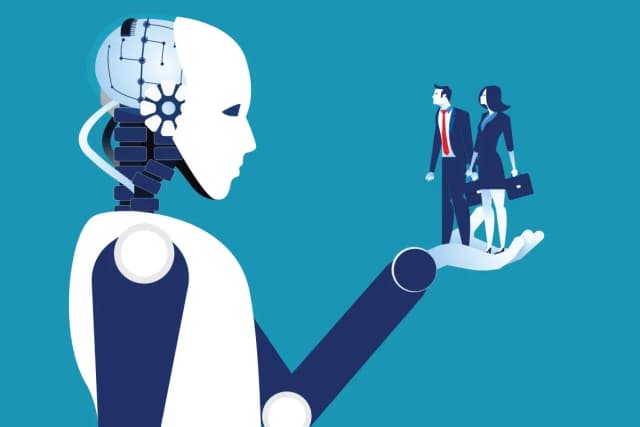
What is NLP and Why is it important?

You speak. Machines respond. And it all feels… natural.
Whether you’re asking Google a question, chatting with a customer support bot, or watching your messages auto-complete, technology seems to understand you effortlessly. But behind these everyday interactions lies a powerful capability called Natural Language Processing (NLP).
As AI becomes more conversational and deeply woven into our daily lives, NLP has shifted from a supporting feature to a core technology driving smarter, more human-like systems. Understanding what NLP is, and why it matters, helps us understand how AI is transforming the way we communicate, work, and make decisions.
Also Read: What is Artificial Intelligence
What Is Natural Language Processing (NLP)?
Natural Language Processing (NLP) is a branch of artificial intelligence that enables machines to understand, interpret, and respond to human language. It allows computers to work with text and speech the way people do, by recognizing meaning, context, intent, and even emotion.
From voice assistants and chatbots to search engines and language translation tools, NLP powers many of the AI experiences we use every day.
At its core, NLP bridges the gap between human communication and machine intelligence, making interactions with technology more natural and intuitive.
Also Read: What do you mean by LLM's?
A Brief History of NLP
NLP began in the 1950s with rule-based systems that followed rigid grammar rules. In the 1990s, it evolved with statistical and machine-learning methods that learned from data. The 2010s brought deep learning, enabling better understanding of context. Today, NLP is driven by large language models, powering human-like conversations and smart AI applications.
NLP in AI: Bridging Humans and Machines
ural Language Processing (NLP) is one of the most important branches of Artificial Intelligence (AI). While AI is the broader field that allows machines to perform tasks that usually require human intelligence, NLP focuses specifically on understanding, interpreting, and generating human language. It’s the technology that makes AI conversational, intuitive, and human-friendly.
Key Components of Natural Language Processing (NLP)
- Tokenization & Preprocessing: Breaks and cleans text for analysis
- Syntactic Analysis: Understands sentence structure and grammar
- Semantic Analysis: Interprets meaning and context
- Named Entity Recognition (NER): Identifies names, places, dates, etc.
- Word Embeddings: Converts words into numerical representations
- Machine Learning Models: Learn patterns from language data
- Natural Language Generation (NLG): Produces human-like text responses
How NLP Works?
NLP works by turning human language into something machines can understand, process, and respond to, just like a conversation.
1. Input: Text or Speech
NLP starts when a machine receives language input, typed text or spoken words.
2. Preprocessing: Cleaning the Language
Human language is messy. NLP first cleans it up by:
- Breaking sentences into words (tokenization)
- Removing unnecessary symbols
- Standardizing words
3. Understanding Meaning & Context
This is where NLP gets smart. Modern AI models understand:
- Intent (What do you want?)
- Context (When? Where?)
- Entities (cab, tomorrow, morning)
4. Learning from Data (Machine Learning & Deep Learning)
NLP models are trained on massive amounts of text so they can recognize patterns in how people talk and write.
This helps AI understand:
- Synonyms
- Tone
- Grammar
- Even ambiguity
5. Generating a Response or Action
Once NLP understands the request, it either:
- Takes an action, or
- Generates a human-like response
6. Learning & Improving Over Time
With feedback and continuous data, NLP systems get better at understanding language, accents, slang, and even emotions.
Also Read: How Do LLMs Work?
Types of NLP
At its core, Natural Language Processing (NLP) empowers computers to interact with human language. It's the sophisticated technology allowing machines to process, understand, and even produce text and speech in a way that feels natural to us. But NLP isn't a single tool; it's a field built on several distinct capabilities.
Let's explore the key branches of NLP and what they're designed to do:
1. Natural Language Understanding (NLU): The Meaning-Maker
NLU is all about teaching computers to comprehend language. It focuses on deciphering the meaning and intent behind words, sentences, and entire conversations. It Breaks down human language to understand its context, nuances, and underlying message.
Examples:
- Sentiment Analysis: Automatically determining if a text (like a social media comment or customer feedback) expresses positive, negative, or neutral feelings.
- Named Entity Recognition (NER): Identifying and classifying key information in text, such as names of people, organizations, locations, dates, or product names.
- Intent Recognition: Allowing chatbots or virtual assistants to understand a user's goal even if phrased differently (e.g., recognizing "I want to buy a ticket" and "book me a flight" both mean "flight booking").
- Automated Reporting: Generating summary reports from large datasets, such as financial updates or sports match recaps.
- Machine Translation: Translating text from one language to another (e.g., converting an email from Spanish to English).
- Chatbot Responses: Formulating clear and natural-sounding replies in a conversational interface.
- Speech-to-Text (STT) / Automatic Speech Recognition (ASR): Transcribing spoken words into written text, used in voice assistants (like Siri or Alexa) or when dictating notes.
- Text-to-Speech (TTS) / Speech Synthesis: Converting written text into spoken audio, heard in navigation systems, audiobooks, or public announcement systems.
- Tokenization: Breaking down text into individual words or phrases (tokens).
- Part-of-Speech (POS) Tagging: Identifying the grammatical role of each word (e.g., noun, verb, adjective).
- Stemming/Lemmatization: Reducing words to their root forms (e.g., "running," "ran," and "runs" all become "run").
2. Natural Language Generation (NLG): The Communicator
Once a computer understands, NLG is the counterpart that enables it to communicate back. It converts structured data or internal thoughts into coherent, natural-sounding human language. It Produces human-like text or speech from data.
Examples:
3. Speech Processing: Bridging Sound and Text
This area of NLP focuses on the spoken word, creating a connection between human voice and computer text. It Encompasses both Speech-to-Text (STT) and Text-to-Speech (TTS).
Examples:
4. Text Preprocessing: The Essential Foundation
While not a 'type' in itself, text preprocessing refers to the crucial initial steps taken to clean and prepare raw text data before other NLP tasks can be applied. It's about getting the data ready for analysis. It Organizes and standardizes raw text data into a format suitable for NLP algorithms.
Examples:
Also Read: What is Machine Learning?
How NLP Works in Real Life?
Imagine you type a message to a food delivery app:
“Where is my order?”
To a human, that’s a simple question. To a machine, it’s data.
NLP helps the system:
- Understand the meaning of your sentence
- Identify your intent (you want order status)
- Connect it to the right action
- Respond in clear, natural language
That’s essentially how NLP works, by turning raw text or speech into something machines can understand and act on.
Real-World Applications of NLP
Every day, we talk to our phones, search the web, reply to emails, binge-watch recommendations on OTT platforms, and chat with customer support bots. Most of us don’t think twice about it, but behind many of these everyday moments is a powerful technology called Natural Language Processing (NLP).
1. Chatbots & Virtual Assistants
They Understand user questions and maintain conversational context and Respond in human-like language
For Example: ChatGPT, Siri, Alexa, Google Assistant
2. Search Engines
They Understand the meaning behind search queries and Handle spelling mistakes and conversational questions
For Example: Google Search, Bing
3. Text & Email Classification
It Analyzes content and intent and Automatically categorizes messages
For Example: Gmail spam filter, support ticket routing
4. Sentiment Analysis
NLP helps in Detects emotions (positive, negative, neutral) and Understanding customer opinions
For Example: Social media monitoring, product reviews
5. Language Translation
NLP understands the sentence structure and meaning and translates context not just words
For Example: Google Translate, Microsoft Translator
6. Voice-to-Text & Speech Recognition
NLP helps to Converts spoken words into text and Understands accents and context
For Example: Voice typing, call center transcription
7. Recommendation Systems
They Understands what users read, search, or review and then matches content to user preferences
For example, they are most commonly used for personalised movie suggestions or product recommendations like, Netflix, Amazon and YouTube.
8. Resume Screening & HR Analytics
It Scans resumes for skills and experience and finds and Matches candidates to job descriptions
For example, How ATS systems used by enterprises for Faster hiring and better talent shortlisting.
9. Fraud Detection & Compliance
It Analyzes transaction descriptions and communications and Flags suspicious language or patterns
For example, ATS systems used by enterprises for detecting fraudulent emails, insider trading signals, or policy violations.
10. Healthcare & Legal Document Analysis
It Extracts important information from large documents and summarizes and highlights key points
For example, it is used for Clinical notes analysis, contract review which reduces manual effort for doctors and lawyers.
Also Read: Real-World Examples of Machine Learning That Actually Matter
Benefits of NLP
1. Makes Technology Feel More Human
One of the biggest benefits of NLP is that it allows people to interact with machines in natural language, just like they would with another person.
You don’t need to learn commands or technical terms. Whether you’re asking a chatbot a question or speaking to a voice assistant, NLP makes interactions intuitive and user-friendly.
2. Saves Time and Reduces Manual Work
Organizations deal with massive amounts of text, emails, tickets, documents, feedback, and reports. NLP can process all of this automatically.
For example:
- Sorting customer queries
- Scanning resumes
- Summarising long documents
- Analysing feedback
This frees up teams to focus on higher-value work instead of repetitive tasks.
3. Improves Customer Experience at Scale
With NLP, businesses can respond to thousands, even millions, of users at the same time.
Chatbots can answer common questions instantly. Voice systems can handle routine calls. Sentiment analysis helps brands understand how customers feel in real time.
The result? Faster responses, fewer delays, and more consistent service.
4. Enables Multilingual and Inclusive Communication
In a diverse country like India, NLP plays a crucial role in bridging language gaps.
With support for regional languages and mixed language usage (like Hinglish), NLP systems make digital services accessible to a wider audience, regardless of language or literacy level.
Challenges of NLP
While NLP has made huge progress, it’s not perfect. Understanding human language is far more difficult than it seems.
1. Language Is Complex and Contextual
Humans use sarcasm, slang, abbreviations, and cultural references all the time. A human understands the frustration. A machine may not be trained well. Understanding context, tone, and emotion is still one of the biggest challenges in NLP.
2. Handling Multiple Languages and Dialects
Languages vary not just across countries, but within regions. Accents, dialects, and informal usage can make it difficult for NLP systems to perform consistently.
In India especially, people often mix languages in a single sentence. Teaching machines to understand this fluidity is challenging and requires high-quality, diverse data.
3. Data Quality and Bias
NLP models learn from data. If the data is incomplete, biased, or poorly labelled, the system’s outputs will reflect that.
This can lead to:
- Inaccurate results
- Unfair decisions
- Misinterpretation of certain user groups
Ensuring clean, representative data is critical, but not always easy.
4. Not Always 100% Accurate
Even advanced NLP systems can misunderstand queries or provide irrelevant responses, especially with ambiguous or complex inputs.
This is why many enterprise NLP applications still combine human oversight with automation instead of relying entirely on machines.
The Future of Natural Language Processing (NLP)
Natural Language Processing is rapidly evolving from simple text understanding to truly human-like communication. In the future, NLP will focus less on commands and more on context, emotion, and intent, making interactions with technology feel natural and effortless.
Voice will become a primary way we interact with technology. From customer service to workplaces, voice-enabled NLP will deliver faster and more intuitive experiences without the need for typing.
Within enterprises, NLP will move beyond chatbots into core operations such as document analysis, resume screening, compliance checks, and internal knowledge management. Language data will play a bigger role in decision-making.
Most importantly, NLP will work alongside humans, not replace them. It will handle repetitive language tasks, while people focus on creativity, judgment, and strategy.
Conclusion
Natural Language Processing helps machines understand human language and make sense of the vast amount of text and conversations we create every day. From improving customer experience to supporting better business decisions, NLP makes technology more intuitive and useful. As AI continues to evolve, NLP will remain essential in bridging the gap between humans and machines, helping systems not just process words, but understand meaning.
Frequently Asked Questions
Q1. What is Natural Language Processing (NLP)?
Natural Language Processing is a branch of AI that enables computers to understand, interpret, and respond to human language in text and speech form.
Q2. Why is NLP important in AI?
NLP helps AI understand meaning and context, allowing systems to process human language and deliver more accurate, useful, and human-like interactions.
Q3. Where is NLP used in real life?
NLP is used in chatbots, voice assistants, search engines, sentiment analysis, language translation, email filtering, and customer support systems.
About the Author
TalentSprint
TalentSprint, Part of Accenture LearnVantage, is a global leader in building deep expertise across emerging technologies, leadership, and management areas. With over 15 years of education excellence, TalentSprint designs and delivers high-impact, outcome-driven learning solutions for individuals, institutions, and enterprises. TalentSprint partners with leading enterprises and top-tier academic institutions to co-create industry-relevant learning experiences that drive measurable learning outcomes at scale.
Advance your career with the right program