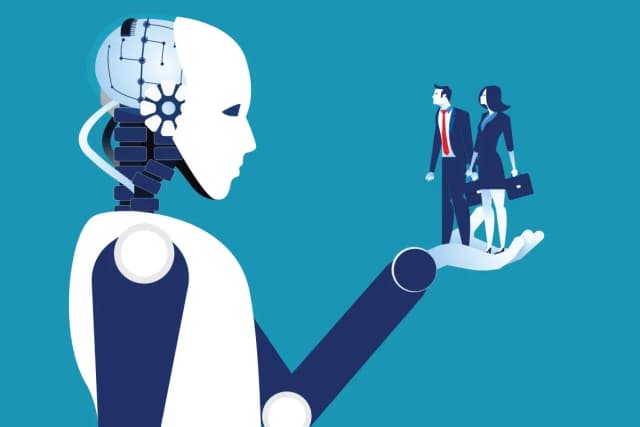
The role of schools in building AI awareness early

TL;DR:As AI becomes part of students’ daily learning, schools play a critical role in building AI awareness early. Beyond teaching technology, they help students develop digital literacy, critical thinking, and responsible AI habits. Early exposure enables learners to evaluate AI-generated information, understand its limitations, and apply AI confidently through guided, hands-on learning experiences.
Walk into a classroom today, and you'll notice something different.
Students are no longer relying solely on textbooks or search engines to find information. Increasingly, they are using AI tools to answer questions, generate ideas, complete assignments, and explore new concepts.
As AI becomes a part of everyday life, young learners are interacting with this technology earlier than ever before. Yet, while usage is growing rapidly, understanding is not always keeping pace.
According to global education and workforce reports, AI is expected to play an increasingly important role across industries, making AI literacy and digital awareness valuable skills for future learners. At the same time, educators are recognizing that students need more than access to technology. They need the knowledge and judgment to use it effectively.
The question is no longer whether students will encounter AI.
The real question is whether they will understand how to use it responsibly, critically, and confidently.
This is where schools play a vital role.
Also Read: What is Artificial Intelligence?
Why schools are uniquely positioned to build AI awareness?
Students are naturally curious. They often discover and adopt new technologies faster than adults expect.
However, curiosity alone does not always lead to understanding.
Schools provide something that self-learning platforms and social media cannot always offer: structure, context, and guided learning.
By introducing AI awareness early, schools can help students:
Understand what AI is and how it works
Recognize where AI is already influencing everyday life
Develop healthy digital habits
Learn how to evaluate AI-generated information
Use technology responsibly and ethically
Rather than simply using AI tools, students begin to understand them.
This shift from usage to understanding is where meaningful learning begins.
Also Read: AI for kids: a simple guide for parents and students
Why AI awareness cannot wait until college?
Many people associate AI education with university programs or technical careers.
In reality, students are already interacting with AI long before they enter higher education.
From recommendation engines on streaming platforms to AI-powered search tools and generative AI applications, technology is influencing how young people consume information, communicate, and learn.
Waiting until college to discuss AI means missing an important opportunity to help students develop informed habits early.
Introducing AI awareness during school years helps learners become thoughtful users of technology rather than passive consumers of it.
Early exposure builds better habits
As AI tools become more accessible, many students are already using them to support schoolwork, research, and creative projects.
These tools can offer significant benefits when used appropriately. However, without guidance, students may develop habits that limit learning rather than enhance it.
For example, students may:
Accept AI-generated information without verification
Depend on tools for answers rather than understanding
Overlook inaccuracies or biases in outputs
Schools can help address these challenges by encouraging students to:
Question AI-generated responses
Verify information using trusted sources
Think critically about results
Understand the strengths and limitations of AI systems
The goal is not to restrict AI use.
The goal is to help students become informed and responsible users of emerging technologies.
AI is changing the skills students need
For generations, education focused largely on accessing information and finding the correct answers.
Today, AI can generate summaries, explain concepts, and solve many structured problems within seconds.
As a result, the skills that matter most are evolving.
Students increasingly need to develop:
Critical thinking
Problem-solving abilities
Creativity
Communication skills
Information evaluation
Adaptability
Success in an AI-enabled world will depend not only on what students know but also on how effectively they can apply, evaluate, and build upon knowledge.
Teaching AI is not the same as teaching coding
One common misconception is that AI education is only relevant for students interested in programming or computer science but, AI awareness is much broader than coding.
At the school level, it often involves helping students understand:
How AI is used in everyday applications
Why algorithms make certain recommendations
How AI systems can make mistakes
What bias in AI means
Why responsible use matters
Simple questions can become powerful learning opportunities:
Why does a platform recommend certain videos?
Can AI-generated information be inaccurate?
How do AI systems make decisions?
What should we do when technology gives conflicting information?
These discussions help students build digital literacy, judgment, and awareness.
The Journey from Awareness to Application
Building AI literacy is most effective when students progress through a structured learning journey.
Stage 1: Awareness
Students learn:
What AI is
Where it exists
How it impacts everyday life
Stage 2: Exploration
Students begin to:
Experiment with AI tools
Observe outputs
Ask questions about how AI works
Stage 3: Application
Students:
Use AI to solve simple challenges
Apply concepts in practical situations
Build confidence through experience
Schools play a crucial role in introducing learners to this journey. However, deeper understanding often develops through opportunities that extend beyond the classroom.
Creating opportunities for hands-on learning
AI is not something students can fully understand through theory alone.
Like any emerging technology, meaningful learning happens when students have opportunities to experiment, solve problems, and apply concepts in practical settings.
This is why project-based learning experiences, competitions, and structured AI initiatives are becoming increasingly valuable. They complement classroom learning by helping students move from awareness to application.
One such example is the National AI Olympiad (NAIO).
The National AI Olympiad (NAIO), an initiative by TalentSprint, part of Accenture, is designed to help learners build AI awareness and assess their readiness in an increasingly AI-driven world. By combining foundational learning, assessments, and practical project experiences, NAIO aims to support students and professionals in developing a deeper understanding of AI concepts and their real-world applications.
How NAIO supports AI learning?
NAIO is designed to support learners at different stages of their educational and professional journeys.
Foundation Track (grades 6–12): Helps school students explore AI concepts early and build foundational awareness.
Advanced Track (college students): Supports learners in developing a deeper understanding of AI applications and future opportunities.
Professional track (working professionals): Helps participants assess AI readiness and strengthen future-relevant skills.
The learning journey is structured to move learners from understanding to application.
Stage 1: Olympiad Assessment
Participants evaluate their understanding of key AI concepts through a structured assessment.
Stage 2: Project-based learning
Learners engage in guided projects with mentorship support, enabling them to apply concepts in practical scenarios. Selected participants also get opportunities to showcase their work to academic institutions and industry stakeholders.
This progression helps learners move beyond theoretical knowledge and gain practical exposure to AI.
What students gain from practical exposure?
Hands-on experiences can help students:
Build foundational AI knowledge
Strengthen critical thinking and problem-solving skills
Gain confidence working with emerging technologies
Apply concepts through real-world projects
Better understand their strengths and areas for growth
Most importantly, students move from being passive users of technology to active learners who understand how to work with it effectively.
Why this matters?
Schools are essential for building awareness. They provide the foundation that helps students understand technology rather than simply consume it.
However, awareness is only the first step.
Students also need opportunities to explore, experiment, and apply what they learn. Initiatives such as NAIO can complement classroom learning by providing structured experiences that encourage deeper engagement with AI concepts.
As AI continues to influence education, careers, and everyday life, opportunities that combine awareness with practical exposure are becoming increasingly important.
Conclusion
AI is rapidly becoming part of how students learn, create, and interact with information.
This makes AI awareness an increasingly important aspect of digital literacy and future readiness.
Schools have a unique opportunity to introduce students to AI early, help them understand its possibilities and limitations, and encourage responsible use.
But awareness alone is not enough.
Students also need opportunities to explore, apply, and build confidence through experience.
Because in the years ahead, success will depend not only on what students know, but on how effectively they can think, learn, and work alongside AI.
Frequently Asked Questions
Q1. Why is it important to introduce AI awareness in schools?
Introducing AI awareness in schools helps students understand how AI works, use it responsibly, and develop critical thinking and digital literacy. Early exposure ensures they become informed users of technology rather than relying on AI without questioning its accuracy or limitations.
Q2. Is AI education only useful for students who want to pursue technology careers?
No. AI awareness benefits students across all fields because AI is increasingly used in education, business, healthcare, finance, and everyday life. Understanding AI helps learners make informed decisions, solve problems, and adapt to future workplaces, regardless of their career path.
Q3. How can students move beyond AI awareness to practical learning?
Students can strengthen their AI understanding through project-based learning, competitions, and guided initiatives that encourage experimentation and real-world application. Hands-on experiences help them build confidence, apply AI concepts to solve problems, and develop skills needed for an AI-driven future.
About the Author
TalentSprint
TalentSprint, Part of Accenture LearnVantage, is a global leader in building deep expertise across emerging technologies, leadership, and management areas. With over 15 years of education excellence, TalentSprint designs and delivers high-impact, outcome-driven learning solutions for individuals, institutions, and enterprises. TalentSprint partners with leading enterprises and top-tier academic institutions to co-create industry-relevant learning experiences that drive measurable learning outcomes at scale.
Advance your career with the right program