How to Build a Strong Tech Portfolio Before Graduation

TL;DR:A strong tech portfolio helps Computer Science students showcase practical skills beyond academic qualifications. By building projects consistently, documenting their work, and using platforms like GitHub, students can demonstrate problem-solving abilities and career readiness. Starting early and focusing on quality projects can significantly improve internship and job opportunities before graduation.
A degree shows what you've learned. A portfolio shows what you can do.
The way employers hire graduates is evolving. While academic qualifications remain important, they're no longer enough to stand out in an increasingly competitive technology job market.
According to the 2026 NACE Job Outlook, nearly 70% of employers now use skills-based hiring, evaluating candidates on demonstrated capabilities rather than relying solely on degrees. The report also highlights the growing importance of experiential learning, with employers placing greater value on projects, internships, apprenticeships, and other hands-on experiences that demonstrate workplace readiness.
For Computer Science students, this means one thing: your resume can tell employers what you've studied, but your portfolio shows how you've applied that knowledge.
Imagine two students graduating with similar grades. Both have learned programming, databases, software development, and emerging technologies. But during placement interviews, one confidently shares GitHub repositories, deployed applications, and real-world projects, while the other struggles to answer a simple question:
"Can you show us something you've built?"
That single question often makes the difference.
The good news is that you don't need years of industry experience to build an impressive portfolio. By starting early and consistently working on meaningful projects throughout college, you can graduate with tangible proof of your skills and career readiness.
In this blog, you'll learn why tech portfolios matter, what recruiters look for, and how to build one before graduation to strengthen your internship and job prospects.
Do employers actually look at student portfolios?
This is one of the most common questions students ask.
The answer is simple and it is yes, they often do.
A resume tells employers what you've studied. A portfolio shows what you've done with that knowledge.
For example, if you list Python on your resume, recruiters may want to know whether you've actually used it to build a project. If you mention AI or web development, they may want to see practical examples of your work.
A portfolio helps recruiters understand:
- Your problem-solving ability
- Your technical skills
- Your practical experience
- Your learning mindset
- Your ability to explain your work
For students who may not yet have professional experience, a portfolio becomes proof of capability.
Can you get a tech job without a portfolio?
Yes, it's possible as some students secure jobs through strong academics, good interview performance, internships, or referrals.
However, portfolios provide a major advantage.
When employers compare students with similar grades, practical work often becomes the deciding factor. A portfolio gives recruiters evidence of what you can build and how you think.
Instead of simply saying, "I know Java," you can show an application you've created using Java.
That makes a stronger impression.
How do you build a tech portfolio before graduation?
Many students think they need advanced skills to start building a portfolio.
They don't.
The best portfolios usually begin with small projects and improve over time.
Year 1: Start Small
Your goal is not perfection. Your goal is consistency.
Start with projects such as:
- Calculator apps
- Quiz applications
- Personal websites
- Expense trackers
- Student attendance systems
Create a GitHub profile and begin uploading your work. Even simple projects demonstrate initiative and progress.
For example, imagine a student named Arjun who starts with a basic Python expense tracker. Over time, he adds categories, reports, and dashboards. By the end of college, that small project has evolved into a polished application that demonstrates years of learning.
That's how strong portfolios are built.
Year 2: Build Real Applications
As your skills improve, start creating projects that solve practical problems.
You could build:
- A library management system
- An event registration platform
- An e-commerce website
- A task management application
The goal is to move beyond coding exercises and begin solving real challenges.
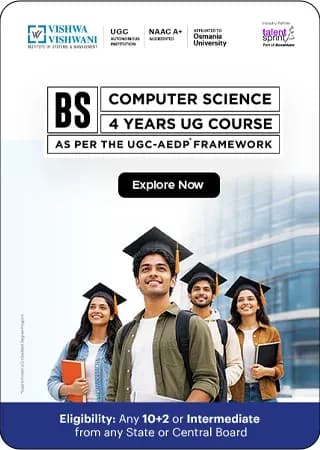
Many students know they should build projects but struggle to stay consistent alongside academics. This is where project-based learning environments can help. The BS in Computer Science at VVISM Hyderabad, delivered in collaboration with TalentSprint, emphasizes hands-on projects, coding labs, and applied learning experiences throughout the degree journey, helping students create practical work continuously rather than only during placements.
Year 3: Explore Specializations
This is the stage where your interests begin to shape your portfolio.
Depending on your career goals, you might explore:
- Artificial Intelligence
- Machine Learning
- Data Science
- Cloud Computing
- Cybersecurity
- Full Stack Development
For example:
A student interested in Data Science might create a performance analytics dashboard.
A student interested in AI could build a chatbot.
Someone passionate about cybersecurity could develop a secure authentication system.
The BS in Computer Science at VVISM Hyderabad, delivered in collaboration with TalentSprint highlights exposure to emerging technology domains including AI & Machine Learning, Data Science, Cloud Computing, Cybersecurity, and Full Stack Development, helping students gain experience in areas that align with evolving industry demand.
Also read: How to Build an AI Portfolio?
Year 4: Focus on Career Readiness
By your final year, your portfolio should showcase your strongest work.
This is the time to:
- Refine projects
- Improve documentation
- Build case studies
- Create demos
- Prepare for interviews
Students who have worked on industry-driven projects, coding challenges, applied assignments, and apprenticeship-based experiences often have stronger portfolio stories to tell. Internal program information positions the VVISM BS in Computer Science degree around apprenticeship-embedded learning, practical exposure, and portfolio-ready work throughout the academic journey.
Also read: Why career readiness matters more than ever for students?
What should you include in your first portfolio?
Many students delay creating a portfolio because they think they don't have enough experience.
That's a mistake.
A beginner portfolio can include:
- A short personal introduction
- GitHub profile
- 3-4 projects
- Screenshots or demos
- Technical skills
- Academic projects
- Hackathon participation
- Certifications
The goal isn't to look like an experienced engineer.
The goal is to show that you're learning, building, and improving.
What kind of projects impress tech recruiters?
Students often ask:
"What projects should I build?"
The answer is simple: projects that demonstrate real-world thinking.
A strong portfolio should ideally include:
- A Web Development Project: A website, booking system, learning portal, or e-commerce application.
- A Data Project: A dashboard, trend analysis system, or visualization project.
- An AI Project: A chatbot, recommendation system, or machine-learning application.
- A Full-Stack Application: A project that combines front-end, back-end, and databases.
- A Real-World Problem-Solving Project: These often stand out the most because they showcase creativity and practical thinking.
Recruiters are generally more interested in seeing how you solve problems than how many technologies you list.
How many projects are enough?
One of the biggest misconceptions is that portfolios need dozens of projects.
They don't.
Five well-documented projects are usually more valuable than twenty incomplete ones.
A balanced student portfolio might include:
- 2 beginner projects
- 2 intermediate projects
- 1 advanced or specialization-based project
- 1 capstone or real-world project
What matters most is quality.
Every project should clearly explain:
- The problem
- The solution
- Technologies used
- Challenges faced
- Key learnings
Should you use GitHub or a Personal website?
The best answer is: both.
GitHub Shows Your Technical Work
GitHub allows recruiters to see:
- Your code
- Project structure
- Documentation
- Development activity
Also read: How to Build a GitHub Portfolio as a Fresher?
A Portfolio Website Tells Your Story
A personal website can showcase:
- Featured projects
- Screenshots
- Case studies
- Skills
- Contact information
Think of it this way:
GitHub shows the proof. Your website provides the context.
Together, they create a stronger professional presence.
Why the right learning environment matters?
Building a portfolio shouldn't feel like a solo journey.
Many students know they should build projects, participate in coding challenges, and explore emerging technologies. The challenge is finding time, guidance, and opportunities to do so consistently.
This is where the learning environment becomes important.
The BS in Computer Science at VVISM Hyderabad, delivered in collaboration with TalentSprint, is designed to blend academic foundations with practical learning through an Apprenticeship-Embedded Degree Program model. Students gain exposure to coding labs, projects, bootcamps, industry mentorship, applied assignments, and real-world learning experiences throughout the degree.
As a result, portfolio building becomes part of the student journey rather than an additional task outside academics. Students continuously create portfolio-ready work while developing skills in areas like AI, Data Science, Cloud Computing, Cybersecurity, and Full Stack Development.
Final Thoughts: Graduate With Proof, Not Just Potential
A Computer Science degree provides the foundation for a career but a portfolio demonstrates how you can apply that foundation.
The students who stand out are often not the ones with the highest number of projects. They are the ones who consistently learn, build, improve, and document their work.
So, start small, build regularly, show your progress and choose learning experiences that help you apply knowledge in real-world situations.
Because when graduation arrives, employers won't just want to know what you've studied, instead they'll want to see what you've built, and your portfolio is where that story comes to life.
Frequently Asked Questions
Q1. Why is a tech portfolio important for Computer Science students?
A tech portfolio demonstrates how you've applied your technical knowledge through real projects. It showcases problem-solving skills, practical experience, and continuous learning, helping recruiters evaluate your capabilities beyond grades and making you more competitive for internships and entry-level technology roles.
Q2. What should a beginner include in a tech portfolio?
A beginner's portfolio should include a GitHub profile, three to five well-documented projects, a brief personal introduction, technical skills, academic projects, certifications, hackathon participation, and project demonstrations. The goal is to show consistent learning, practical application, and steady progress over time.
Q3. How many projects are enough to build a strong tech portfolio?
Quality matters more than quantity. Around five well-documented projects covering beginner, intermediate, advanced, and real-world applications are often sufficient. Each project should clearly explain the problem solved, technologies used, implementation process, challenges faced, and key learnings to showcase practical skills effectively.
About the Author
TalentSprint
TalentSprint, Part of Accenture LearnVantage, is a global leader in building deep expertise across emerging technologies, leadership, and management areas. With over 15 years of education excellence, TalentSprint designs and delivers high-impact, outcome-driven learning solutions for individuals, institutions, and enterprises. TalentSprint partners with leading enterprises and top-tier academic institutions to co-create industry-relevant learning experiences that drive measurable learning outcomes at scale.
Explore Our Programme
Advance your career with the right program