How Industry-integrated degrees are helping students build careers earlier?

TL;DR:Industry-integrated degrees help students start building their careers while still in college by combining academic learning with hands-on industry experience. Through real projects, mentorship, apprenticeships, and exposure to emerging technologies, students develop job-ready skills, gain practical confidence, and graduate with both a degree and valuable professional experience.
The biggest change in higher education today is not where students learn. It is when they begin preparing for their careers.
For decades, education and employment were viewed as separate stages. Students completed a degree first and then started thinking about jobs, industries, and professional skills. Today, that distinction is becoming increasingly blurred. Employers expect g
raduates to bring not only academic knowledge but also practical skills, adaptability, and an understanding of how businesses operate in the real world.
As a result, students are looking for learning experiences that help them build career readiness alongside academic excellence. This shift is driving the rise of industry-integrated degrees, programmes designed to connect classroom learning with real-world application from the very beginning.
What are Industry-Integrated degrees?
At their core, industry-integrated degrees are built on a simple idea, Learning becomes more meaningful when students can connect what they study with how it is applied in the real world.
Traditionally, education followed a sequential model, Learn first. Apply later.
Industry-integrated programmes follow a different philosophy, Learn and apply together.
Students continue to build strong academic foundations while also gaining exposure to industry perspectives, practical projects, business challenges, emerging technologies, and professional ways of thinking.
Also Read: What is industry-integrated education?
How Industry-Integrated learning is taking shape today?
As industry expectations continue to evolve, some institutions are rethinking how degree programmes are designed and delivered.
A growing emphasis is being placed on combining academic excellence with industry relevance, ensuring that students develop both subject knowledge and practical capabilities during their undergraduate years.
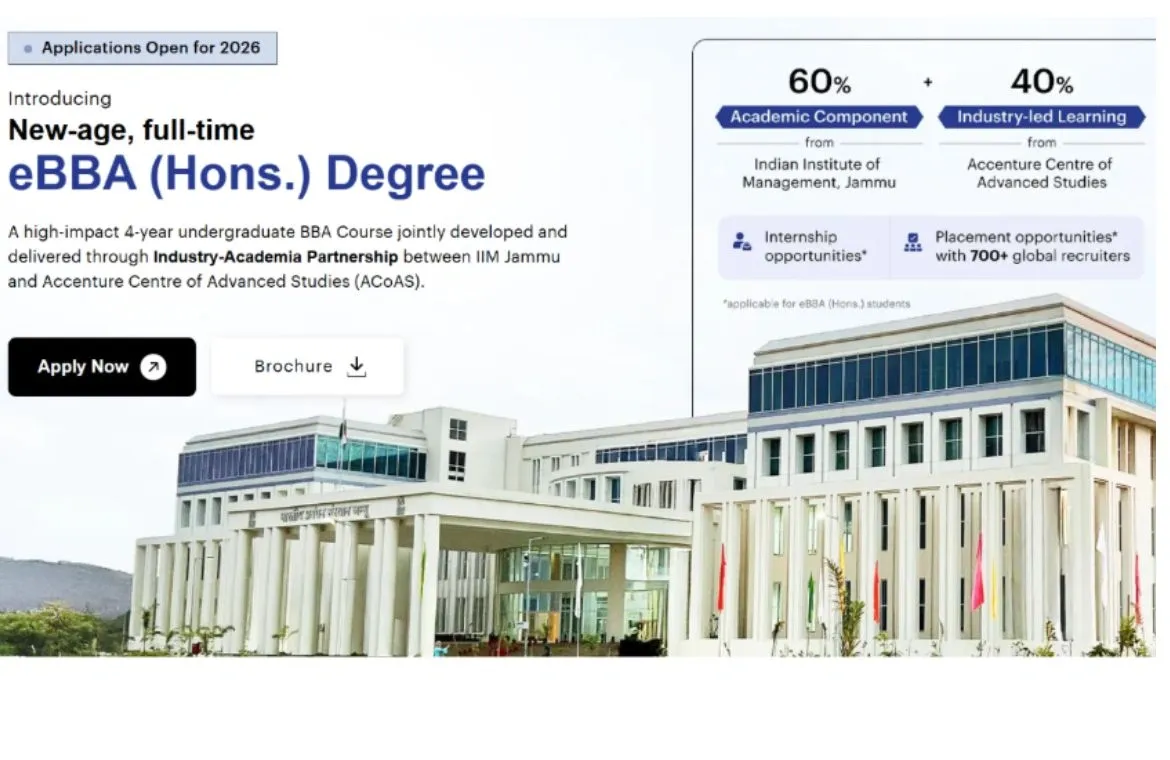
The Online BBA by IIM Jammu in collaboration with the Accenture Centre for Advanced Studies (ACoAS).
The four-year programme reflects the vision of India's National Education Policy (NEP) 2020, which encourages stronger industry-academia collaboration to bridge the gap between education and employability.
What makes the programme distinctive is its industry-integrated structure,
60% academic learning delivered through IIM Jammu's business education framework and
40% industry-led learning through the Accenture Centre for Advanced Studies.
This model allows students to build strong foundations in management, marketing, finance, economics, and business strategy while simultaneously gaining exposure to practical business challenges, industry projects, and workplace perspectives.
Students also engage with future-focused learning through electives and industry-led experiences covering areas such as:
Artificial Intelligence
Data Analytics
Cloud Technologies
Digital Business
Technology-enabled decision-making
Beyond academics, the programme integrates internship opportunities, industry engagement, and career readiness initiatives, helping students develop professional confidence alongside business knowledge.
Students benefit from:
Learning from IIM Jammu faculty
Industry-oriented curriculum and projects
Internship opportunities and practical exposure
Communication and aptitude training
Resume-building workshops
LinkedIn profile development
Personalised mock interviews
Career readiness assessments
This approach reflects a broader shift in higher education, where career preparation is becoming an integral part of the learning experience rather than something students focus on only after graduation.
Why education and careers are converging?
world of work has changed, and so have expectations from higher education.
Today, employers look beyond academic knowledge. They value graduates who can think critically, solve problems, collaborate effectively, and apply their learning in real-world situations.
At the same time, students are looking for more than a degree. They want industry exposure, career clarity, and opportunities to build practical skills before graduation.
As a result, the conversation The is shifting from "What will I study?" to "How will this help me succeed in the future?"
Industry-integrated degrees are helping bridge that gap by bringing learning and career preparation together from day one.
Also Read: How Industry collaboration is changing education?
The rise of career-ready degrees
A degree remains one of the most important investments students make in their future.
However, the criteria for evaluating a degree are changing.
Students and parents are increasingly looking beyond curriculum and credentials. They want programmes that offer:
Industry relevance
Practical exposure
Future-ready learning
Professional skill development
Career readiness support
In other words, they are looking for educational experiences that prepare students not only to graduate but also to succeed in the professional world.
This shift is contributing to the growing popularity of career-ready, industry-integrated degree programmes.
How do Industry-Integrated degrees help students build careers early?
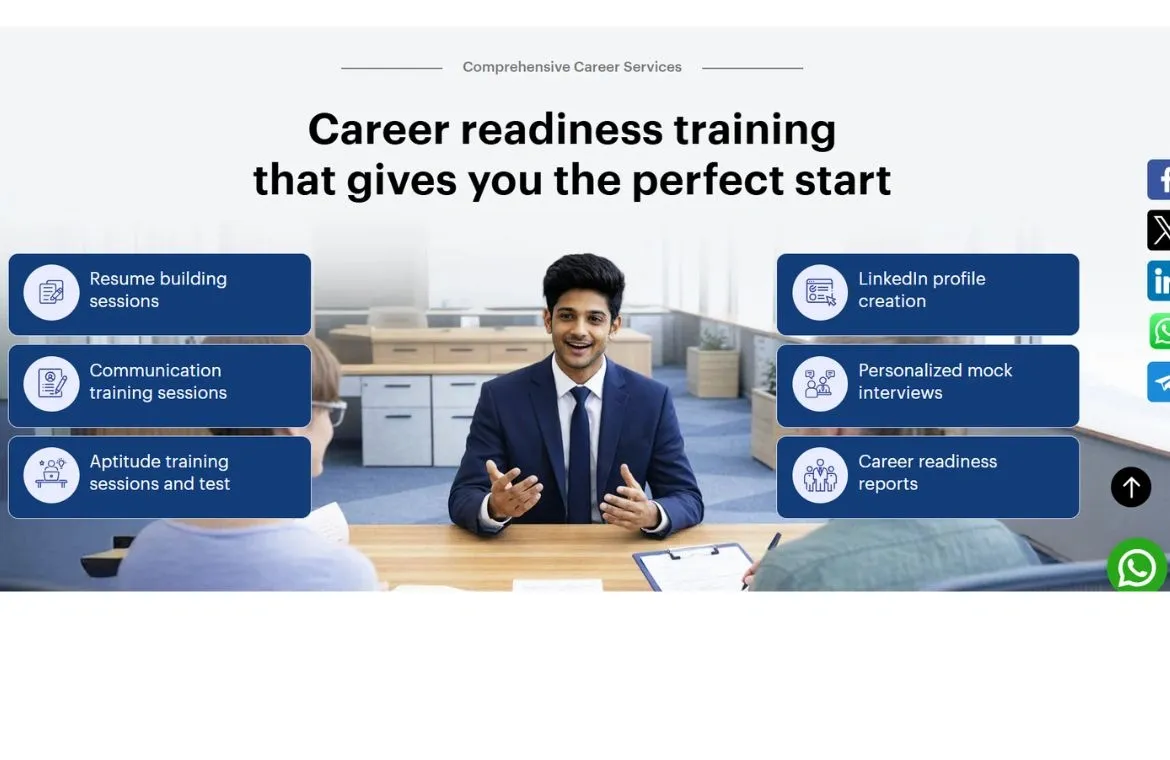
Industry-integrated degrees go beyond academic learning by helping students build professional skills and confidence throughout their educational journey.
Resume-building sessions: Help students learn how to effectively showcase their skills, projects, internships, and achievements in a professional format.
Communication training sessions: Focus on developing verbal, written, and interpersonal communication skills that are essential in the workplace.
Aptitude training sessions and assessments: Strengthen analytical thinking, logical reasoning, problem-solving, and decision-making abilities that are valued across industries.
LinkedIn profile creation: Helps students build a strong professional online presence and understand how networking can support career growth.
Personalised mock interviews: Provide hands-on interview practice along with expert feedback, helping students improve their confidence and interview performance.
Career readiness reports: Offer personalised insights into students' strengths, areas for improvement, and potential career pathways, enabling more informed career planning.
Together, these experiences help students graduate with more than just a degree. They develop the confidence, professional skills, and career awareness needed to navigate opportunities and transition more smoothly into the world of work.
What should students and parents look for?
As industry-integrated learning becomes more common, it is important to evaluate programmes carefully.
Some useful questions include:
Does the programme combine theory with application?
Is industry exposure embedded within the learning experience?
Are industry experts involved in curriculum design or delivery?
Does the programme address emerging technologies and future skills?
Does it provide career readiness support alongside academics?
Does it help students explore career opportunities before graduation?
The strongest programmes are those that help students build both competence and confidence.
The future of degrees is more connected to careers
The value of a degree today is no longer defined only by what students learn, but by how well it prepares them for a changing world of work.
According to the World Economic Forum's Future of Jobs Report, nearly 40% of current job skills are expected to change by 2030, while 63% of employers identify skills gaps as a major challenge to business growth.
As industries evolve, students need more than academic knowledge alone. They need practical experience, professional skills, and the ability to adapt to new technologies and changing workplace demands.
This is why industry-integrated degrees are becoming increasingly relevant. By combining academic learning with real-world exposure, industry engagement, and career readiness support, they help students prepare not just for their first job, but for long-term career success in an evolving economy.
Frequently Asked Questions
Q1. What makes an industry-integrated degree different from a traditional degree?
Industry-integrated degrees combine academic learning with real-world exposure throughout the programme. Students engage in practical projects, industry-led sessions, internships, and career development activities while studying, helping them apply concepts, build workplace skills, and gain professional confidence before graduation.
Q2. How do industry-integrated degrees improve employability?
These programmes help students develop skills employers increasingly value, including problem-solving, communication, critical thinking, and adaptability. Through internships, industry projects, mock interviews, and career readiness training, students gain practical experience that supports a smoother transition from education to employment.
Q3. Why are industry-academia partnerships becoming important in higher education?
As industries evolve rapidly, employers seek graduates who can apply knowledge in real-world settings. Industry-academia partnerships help align learning with workplace expectations, expose students to emerging technologies, and ensure they develop relevant skills, making education more connected to future career opportunities.
About the Author
TalentSprint
TalentSprint, Part of Accenture LearnVantage, is a global leader in building deep expertise across emerging technologies, leadership, and management areas. With over 15 years of education excellence, TalentSprint designs and delivers high-impact, outcome-driven learning solutions for individuals, institutions, and enterprises. TalentSprint partners with leading enterprises and top-tier academic institutions to co-create industry-relevant learning experiences that drive measurable learning outcomes at scale.
Explore Our Programme

Advance your career with the right program