No Science in 12th? Tech Career Path Arts Students Can Pursue

TL;DR:A science background is no longer a prerequisite for building a successful tech career. With structured learning, practical experience, and in-demand skills like programming, data literacy, and problem-solving, students from arts and other non-science streams can pursue rewarding technology careers. Industry-integrated programs further help bridge the gap between education and real-world employability.
Technology is no longer defined by degrees alone it’s defined by skills. Across industries, the demand for professionals who can work with digital tools, data, and AI is rising rapidly. Global insights from the Future of Jobs Report 2025 show how technological change, automation, and digital access are transforming the workforce and creating new opportunities for those ready to adapt.
This shift raises an important question: do you really need a science background to enter tech?
Not necessarily. Today, tech careers are becoming more accessible to students from all streams. What truly matters is your ability to learn, adapt, and apply skills in real-world contexts not the subjects you studied in 12th.
Why tech careers are no longer limited to science students?
In today’s digital-first world, careers in technology and data are no longer restricted to students with a Science or STEM background. A growing number of learners from humanities, commerce, arts, and design are successfully transitioning into tech roles.
Over the past decade, technology has transformed almost every field from business and education to policymaking and journalism. As a result, the demand for professionals who can combine domain knowledge with digital skills is rising sharply. Employers are increasingly looking for individuals who can interpret data, communicate insights clearly, and use technology tools to drive smarter decisions not just those with traditional technical degrees.
Can you build a tech career without studying science?
The short answer: yes.
You don’t need advanced knowledge of Physics, Chemistry, or Mathematics to get started in tech today. What matters more are foundational capabilities such as:
- Logical thinking
- Problem-solving mindset
- Willingness to learn tools and technologies
In fact, many professionals today have successfully moved into tech from non-STEM backgrounds by focusing on skill development and practical application.
Skills you need to succeed in tech
Breaking into tech today is less about your background and more about the skills you bring to the table. Most successful professionals build a mix of technical and transferable capabilities.
Core Technical Skills
You don’t need to start advanced but having a foundation helps you grow:
- Programming basics (Python, HTML, CSS)
- Data literacy understanding how to read, analyze, and interpret data
- Familiarity with digital tools and platforms used across industries
These skills form the base for many entry-level tech roles and can be learned step by step.
Core Transferable Skills
Equally important are skills that help you apply technology effectively:
- Clear communication
- Strong analytical thinking
- Creativity in problem-solving
- Adaptability to keep up with changing tools and trends
What is the industry looking for?
Industry demand is increasingly focused on skills related to AI, data, and cybersecurity. However, beyond specific tools, employers value professionals who can learn quickly, adapt to new technologies, and apply knowledge in practical scenarios.
Continuous learning is no longer optional it is essential for long-term growth in tech careers.
How to Transition into Tech After 12th?
Step 1: Choose the right entry pathway
Start with a structured degree program that builds both foundational knowledge and applied skills. This gives you clarity and a clear progression path from the beginning.
Step 2: Focus on structured learning
Avoid jumping between random tutorials. A guided curriculum helps you learn concepts in the right order and build confidence step by step.
Step 3: Build real-world exposure
Hands-on learning is critical. Work on projects, internships, or labs to apply what you learn and develop practical experience that employers value.
A smart way to start a tech career after 12th
As tech careers become more accessible, the way you learn matters just as much as what you learn. This is where industry-integrated degree programs are emerging as a strong pathway.
This program uniquely combines:
- Strong computer science fundamentals
- Industry-embedded apprenticeship
- Curriculum co-designed with TalentSprint (Part of Accenture)
- Real-world project exposure
- Focused employability outcomes
Unlike traditional programs that focus heavily on theory, these degrees are designed to be structured, guided, and career-focused helping students build both knowledge and practical skills from day one.
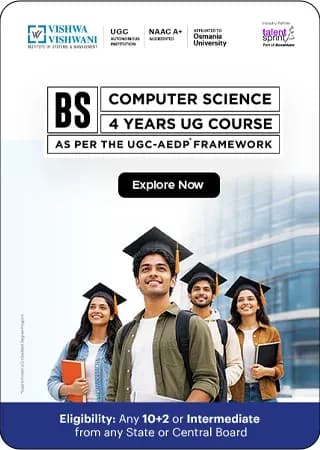
Programs like the BS in Computer Science offered by VVISM, Hyderabad in collaboration with TalentSprint follow this approach. They combine:
- Strong academic foundations in core computer science concepts
- Industry-integrated learning, with labs, projects, and mentorship from experts
- Real-world exposure, including apprenticeship-based training and hands-on experience
This model is designed to bridge the gap between classroom learning and real tech jobs helping students graduate with not just a degree, but job-ready skills.
Also Read: Here’s How You Can Break into the IT Field After 12th
Top tech career paths for arts students after a computer science degree
A Computer Science degree opens up multiple career paths, allowing students to choose roles based on their interests whether creative, analytical, or technical. Here’s how these roles translate in the real world:
Core Job Roles You Can Explore
- Software Engineer: Designs and builds applications, websites, or systems that power everything from mobile apps to enterprise platforms
- Data Scientist: Works with large datasets to uncover patterns, generate insights, and support better decision-making
- AI/ML Engineer: Develops intelligent systems and models that can learn from data and automate complex tasks
- Business Analyst: Bridges business and technology by using data to identify opportunities and improve processes
- Technology Consultant: Helps organisations adopt the right technology solutions and optimise their digital strategies
Conclusion
Tech careers are no longer limited by the stream you chose in school. Today, the focus is shifting from “Did you study Science?” to “What skills can you build?” With the right pathway and consistent effort, students from any background can enter and grow in the tech industry. What matters most is your willingness to learn, adapt, and apply knowledge in real-world situations.
As the future of work continues to evolve, adaptability and skill-building will matter far more than academic labels opening up new possibilities for those ready to take the first step.
About the Author
TalentSprint
TalentSprint, Part of Accenture LearnVantage, is a global leader in building deep expertise across emerging technologies, leadership, and management areas. With over 15 years of education excellence, TalentSprint designs and delivers high-impact, outcome-driven learning solutions for individuals, institutions, and enterprises. TalentSprint partners with leading enterprises and top-tier academic institutions to co-create industry-relevant learning experiences that drive measurable learning outcomes at scale.
Explore Our Programme
Advance your career with the right program