A Practical Guide for Non-Tech Students to Start a Career in Tech

TL;DR:Choosing commerce or arts in Class 12 no longer limits your path to a tech career. With the right mindset and a structured, industry-integrated computer science degree, non-science students can build programming, problem-solving, and job-ready skills. Hands-on projects, apprenticeships, and industry exposure help learners confidently transition into high-demand technology careers, regardless of their academic background.
Choosing commerce or arts in Class 12 often comes with a silent assumption: tech careers aren’t for you. But that assumption no longer holds. Today, technology is less about what you studied and more about how you think your ability to solve problems, adapt, and learn.
Why tech careers are no longer limited to science students?
Tech has moved beyond traditional boundaries. Businesses, media, healthcare, and even finance now rely on technology. This shift has created space for diverse talent. Students from non-science backgrounds bring valuable strengths communication, creativity, and analytical thinking that are equally relevant in tech. What matters now is not your stream, but your willingness to build the right skills consistently.
Can you build a tech career without a science background in class 12?
Many students assume a science background is a prerequisite for a tech career. In reality, thousands of learners from commerce, arts, and humanities successfully transition into tech every year. What truly matters is not your stream, but your ability to think logically, solve problems, and stay consistent in learning.
Skills like analytical thinking, communication, and structured reasoning often developed in non-science streams translate well into tech roles. Today, there are also computer science degrees and programs designed for beginners, meaning you don’t need prior science experience to get started.
Smartest way to start: A structured computer science degree
If you’re serious about building a tech career, starting with a structured computer science degree is often the most reliable path. It gives you a strong base in programming, systems, and problem-solving skills that employers consistently look for across tech roles.
What’s changed is how modern degrees are designed. Today’s programs go beyond textbooks they combine core concepts with real-world projects, practical applications, and industry exposure. This not only builds fundamentals but also helps you develop job-ready skills from day one.
The result? Better clarity, stronger skills, and more flexibility to grow across roles as your career evolves.
A better path for non-science students: Industry-integrated learning
What is industry integrated learning?
An industry-integrated program is a learning journey that combines academic education with real-world industry exposure through a unique format designed to build practical skills, industry relevance, and career readiness from day one.
For non-science students, the biggest shift comes from how you learn. Industry-integrated programs focus on learning by doing working on real problems, not just theory.
This builds early confidence, sharpens problem-solving, and makes you job-ready from the start going beyond memorising concepts to actually applying them.
How the VVISM BS in Computer Science helps you start?
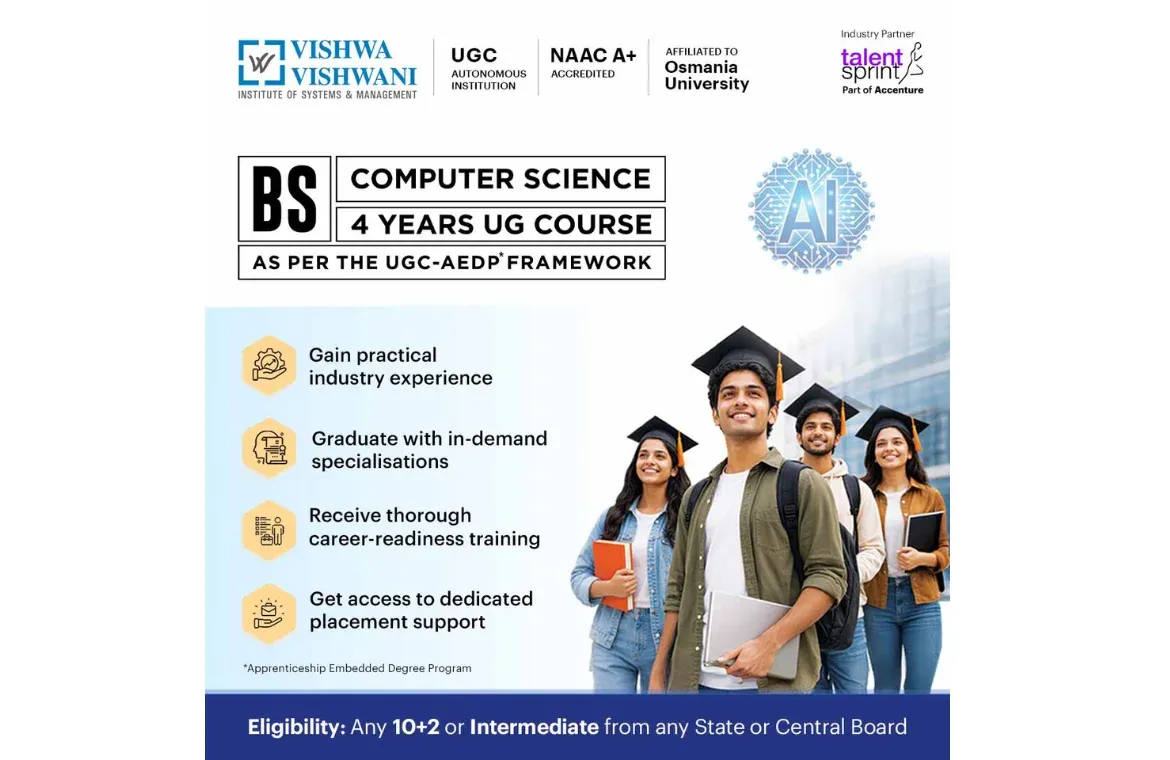
The VVISM BS in Computer Science is designed for students who want more than just a traditional degree it combines academic learning with real industry experience from the start. Delivered under the UGC-approved Apprenticeship Embedded Degree Programme (AEDP), it integrates a formal degree with structured industry exposure and mentorship.
Students build strong fundamentals through coding labs, bootcamps, and projects, while also gaining hands-on experience with real-world applications. The program offers specialisations in high-demand areas like AI, Data Science, Cloud Computing, and Cybersecurity, ensuring relevance in today’s job market.
What sets it apart is the apprenticeship model students gain up to two years of industry exposure and graduate with real work experience, not just theoretical knowledge. Continuous mentorship, industry-led teaching, and live projects ensure learners become job-ready professionals by the time they graduate.
Key takeaway
Choosing commerce or arts in Class 12 no longer limits your entry into tech. What matters today is how you think your ability to solve problems, adapt, and learn consistently. With the right foundation, non-science students can confidently build careers in this space.
The key is starting with structured, industry-integrated learning that builds both fundamentals and practical skills. The VVISM BS in Computer Science offers exactly that designed for beginners, focused on hands-on learning, and embedded with real industry exposure. For students serious about entering tech, it provides a clear, practical pathway to build skills, confidence, and job readiness from day one.
About the Author
TalentSprint
TalentSprint, Part of Accenture LearnVantage, is a global leader in building deep expertise across emerging technologies, leadership, and management areas. With over 15 years of education excellence, TalentSprint designs and delivers high-impact, outcome-driven learning solutions for individuals, institutions, and enterprises. TalentSprint partners with leading enterprises and top-tier academic institutions to co-create industry-relevant learning experiences that drive measurable learning outcomes at scale.
Explore Our Programme
Advance your career with the right program