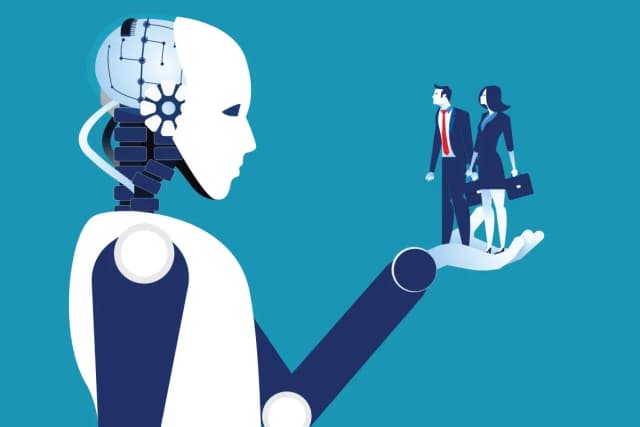
Embrace the AI Revolution: How to Upskill Your Entire Workforce

Across the globe, companies are racing to integrate AI, and they’re seeing real impact. According to workplace strategy research by statista, 77% of businesses now prioritise reskilling and upskilling to prepare teams to work alongside AI, making it the most common strategy for AI implementation today.
Yet despite the surge in AI use, many organisations still treat AI as a technology upgrade rather than a workforce transformation. Leaders may deploy the latest tools, but if employees lack the skills to operate them confidently, from interpreting outputs to applying insights, those investments fail to deliver their full potential.
Also Read: How to Start Your AI Journey?
Why AI is for everyone not just IT?
One of the biggest misconceptions about AI is that it only matters for IT or technical teams. In reality, AI is already transforming nearly every function across Indian organisations, reshaping how work gets done and how decisions are made.
- Marketing uses AI for content, personalization, and campaign optimization
- HR relies on AI for resume screening, workforce planning, and employee engagement
- Finance uses AI for forecasting, risk analysis, and fraud detection
- Operations and supply chain teams use AI for demand planning and efficiency
- Leadership uses AI-powered dashboards to guide strategic decisions
- When everyone is touching AI, responsibility can’t sit with IT alone.
Also Read: What 'AI for Everyone' Really Means?
How is the AI Revolution a Workforce Challenge?
For years, digital transformation was largely about upgrading systems and software. AI has changed that equation. It doesn’t just support work, it actively influences how decisions are made, how tasks are performed, and how value is created.
When employees lack a clear understanding of AI, organizations face familiar challenges: low adoption, stalled pilot projects, and significant investments in AI tools that fail to deliver meaningful business outcomes. Technology exists, but the ability to use it does not exist.
Where does the organization get stuck?
Many organizations unknowingly approach AI the same way they approached earlier software rollouts, deploy the tool, run a quick demo, and expect adoption to follow. But AI doesn’t work like traditional software. It requires a far higher level of judgment, context, and collaboration between humans and machines.
AI is not just something employees use; it’s something they actively work with. Without structured learning and the right organizational support, AI adoption quickly starts to falter.
What typically follows is predictable:
- Employees use AI inconsistently or incorrectly, leading to unreliable outcomes
- Teams operate in silos, duplicating efforts and experimenting in isolation
- Leaders struggle to connect AI initiatives to clear business ROI
- Promising ideas remain stuck in pilots, never scaling into real impact
This is where frustration sets in, not because AI lacks capability, but because people haven’t been prepared to collaborate with it effectively.
This is precisely why AI upskilling and corporate learning are no longer optional. Organisations needs a Custom AI corporate training solution that goes beyond basic tool introductions. Structured, role-based learning helps employees understand not just how to use AI, but when, where, and why to use it responsibly and confidently. A strong AI corporate training solution creates a shared understanding across teams, aligns experimentation with business objectives, and equips leaders to move from isolated pilots to enterprise-wide impact.
Also Read: What is a Corporate Training Program? A Complete Guide for Modern Businesses
What can organizations do now?
1. Work on Turning AI Potential into Business Value
AI has immense potential to transform how organizations operate, compete, and grow. Yet for many businesses, this potential remains largely untapped. Despite investing in advanced tools and technologies, organizations often struggle to convert AI capabilities into measurable outcomes.
The missing link is not technology, it is people's readiness. Turning AI into business value requires a deliberate focus on upskilling, and the time to act is now.
2. Adopting the Right Technology for value creation
AI creates value only when it is embedded into real business processes. Organizations must move beyond experimenting with AI tools and instead identify where AI can solve concrete problems, improving efficiency, enhancing customer experience, reducing risk, or driving growth.
This shift demands that employees understand how to apply AI insights in their daily work, rather than treating AI as a separate or experimental function.
How AI Upskilling Turns Potential into Real Business Value?
AI is everywhere, but having the latest tools doesn’t automatically create impact. The real power of AI lies in the people who use it. Upskilling your workforce transforms AI from a shiny technology into a game-changer for your business.
- Work Smarter, Not Harder: AI can take over repetitive tasks, freeing employees to focus on what humans do best, creative problem-solving, strategy, and innovation.
- Better Decisions, faster: AI delivers insights, but humans bring judgment. Upskilling helps teams interpret data, act confidently, and make smarter decisions that actually move the needle.
- Innovation That Sticks: When employees know how to work with AI, they stop experimenting randomly and start creating real solutions, whether it’s optimizing processes, designing new products, or delighting customers.
- AI for Everyone: Adoption doesn’t happen in silos. Training across teams ensures AI is woven into daily work, making it a true organizational advantage.
- Safe and Responsible AI: Learning about ethics, bias, and governance builds trust, employees know how to use AI confidently, responsibly, and effectively.
- Leaders Who Lead with AI: When managers understand AI, they guide teams wisely, prioritize the right projects, and turn experimentation into measurable business value.
Hence, when your people are ready, AI stops being a tool in the background and becomes a strategic partner, driving efficiency, innovation, and growth across the organization.
Also read: Why Every Company Needs AI Literacy to Thrive
Wrapped Up
The AI revolution is not waiting for organizations to catch up, it is already reshaping how work is done, how decisions are made, and how value is created. While technology continues to advance rapidly, the true differentiator lies in the readiness of people to work with AI. Without that readiness, even the most advanced AI investments fail to deliver impact.
So, “The value of AI is determined not by algorithms, but by the people who apply them.”
In embracing the AI revolution, organizations must start with learning. Because in this era, competitive advantage will belong not to those who simply adopt AI, but to those who invest in their people, build AI fluency across the workforce, and make upskilling an ongoing priority. AI may be the technology of the future, but upskilling is the foundation that makes that future possible.
Also Read: AI Readiness Assessment: Your Step-by-Step Business Preparation Guide
Frequently Asked Questions
Q1. Why is AI upskilling important for all employees, not just tech teams?
AI now impacts every department, from finance to marketing. Organisations that upskill their entire workforce are more likely to achieve productivity gains and outperform competitors. Without comprehensive AI literacy, companies risk falling behind in efficiency, innovation, and market relevance.
Q2. How can organisations address the growing AI skills gap?
Organisations can address the AI skills gap by implementing tailored learning paths, using AI-powered learning platforms, encouraging peer-to-peer knowledge sharing, and creating incentives for continuous learning. It's crucial to focus on both technical and non-technical skills, and to align training with specific business objectives.
Q3. What are some effective strategies for AI upskilling across an organisation?
Effective strategies include creating customised learning paths based on individual roles and skill levels, utilising AI-powered learning platforms for adaptive experiences, fostering peer-to-peer learning through initiatives like AI hackathons, incentivising continuous learning with skill-based pay adjustments, and regularly measuring and adapting training outcomes.
Q4. How is AI changing the nature of work and future job roles?
AI is transforming work by automating routine tasks and shifting human roles towards more strategic, creative, and interpretive functions. While some jobs may be displaced, new roles are emerging that require a blend of AI literacy and uniquely human skills like critical thinking, communication, and problem-solving.
Q5. What are the risks of not investing in organisation-wide AI upskilling?
Organisations that fail to invest in comprehensive AI upskilling risk falling behind competitors, experiencing product delivery delays, missing revenue goals, and facing quality issues. The financial impact can be significant, with tech talent shortages potentially costing organisations trillions. Additionally, the competitive gap between AI adopters and laggards is widening rapidly.
About the Author
TalentSprint
TalentSprint, Part of Accenture LearnVantage, is a global leader in building deep expertise across emerging technologies, leadership, and management areas. With over 15 years of education excellence, TalentSprint designs and delivers high-impact, outcome-driven learning solutions for individuals, institutions, and enterprises. TalentSprint partners with leading enterprises and top-tier academic institutions to co-create industry-relevant learning experiences that drive measurable learning outcomes at scale.
Advance your career with the right program