What Employers Look for in Computer Science Graduates?

TL;DR:Employers today look beyond a computer science degree when hiring graduates. They value a combination of strong technical foundations, problem-solving abilities, practical project experience, industry exposure, communication skills, and adaptability. As technologies like AI continue to reshape workplaces, graduates who can apply their knowledge in real-world situations are increasingly better positioned for career success.
Computer science remains one of the most employable fields today, with employability levels reaching nearly 80% for CS and IT graduates in India, driven by demand in areas like AI, data analytics, and automation.
These opportunities also translate into a wide range of career pathways, from software development and data analytics to emerging roles in AI, cloud, and cybersecurity, making computer science one of the most versatile fields in today’s job market.
However, this demand comes with a shift in expectations.
Employers today are no longer hiring based on degrees alone. Instead, they prioritize skills, real-world experience, and the ability to apply knowledge effectively. The strongest candidates are those who can demonstrate not just what they’ve learned, but how they can use it in practice.
How a degree is only the starting point?
A computer science degree still provides a strong foundation. It signals that a student has:
Technical understanding
Logical reasoning ability
Exposure to programming concepts
At the same time, hiring trends increasingly show that a degree is only the entry point, not the differentiator. Employers use it as a baseline, but focus more on what candidates can demonstrate beyond it.
In many hiring processes, candidates with similar degrees compete for the same roles, this is where skills, experience, and portfolio work begin to make the difference.
What employers actually look for?
1. Strong fundamentals, applied, not theoretical
Employers expect knowledge of core concepts such as data structures, algorithms, and programming languages like Python, Java, or C++.
However, what they truly assess is the ability to apply these fundamentals in real-world scenarios, whether that’s solving problems, building systems, or debugging issues.
2. Real-world project experience
One of the strongest signals of job readiness is proof of work.
In practice, this means:
Projects that demonstrate functionality
Hands-on coding experience
Applied learning beyond coursework
In many hiring decisions, personal and academic projects become a key differentiator, helping employers evaluate how effectively a candidate can apply their knowledge.
This is also why students who actively build during college often have a clearer advantage when entering the job market.
3. Problem-solving ability
Employers are not just hiring based on knowledge, but on how candidates think.
They look for individuals who can:
Approach unfamiliar problems
Break down complexity
Apply logical reasoning
This ability becomes especially important in real-world environments, where problems are not predefined and solutions are rarely straightforward.
4. Collaboration and Communication
Technology roles today require constant collaboration.
Graduates are expected to:
Work in teams
Communicate clearly
Contribute to shared projects
These expectations apply across different environments, whether it’s a fast-paced startup or a large tech organization, making communication and adaptability essential from the beginning.
5. Familiarity With Real Tools and Workflows
Employers expect graduates to be comfortable with:
Development tools
Version control systems
Real-world workflows
The closer a student’s exposure is to actual industry practices, the easier it becomes to transition into entry-level roles such as software developer, data analyst, or QA engineer.
6. Adaptability and learning agility
Technology continues to evolve rapidly, and so do employer expectations.
Today, companies look for candidates who can:
Learn new technologies quickly
Adapt to changing roles
Stay relevant in dynamic environments
Along with technical skills, attributes like critical thinking, digital fluency, and learning agility are increasingly valued.
Why landing the first job can be challenging?
Despite strong demand, many graduates face difficulty in securing their first role.
This is not necessarily due to a lack of degree value, but often due to gaps in:
Practical exposure
Project experience
Confidence in applying knowledge
As a result, entry-level hiring can be competitive, especially for candidates who rely only on academic learning without building hands-on experience.
At the same time, opportunities continue to exist across multiple roles, particularly in areas like software development, data science, cloud computing, and AI-driven applications.
A Shift in how students need to prepare
To meet these expectations, students need to go beyond traditional approaches.
Instead of focusing only on coursework, they must actively:
Build projects
Engage in practical learning
Develop problem-solving skills
Gain exposure to real-world environments
This is where internships and structured hands-on experiences play a crucial role. They provide the kind of exposure that helps students transition more confidently into full-time roles after graduation.
What this looks like in practice?
This shift is already influencing how some undergraduate programs are designed today.
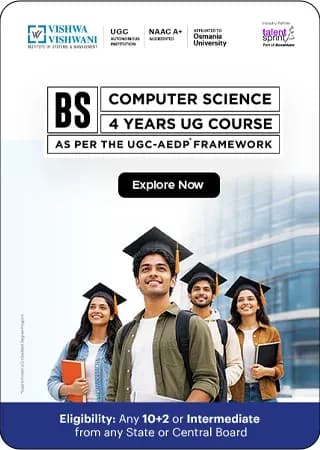
For instance, the BS Computer Science program by VVISM Hyderabad, delivered in collaboration with TalentSprint (part of Accenture), is structured to integrate academic learning with continuous practical exposure.
Instead of separating theory and application, the learning approach combines:
Conceptual clarity
Hands-on projects
Exposure to real-world challenges
How this approach aligns with employer expectations?
Learning through real projects
Students engage in:
Industry-driven labs
Live projects
Applied assignments
This enables them to build portfolio-ready work, which is a key factor in hiring decisions.
Continuous exposure to real environments
Sustained exposure to practical challenges helps students:
Build confidence
Improve problem-solving ability
Understand real workflows
Industry mentorship
Guidance from experienced professionals helps students:
Align with current expectations
Learn relevant tools
Improve through feedback
Skills built for high-demand roles
The program focuses on areas aligned with current hiring demand, including:
Artificial Intelligence
Data Science
Cloud Computing
These areas continue to create strong entry-level opportunities in the job market.
Beyond skills: building career readiness

In addition to technical capabilities, employers also evaluate how well candidates are prepared for the hiring process itself.
This includes:
How they present their work
How they communicate
How confidently they perform in interviews
Structured support in areas such as:
Resume building
Communication training
Aptitude preparation
LinkedIn profile development
Mock interviews
helps ensure that students are not just technically capable, but fully prepared to engage with hiring processes effectively.
Degrees open doors, skills and readiness drive outcomes
A computer science degree continues to provide a strong foundation.
However, what ultimately determines career outcomes is:
The ability to apply knowledge
Evidence of real-world work
Readiness to perform in professional environments
Students who develop these during college are better positioned to transition into roles and grow in their careers.
Final Thoughts
The expectations from computer science graduates have evolved.
It is no longer just about earning a degree, but about building the skills, experience, and readiness to use that degree effectively.
Because in today’s job market, the real advantage lies in what students can demonstrate, not just what they have studied.
Frequently Asked Questions
1. What skills do employers look for in computer science graduates?
Employers look for a combination of strong fundamentals, problem-solving ability, and hands-on experience. Beyond technical knowledge, they value real-world project work, familiarity with tools, communication skills, and adaptability. Candidates who can demonstrate how they apply concepts in practical scenarios tend to stand out in hiring processes.
2. Do projects and internships really make a difference in getting hired?
Yes. Projects and internships provide concrete evidence of a candidate’s ability to apply learning. They help employers evaluate problem-solving skills, technical capability, and readiness for real work environments. Candidates with strong portfolios and practical exposure often have a significant advantage during hiring.
3. Is a computer science degree enough to get a tech job today?
A degree remains important, but it is no longer sufficient on its own. Employers view it as a foundation. What differentiates candidates is their ability to apply knowledge, build projects, and demonstrate real-world experience alongside their academic learning.
4. What are the most common entry-level jobs for computer science graduates?
Entry-level roles typically include software developer, data analyst, QA engineer, cloud associate, and junior AI/ML engineer. These roles require a blend of technical fundamentals and practical exposure, with employers expecting candidates to demonstrate both basic competence and real-world application skills
5. How can students become job-ready during their computer science degree?
Students can become job-ready by combining academic learning with hands-on experience. This includes building projects, gaining internship exposure, improving communication skills, and preparing for interviews. Structured career readiness support, such as resume building, mock interviews, and mentorship, can further strengthen their chances of success.
About the Author
TalentSprint
TalentSprint, Part of Accenture LearnVantage, is a global leader in building deep expertise across emerging technologies, leadership, and management areas. With over 15 years of education excellence, TalentSprint designs and delivers high-impact, outcome-driven learning solutions for individuals, institutions, and enterprises. TalentSprint partners with leading enterprises and top-tier academic institutions to co-create industry-relevant learning experiences that drive measurable learning outcomes at scale.
Explore our Programme
Advance your career with the right program