How Industry experience during college changes your career

TL;DR: Industry experience during college helps students bridge the gap between academic learning and workplace expectations. Through internships, live projects, industry mentorship, and hands-on learning, students build practical skills, career clarity, and professional confidence. As employers increasingly prioritize real-world capabilities, industry-integrated learning enables graduates to enter the workforce better prepared and more competitive.
In today’s job market, the difference between a graduate and a job-ready professional often comes down to one factor: industry experience during college.
Students who engage in real-world learning early tend to build stronger skills, clearer career direction, and better opportunities after graduation. This blog explores how industry experience during college shapes career outcomes, and how a new approach to undergraduate learning is helping students become career-ready.
The Growing gap between college and careers
Across industries, a clear pattern is emerging.
Many students graduate with strong academic knowledge, but struggle when it comes to applying that knowledge in real-world environments.
- Employers continue to highlight gaps in practical skills
- Students often feel underprepared for workplace expectations
- Real-world problem-solving is rarely part of traditional learning
So, Only a small percentage of students gain meaningful hands-on exposure during college and those who do are far more likely to secure full-time roles
Hence, the challenge isn’t a lack of learning, it’s a lack of application.
Also Read: How Industry collaboration is changing education?
Why gaining industry experience during college changes everything?
Learning through real-world experience also changes how students approach one of the most common choices during college, whether to focus only on academics or gain practical exposure alongside their studies.
1. From studying concepts to solving real problems
Learning moves beyond theory.
Students begin to:
- Work on real challenges
- Handle practical constraints
- Build solutions that work outside the classroom
2. You build skills that employers actually hire for
Not all work experience contributes equally to career growth. What makes a real difference is experience that is aligned with what students are learning and the kinds of roles they want to pursue.
Today’s hiring is increasingly skills-focused. Employers look for:
- Problem-solving ability
- Collaboration and communication
- Practical familiarity with tools and workflows
Experiences such as internships, project-based work, and industry-led assignments help students apply their knowledge and build skills that employers actively look for.
Work-based learning helps translate classroom knowledge into real, usable skills.
3. You graduate with proof of work, not just a degree
A degree shows what you studied.
But what stands out is:
- Projects you’ve built
- Problems you’ve solved
- Work you’ve contributed to
Students with industry exposure graduate with evidence, not just potential.
4. Clarity comes early, not after graduation
Many students struggle to decide their path late in their degree.
Industry exposure helps them:
- Explore roles early
- Understand real job expectations
- Make better career choices
5. Your career begins while you’re still in college
Early work experience, especially internships and structured, hands-on roles, plays a significant role in how smoothly students transition into full-time careers.
Students with early exposure often:
- Build networks sooner
- Gain confidence faster
- Transition more smoothly into jobs
In many cases, this significantly improves employment outcomes after graduation.
This is why students with meaningful industry exposure often have a clear advantage when it comes to securing their first role.
Why most degrees still fall short?
Despite the clear benefits of industry experience, many degree programs still follow a traditional structure and that is, learn first and work later
This creates a gap:
- Real exposure comes too late
- Practical learning is limited
- Students face pressure during final placements
By the time students graduate, they are expected to perform, without enough real-world practice.
A shift in how degrees are being designed
This shift also addresses a long-standing dilemma for students, whether to focus entirely on academics or gain work experience alongside their studies. Increasingly, the most effective path is one where both happen together in a structured way.
To bridge this gap, some undergraduate programs are rethinking how learning works.
Instead of treating industry exposure as something that happens at the end, these programs are designed so that students gain real-world experience alongside their academic journey.
What defines this approach is not one feature, but a combination of:
- Learning through live projects and real-world problem-solving
- Continuous hands-on exposure instead of one-time internships
- Industry professionals contributing to teaching and mentorship
- A strong focus on building skills that directly translate into careers
The focus shifts from completing a degree to building capability during the degree.
For students, this translates into actively seeking opportunities such as projects, internships, and hands-on learning experiences that build real capability alongside academic learning.
Traditional degree vs Industry-integrated learning
| Aspect | Traditional Degree | Industry-Integrated Learning |
| Learning Model | Learn first, apply later | Learn and apply simultaneously |
| Industry Exposure | Limited, often in final year | Continuous and built into the program |
| Hands-on Experience | Depends on internships | Structured through projects and real work |
| Teaching Style | Lectures + exams | Labs, projects, real-world challenges |
| Industry Involvement | Minimal | Active role in learning and mentorship |
| Career Readiness | Begins after graduation | Built during the degree |
| Portfolio | Academic assignments | Real-world work and project outputs |
Also Read: Difference between traditional and industry-integrated degrees
What this looks like in practice?
This shift is already shaping how some undergraduate programs are structured today.
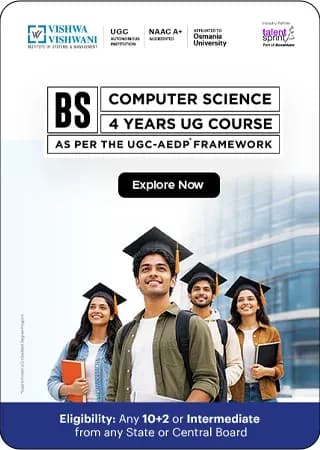
For instance, the BS in Computer Science offered by VVISM Hyderabad in collaboration with TalentSprint (part of Accenture) follows a model where industry exposure is embedded into the student journey rather than added at the end.
Instead of waiting until the final year, students engage with real-world learning much earlier in their degree.
How this approach translates into real career outcomes?
1. Industry experience is built into the learning journey
The structure combines:
- Strong foundational learning
- Extended exposure to real industry environments
This ensures that students graduate with meaningful experience, not just theoretical knowledge.
2. Learning happens through real work
Students engage with:
- Industry-driven labs
- Live projects and applied problem-solving
- Coding challenges and hands-on assessments
This helps them build portfolio-ready skills and practical confidence.
3. Industry professionals are part of the process
Learning is guided not just by faculty, but also by:
- Industry mentors
- Practitioners with real-world experience
This keeps learning aligned with current expectations and real workflows.
Skills align with high-growth careers
Students build capabilities in areas that are directly relevant to the future of work, ensuring their skills stay aligned with evolving industry needs.
This also means that career paths are no longer strictly limited by a student’s degree, but increasingly shaped by the skills they build and the experience they gain.
Students graduate ready to contribute
By the time they complete their degree, students have:
- Worked on practical projects
- Experienced real environments
- Built confidence in applying their skills
They don’t just prepare for jobs, they’re ready to step into them.
Degrees open doors, experience helps you walk in
A degree still provides the foundation.
But industry experience determines how effectively students can use that foundation.
Students who gain real-world exposure during college:
- Build stronger, more relevant skills
- Make informed career decisions
- Transition into the workforce with confidence
Final thoughts
Education today is no longer just about learning concepts, it’s about applying them in meaningful ways.
Because in today’s world, the real advantage is not just having a degree,
it’s having already started your career while earning it.
Frequently Asked Questions
1. What If I Don't Have Any Work Experience When I Graduate?
Not having formal work experience does not end your career prospects, but it may make the transition to employment more challenging. Employers increasingly value practical exposure, so internships, live projects, volunteering, certifications, and industry-integrated learning can help demonstrate your skills, initiative, and workplace readiness.
2. How Do You Stand Out to Employers Without Experience?
Students can stand out by showcasing practical skills through academic projects, freelance work, hackathons, certifications, volunteer initiatives, or personal portfolios. Recruiters often look for evidence of problem-solving, communication, and initiative. Demonstrating how you have applied your knowledge can be as valuable as traditional work experience.
3. Should I Take an Easy Job in College or an Internship?
The right choice depends on your goals. A part-time job can build responsibility, communication, and time-management skills, while internships often provide industry-specific experience. If possible, choose opportunities that align with your career interests, as relevant exposure can strengthen employability and career readiness after graduation.
4. Do Personal Projects Count as Work Experience?
Yes. Personal projects can demonstrate initiative, creativity, and practical application of skills. Whether it is building an app, conducting research, creating content, or solving real-world problems, well-documented projects provide tangible evidence of your abilities and can strengthen your profile during interviews and hiring processes.
5. How Many Internships Should I Do Before Graduating?
There is no ideal number. What matters most is the quality of experience gained. One meaningful internship with substantial responsibilities can be more valuable than several short-term placements. Students should focus on gaining practical skills, industry exposure, and measurable achievements that demonstrate readiness for professional roles.
About the Author
TalentSprint
TalentSprint, Part of Accenture LearnVantage, is a global leader in building deep expertise across emerging technologies, leadership, and management areas. With over 15 years of education excellence, TalentSprint designs and delivers high-impact, outcome-driven learning solutions for individuals, institutions, and enterprises. TalentSprint partners with leading enterprises and top-tier academic institutions to co-create industry-relevant learning experiences that drive measurable learning outcomes at scale.
Explore our Programme
Advance your career with the right program