How Students can prepare for tech interviews with confidence?

TL;DR:Tech interviews are about more than coding skills. Recruiters want to see how students solve problems, apply knowledge, and communicate their thinking. By building strong technical foundations, gaining hands-on experience through projects, and practicing interview scenarios, students can develop the confidence needed to transition successfully from the classroom to the interview room.
You've passed dozens of exams. But are you prepared for the conversation that could launch your career?
When recruiters interview students, they're not looking for perfect answers. They're looking for signs of potential, curiosity, problem-solving ability, and the confidence to apply knowledge in unfamiliar situations.
The real question is no longer "What do you know?" It's "What can you do with what you know?"
As students move from the classroom to the interview room, success depends not just on technical knowledge, but on the ability to demonstrate skills, experiences, and a readiness to contribute from day one.
What are recruiters really looking for during a tech interview?
Many students assume tech interviews are designed to test coding skills alone. While technical knowledge is important, recruiters are often evaluating something much broader.
They want to understand:
- How you approach problems
- Whether you can communicate your thinking clearly
- How you learn and adapt
- Your ability to work through challenges
- How you've applied technical concepts in practical situations
This is why a typical tech interview may include coding rounds, project discussions, behavioral questions, and scenario-based problem solving.
In other words, recruiters aren't just looking for students who can write code. They're looking for students who can think like future professionals.
Also Read: What Employers Look for in Computer Science Graduates?
Preparing for interviews is a marathon, not a sprint
One of the most common questions students ask is: "How long does it take to prepare for a tech interview?"
The answer may not be what most students expect.
While focused preparation before an interview is important, interview confidence is rarely built overnight. It develops through consistent learning, practice, and hands-on experiences accumulated over time.
Think of interview preparation as a journey:
1.Build foundations
Before students can confidently tackle interview questions, they need confidence in the fundamentals. Technical interviews often test concepts that form the backbone of Computer Science, including programming, data structures, algorithms, databases, operating systems, and computer networks.
Rather than rushing into advanced interview questions, focus on understanding how these concepts work and how they are used to solve real problems. A strong foundation not only makes technical discussions easier but also helps students approach new challenges with greater confidence.
2. Apply knowledge
Knowing a concept is one thing. Applying it is another.
The most effective way to prepare for tech interviews is to move beyond theory and start building. Whether it's developing projects, participating in hackathons, solving coding challenges, contributing to GitHub repositories, or collaborating with peers, practical experiences help transform learning into demonstrable skills.
These experiences also give students something invaluable during interviews: real stories. Instead of simply saying they know a technology, they can discuss how they used it to solve a problem, overcome challenges, and create meaningful outcomes.
3. Showcase readiness
As interviews approach, the focus should shift from learning new concepts to communicating existing skills effectively.
This is where mock interviews, resume reviews, company research, behavioral preparation, and communication practice become important. Technical interviews are rarely just about arriving at the correct answer. Recruiters also want to understand how candidates think, explain their decisions, and approach unfamiliar situations.
By this stage, the goal is not simply to know the material. It's to demonstrate problem-solving ability, articulate experiences confidently, and show recruiters how classroom learning has translated into real-world capability.
Why Understanding matters more than memorization?
Many students prepare for interviews by trying to memorize solutions to coding problems.
The problem with this approach is simple: interviews rarely follow a script.
Interviewers often introduce variations, ask follow-up questions, or present unfamiliar scenarios. Students who rely on memorization may struggle when the problem changes.
Instead, focus on understanding:
- Why a solution works
- Different ways to approach a problem
- Time and space complexity
- Trade-offs between solutions
Strong candidates aren't necessarily the ones with the fastest answers. They're often the ones who can explain their reasoning and adapt when faced with something new.
Your projects are often stronger than your resume
Imagine an interviewer asks:
"Tell me about something you've built."
For many students, this question becomes more important than any coding challenge.
Projects provide evidence of your skills. They demonstrate:
- Problem-solving ability
- Technical knowledge
- Creativity
- Initiative
- Persistence
When discussing a project, interviewers typically want to understand:
- What problem you were trying to solve
- Why you chose a particular approach
- Challenges you encountered
- What you learned from the experience
These conversations help recruiters move beyond grades and understand how you apply knowledge in practical situations.
The learning environment matters more than ever
One reason some students walk into interviews with confidence while others struggle isn't talent or academic performance. It's the kind of learning experiences they've had before reaching interview season.
Students who regularly work on real projects, solve practical problems, collaborate with peers, and receive industry guidance often have more to talk about during interviews. They have examples to share, challenges to discuss, and experiences that demonstrate their skills beyond coursework.
What helps students become interview-ready?
- Strong Computer Science fundamentals that form the foundation of technical interviews
- Hands-on projects and coding challenges that transform knowledge into practical skills
- Industry exposure and mentorship that provide insights into workplace expectations
- Hackathons and collaborative learning experiences that build problem-solving and teamwork skills
- Portfolio development opportunities that help students showcase their work
- Exposure to emerging technologies that align with evolving industry needs
Also read: How to Build a Strong Tech Portfolio Before Graduation
A good interview answer rarely starts with "I studied this concept in class." More often, it starts with:
- "I built a project that solved this problem."
- "During my apprenticeship, I worked on..."
- "While participating in a hackathon, my team faced..."
- "Through a real-world assignment, I learned..."
This is where the learning environment can make a significant difference.
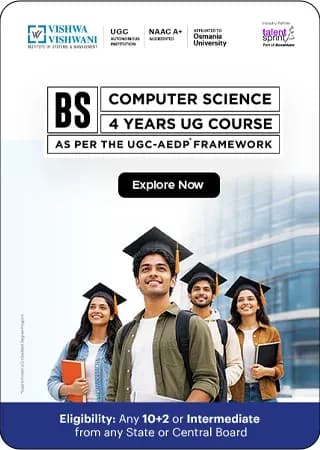
For example, the BS in Computer Science offered by VVISM Hyderabad and TalentSprint is designed around the UGC-AEDP framework, integrating a UGC-recognized undergraduate degree with a structured industry apprenticeship. Instead of separating education from industry exposure, students gain opportunities to develop both simultaneously.
Throughout the programme, students are encouraged to build interview-ready capabilities through:
Building Strong Foundations
- Hands-on labs
- Coding bootcamps
- Coding challenges
- Hackathons
- Project-based learning
Developing Industry-Relevant Expertise
- Artificial Intelligence (AI)
- Machine Learning (ML)
- Data Science
- Cloud Technologies
- SAP
- Pega
Learning Beyond the Classroom
- Industry-integrated learning experiences
- Guidance from VVISM faculty and TalentSprint experts
- Continuous mentorship from industry professionals
- Certifications and skill-development opportunities
Creating Evidence of Skills
- Portfolio projects
- Apprenticeship experiences
- Real-world problem-solving assignments
- Applied learning outcomes
The result is that students graduate with more than theoretical knowledge. They develop experiences that can be discussed confidently during interviews.
When recruiters ask questions such as:
- "Tell us about a project you've worked on."
- "Can you describe a challenge you solved?"
- "How have you applied your technical skills in a practical setting?"
Students can draw from apprenticeship experiences, portfolio projects, hackathons, industry-led assignments, and real-world applications of their learning.
That is often what transforms interview preparation from memorizing answers into confidently showcasing capability.
Learn to think out loud
One of the biggest misconceptions about technical interviews is that students must immediately arrive at the right answer.
In reality, interviewers often care just as much about the process as the outcome.
Strong candidates typically:
- Ask clarifying questions
- Confirm assumptions
- Break problems into smaller steps
- Explain their thought process
- Discuss alternative approaches
Many students worry that asking questions during an interview might make them appear uncertain.
The opposite is often true.
Thoughtful clarification demonstrates analytical thinking and a willingness to fully understand the problem before solving it.
What is the most overlooked part of interview preparation?
Technical preparation is important. But it isn't the only factor that influences interview performance.
Research the Company
Before any interview, take time to understand:
- The company's products and services
- Industry focus
- Recent developments
- Technology stack, where relevant
Research demonstrates genuine interest and helps students provide more relevant answers.
Prepare questions for the interviewer
A strong interview is a two-way conversation.
Consider asking:
- What does success look like in this role?
- What technologies does the team work with most often?
- How are graduates supported during their first year?
These questions show curiosity and professionalism.
Manage nervousness through preparation
Almost every student feels nervous before an interview.
The goal is not to eliminate nerves completely. It is to ensure that preparation is stronger than anxiety.
Mock interviews, project reviews, company research, and adequate rest often do far more for confidence than last-minute cramming.
Conclusion
The students who perform well in tech interviews are not always the ones who know the most.
More often, they are the ones who can showcase what they've learned, explain how they think, and demonstrate how they've applied their skills beyond the classroom.
The journey from classroom to interview room is not about memorizing answers or solving hundreds of coding problems. It's about continuously building knowledge, gaining practical experience, and developing the confidence to communicate your potential.
Because in today's hiring landscape, the question isn't simply "What do you know?"
It's "What can you do with what you know?"
Frequently Asked Questions
Q1. What should students focus on first when preparing for tech interviews?
Students should begin by strengthening their understanding of programming fundamentals, data structures, algorithms, databases, operating systems, and computer networks. A strong grasp of these concepts provides the foundation for solving technical problems and discussing solutions confidently during interviews.
Q2. Do projects really matter in tech interviews?
Yes. Projects often help recruiters understand how students apply their knowledge to real-world challenges. They provide opportunities to showcase problem-solving skills, technical expertise, creativity, and decision-making while giving candidates practical examples to discuss during interviews.
Q3. How can students become more confident during technical interviews?
Confidence comes from preparation and practice. Mock interviews, coding exercises, project reviews, company research, and communication practice help students become comfortable explaining their thought process and responding effectively to interview questions under pressure.
About the Author
TalentSprint
TalentSprint, Part of Accenture LearnVantage, is a global leader in building deep expertise across emerging technologies, leadership, and management areas. With over 15 years of education excellence, TalentSprint designs and delivers high-impact, outcome-driven learning solutions for individuals, institutions, and enterprises. TalentSprint partners with leading enterprises and top-tier academic institutions to co-create industry-relevant learning experiences that drive measurable learning outcomes at scale.
Explore Our Programme
Advance your career with the right program