Why being a graduate isn’t enough anymore?

Two students graduate with the same degree.
Same subjects. Similar marks. Comparable academic records.
Yet, during placements, one secures multiple opportunities while the other struggles to get shortlisted.
What makes the difference?
According to a report published by The New Indian Express, citing findings from the Mercer Mettl India Graduate Skill Index, only 42.6% of Indian graduates are considered employable. The finding highlights a growing reality in today's job market: while earning a degree remains important, employers are increasingly looking beyond qualifications alone.
The question is no longer simply whether a student has a degree.
It is whether that degree has helped them develop the skills, exposure, and confidence needed to succeed in the workplace.
The Employability gap
India produces millions of graduates every year. At the same time, employers across industries continue to report challenges in finding talent that is ready to contribute from day one.
The issue is not a lack of knowledge. Rather, it is often a gap between learning and application.
Traditional higher education has been highly effective at building foundational knowledge and subject expertise. However, today's workplace expects graduates to do more than understand concepts. Employers want individuals who can apply knowledge, solve problems, collaborate with teams, communicate effectively, and adapt to changing business environments.
As a result, students who have only experienced classroom learning often find themselves competing against peers who have had opportunities to apply their learning through projects, case studies, internships, and industry interactions.
What Employers are looking for today?
The modern workplace is evolving rapidly.
Businesses are becoming more technology-enabled, data-driven, and globally connected. In this environment, employers are increasingly seeking graduates who can combine academic understanding with practical capability.
They value critical thinking because business problems rarely come with textbook answers. They value communication because ideas create impact only when they can be shared effectively. They value adaptability because industries, technologies, and job roles continue to change at an unprecedented pace.
Most importantly, employers are looking for individuals who can translate knowledge into action.
This is why employability today is increasingly linked to exposure, experience, and application, not just academic performance.
Why exposure creates a competitive advantage?
Consider two students attending the same interview.
The first has strong grades and a solid understanding of business concepts. However, their learning has largely been limited to textbooks, lectures, and examinations.
The second has studied similar concepts but has also worked on case studies, explored real business challenges, interacted with industry professionals, and participated in practical learning experiences.
Both students may possess similar knowledge.
But the second student is often better equipped to discuss real-world situations, explain their thought process, and demonstrate confidence in applying what they have learned.
The difference is rarely intelligence as the difference is exposure.
Also Read: Why being Job ready is as important as a degree itself?
How education is evolving to meet industry needs?
Recognising these changing expectations, higher education is beginning to evolve.
The National Education Policy (NEP) 2020 places significant emphasis on industry–academia collaboration, encouraging institutions to bridge the gap between academic learning and workplace readiness through practical, industry-oriented experiences.
This reflects a growing understanding that employability should not be treated as something students pursue after graduation. Instead, it should be developed throughout the learning journey.
As a result, many institutions are exploring new approaches that combine academic rigor with industry exposure, helping students build professional capabilities alongside subject knowledge.
Also Read: How Industry collaboration is changing education?
Bridging learning and employability through industry-academia partnerships

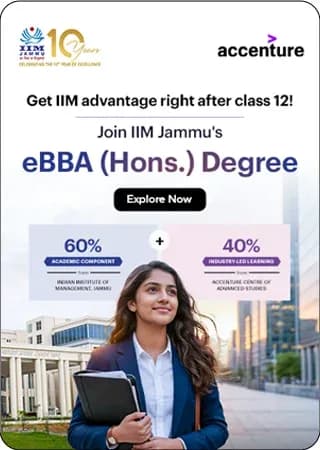
The online BBA by IIM Jammu is a four-year undergraduate business degree which aims to help learners build a strong foundation in business while developing the skills and exposure increasingly valued by employers.
Developed in collaboration by IIM Jammu and the Accenture Centre of Advanced Studies, the programme brings together academic learning and industry engagement within a single educational framework.
The learning model is structured around a blend of
60% academic delivery by IIM Jammu and
40% industry exposure through the Accenture Centre of Advanced Studies (ACoAS).
Beyond academic learning, the programme incorporates elements that support long-term career readiness. These include
internships,
practical business projects,
industry interactions, and
exposure to contemporary workplace expectations.
By engaging with real-world business scenarios during their academic journey, students gain opportunities to understand how organisations operate and how classroom concepts translate into professional environments through:

Communication training,
Aptitude preparation,
Resume-building sessions,
LinkedIn profile development,
Personalised mock interviews, and
Career-readiness assessments.
The programme also provides exposure to a global recruiter ecosystem spanning more than 800+ companies across industries and markets. Combined with internship opportunities and industry engagement, this exposure helps students build awareness of career pathways, workplace expectations, and emerging opportunities in a rapidly evolving business landscape.
What helps graduates stand out?
n today's job market, academic knowledge alone is rarely enough. The graduates who stand out are often those who can apply what they have learned, communicate their ideas effectively, and adapt to real-world challenges.
Alongside strong subject knowledge, practical exposure through projects, internships, industry interactions, and career-readiness training can help students develop the confidence and professional skills employers increasingly value.
Ultimately, it is the combination of knowledge, skills, and real-world exposure that helps graduates transition more effectively from education to employment.
Conclusion
A degree remains one of the most valuable foundations for building a successful career.
However, as employer expectations continue to evolve, the conversation is shifting from qualifications alone to readiness, adaptability, and application.
The graduates who thrive in the future workplace are likely to be those who combine academic knowledge with practical exposure, professional skills, and a mindset of continuous learning.
Because in today's world, success is determined not only by what graduates know, but by how effectively they can apply that knowledge when it matters most.
Frequently Asked Questions
Q1. Why are employers looking beyond academic degrees today?
Employers increasingly seek candidates who can apply knowledge in practical situations. Along with academic qualifications, they value problem solving, communication, adaptability, and real world experience because these qualities help graduates contribute effectively from the beginning of their careers.
Q2. What kind of experience helps students become more employable?
Internships, industry projects, case studies, certifications, and hands on learning opportunities help students gain practical exposure. Such experiences allow learners to understand workplace expectations, build confidence, and demonstrate skills that employers often look for during recruitment processes.
Q3. How can students prepare for the changing job market while studying?
Students can strengthen their career readiness by combining academics with practical learning. Participating in internships, industry interactions, skill building programmes, projects, and networking opportunities helps them develop capabilities that complement their degree and improve employability.
About the Author
TalentSprint
TalentSprint, Part of Accenture LearnVantage, is a global leader in building deep expertise across emerging technologies, leadership, and management areas. With over 15 years of education excellence, TalentSprint designs and delivers high-impact, outcome-driven learning solutions for individuals, institutions, and enterprises. TalentSprint partners with leading enterprises and top-tier academic institutions to co-create industry-relevant learning experiences that drive measurable learning outcomes at scale.
Explore Our Programme
Advance your career with the right program